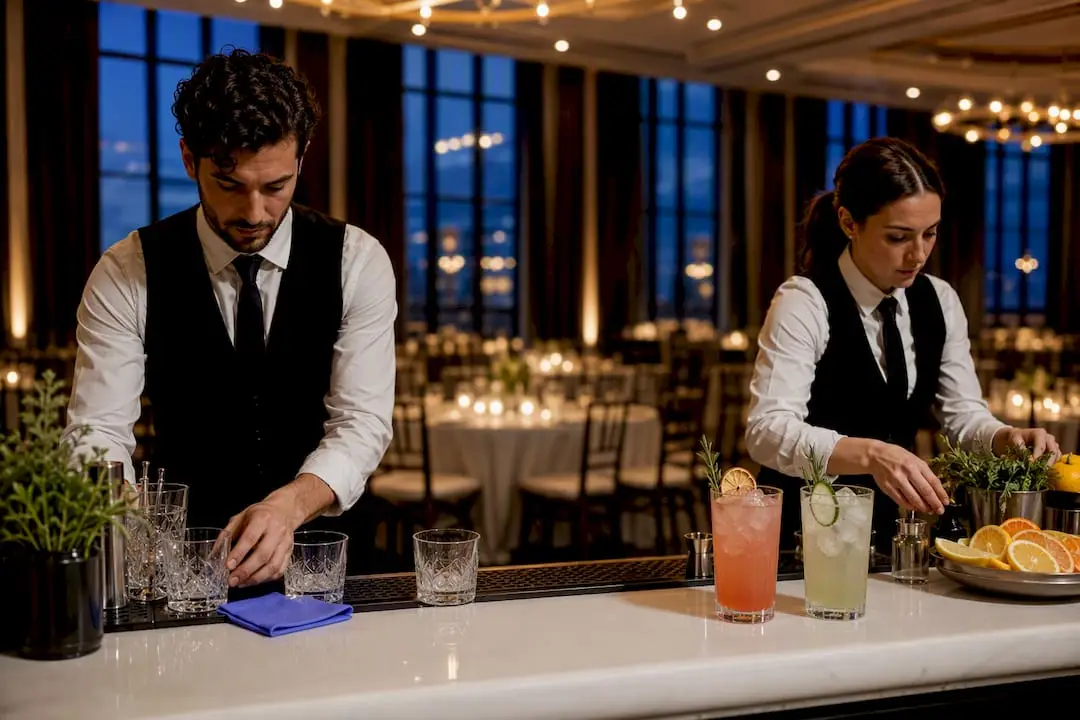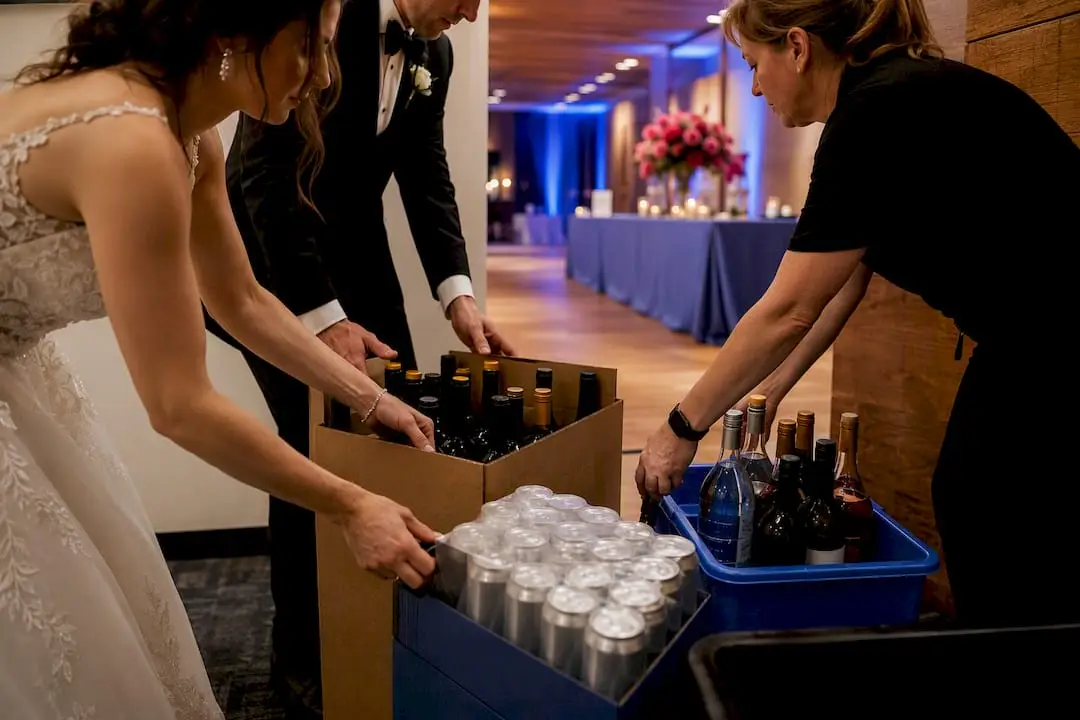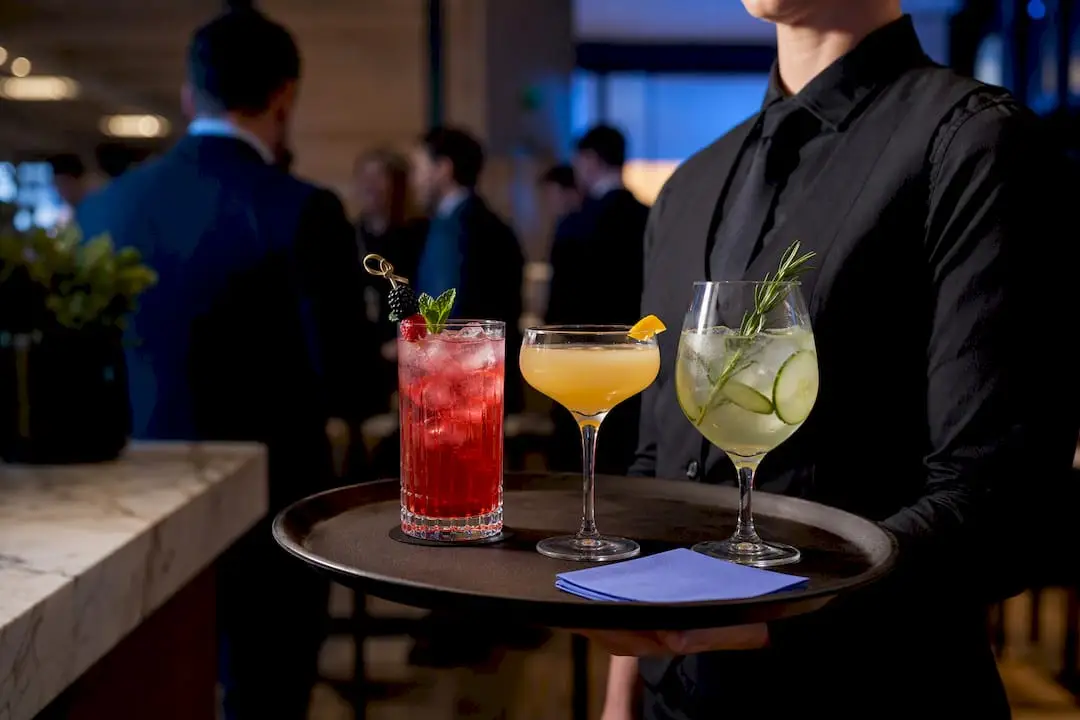
Elevated mocktails are professionally crafted, individually served nonalcoholic cocktails delivered as part of staffed bartending for an event, not recipes a host mixes at home. The move to make is to hire a mocktail-capable bartending service rather than treating nonalcoholic drinks as an afterthought at the soda station. Done right, it buys inclusivity for sober-curious and pregnant guests, a presentation upgrade that photographs beautifully, and often frees up budget you’d otherwise sink into liquor inventory.
TL;DR:
- Hiring a dedicated mocktail service ensures high-quality, visually appealing drinks that meet dietary restrictions and enhance guest engagement.
- Using a curated menu or interactive station adds variety and allows customization, making mocktails stand out without increased complexity or cost.
- Staffing ratios should be one bartender per several dozen guests for curated menus and more for interactive stations to ensure timely service.
- Glassware, garnishes, and presentation details significantly influence the perceived quality, with options like dehydrated citrus and smoked herbs elevating mocktails visually.
- Budget savings from skipping liquor can be reinvested into custom glassware, live demos, or tasting flights, enhancing the event’s overall presentation and experience.
Table of Contents
- Why elevated mocktails have become a smart event strategy
- Menu frameworks bartenders use to build a mocktail program
- Staffing and logistics that make service run smoothly
- Presentation details that make mocktails look premium
- Budgeting for mocktail service versus a full bar
- A sample elevated mocktail menu to bring to your tasting
- How to hire and brief a bartending service for mocktail programming
- Brand perspective: why we build mocktail programs the way we do
- Book The Cocktail Crew for your next elevated mocktail bar
- Sources
Why elevated mocktails have become a smart event strategy
Guest lists have changed. Fewer people drink at every event, and the ones who don’t still expect something better than cranberry juice in a plastic cup. Wellness positioning plays into this directly. Event planners report that nonalcoholic drinks now carry a genuine health halo that makes a well-made mocktail feel like the smart choice, not the fallback one.
There’s a budget angle too. Planners who trim alcohol inventory often redirect that spending into presentation, staffing, or an interactive station guests actually remember.
What’s driving demand right now:
- Corporate daytime events where sobriety isn’t optional, just practical
- Weddings with mixed guest lists spanning multiple generations and preferences
- Brunches and wellness-branded events where a spritz fits the mood better than a martini
Menu frameworks bartenders use to build a mocktail program
A good bartending service doesn’t hand guests one flavor and call it done. Three frameworks cover most events:
- Signature mocktail. One showpiece drink, built around a seasonal ingredient or a story worth telling. Works best for smaller gatherings or when the mocktail needs to complement a full bar rather than replace it.
- Curated three-drink menu. A spritz, a botanical highball, and a shrub or collins-style pour, covering bubbly, herbal, and tart profiles so no guest is stuck with one option.
- Interactive station. Guests choose a base, then add modifiers like fresh purees, herbs, or a sparkling topper, similar to ordering at a specialty coffee counter. This format tends to boost engagement because guests get a say in the outcome.
Whichever framework you pick, ask about:
- Gluten-free and sugar-free swaps for syrups and mixers
- Allergen labeling for nuts, dairy, and common garnish ingredients
- A vegan-friendly base for anyone avoiding egg whites or dairy foams
Staffing and logistics that make service run smoothly
The framework only works if the staffing behind it does too. Ratios matter here just as much as they do for a full bar. A general guideline for elevated mocktail service is about one bartender per several dozen guests for a curated menu, and more bartenders per guest when drinks take longer to build at interactive stations.
Most reputable bartending services set a three-hour minimum for booking, which gives hosts room to plan cocktail hour and dinner service without forcing an awkward overlap. Confirm these details before signing anything:
- Whether a tasting is included or offered as a paid add-on before the event
- Refrigeration and ice needs, especially for outdoor or non-venue locations
- Glassware provided by the service versus rented separately
- Setup and breakdown time factored into the contracted hours
Pro Tip: Ask for a tasting two to three weeks out, not the week of the event. It gives the bartender time to adjust a recipe if a flavor doesn’t land, and gives you time to change your mind without panic.
Presentation details that make mocktails look premium
Presentation is where mocktails either read as an afterthought or as the best drink on the table. Glassware sets the tone before a guest even tastes anything: a coupe signals ceremony, stemware signals elegance, a highball signals something more casual and refreshing.
Garnish is where the craft shows. Dehydrated citrus wheels, smoked rosemary sprigs, and edible flowers all add visual weight without adding alcohol or excess sugar. A few finishing touches worth requesting:
- A flamed citrus peel for aromatic bars without any flame risk to guests
- Herb sprigs bruised right before serving so the aroma hits as the drink is handed over
- Clear signage at stations naming each mocktail and its base ingredients
- Soft, warm lighting at the station itself, since harsh overhead light flattens color
Budgeting for mocktail service versus a full bar
Mocktail programs typically cost less than a full bar because you’re cutting the liquor line item entirely. What remains is labor, fresh produce, specialty syrups, and glassware rental, all of which scale with guest count rather than pour count.
That gap is exactly where hosts add value elsewhere. Industry guidance on budget-friendly receptions points to a specific move: reinvest what you’d have spent on alcohol into a stronger presentation instead.
Consider putting savings toward:
- Custom glassware or a branded garnish tray for the station
- A live mixology demo during cocktail hour
- A tasting flight for guests who want to sample more than one drink
A sample elevated mocktail menu to bring to your tasting
Hand this to your bartender as a starting point, not a fixed order:
- Rosemary Pear Spritz. Pear puree, fresh rosemary, sparkling water. Served in a wine glass with a rosemary sprig garnish.
- Garden No-jito. Cucumber, mint, lime, a splash of soda. Served in a highball over crushed ice.
- Smoked Cherry Sour. Tart cherry juice, lemon, a dash of aromatic bitters substitute. Served in a coupe with a flamed cherry garnish.
- Botanical Tonic Build. A botanical nonalcoholic spirit, tonic water, grapefruit peel. Served in a copa glass.
- Golden Ginger Shrub. Ginger shrub, turmeric, apple cider. Served in a collins glass with a candied ginger garnish.
Both spritzes and the shrub can go sugar-free with alternate syrups, and the whole menu holds up as dairy-free and gluten-free without modification.
How to hire and brief a bartending service for mocktail programming
Before you book anyone, get clear answers on the basics. A bartender who hires well for creativity and speed should be able to answer these without hesitation:
- What’s your minimum service time, and does it flex around cocktail hour timing?
- Do you offer a tasting, and is it included in the quote?
- What’s your staffing ratio for a mocktail-only or hybrid bar?
- Have you worked with nonalcoholic spirits and specialty syrups before, or mostly standard mixers?
- What’s included in setup: glassware, garnish prep, ice, signage?
Put your answers in a written brief, including guest count, dietary restrictions, and any signature flavors you want featured. That document becomes the blueprint your bartender builds the tasting around, and it’s worth reviewing our guide to hiring a bartender before your first call.
Brand perspective: why we build mocktail programs the way we do
We built our elevated mocktail service because “sober-curious” guests kept getting the worst drink at every event we staffed. Being featured on Shark Tank pushed us to formalize what we already believed: a three-hour minimum, a real tasting, and bartenders who treat a mocktail menu with the same seriousness as a full bar…
— Nelson
Book The Cocktail Crew for your next elevated mocktail bar
The Cocktail Crew is the direct route to a staffed elevated mocktail bar, not a recipe list you have to execute yourself. Our three-hour minimum gives you real flexibility for cocktail hour and dinner timing, our bartenders run tastings before the event so nothing surprises you on the day, and we’ve specialized in mocktail programming long enough to have built a reputation backed by strong client reviews and a Shark Tank feature.
If your guest list includes sober-curious attendees, pregnant guests, or anyone who just wants a better drink than soda water, our bartenders can build a signature mocktail, a curated three-drink menu, or a full interactive station around your event. Use our mocktail bar ideas page to shape your brief, then request a quote for private event bartending to lock in a tasting date.
Sources
For deeper background on the trends and hiring advice referenced above, see BizBash’s coverage of nonalcoholic beverage trends, HOST Events on interactive mocktail activations, and Topic Territory’s bartender hiring checklist. For event logistics, our own event bar setup guide and mocktail bartender tips cover the operational side in more detail.
- Planning cocktail & mocktail receptions on a budget – Groups360
- To imbibe or not to imbibe: The growing non-alcoholic beverage trend at meetings and events – BizBash (2025-01-22)
- The Mocktail Craze: How Alcohol-Free Experiences Are Reshaping Events – HOST Events
- How to hire the perfect mocktail bartender for your next event – Topic Territory