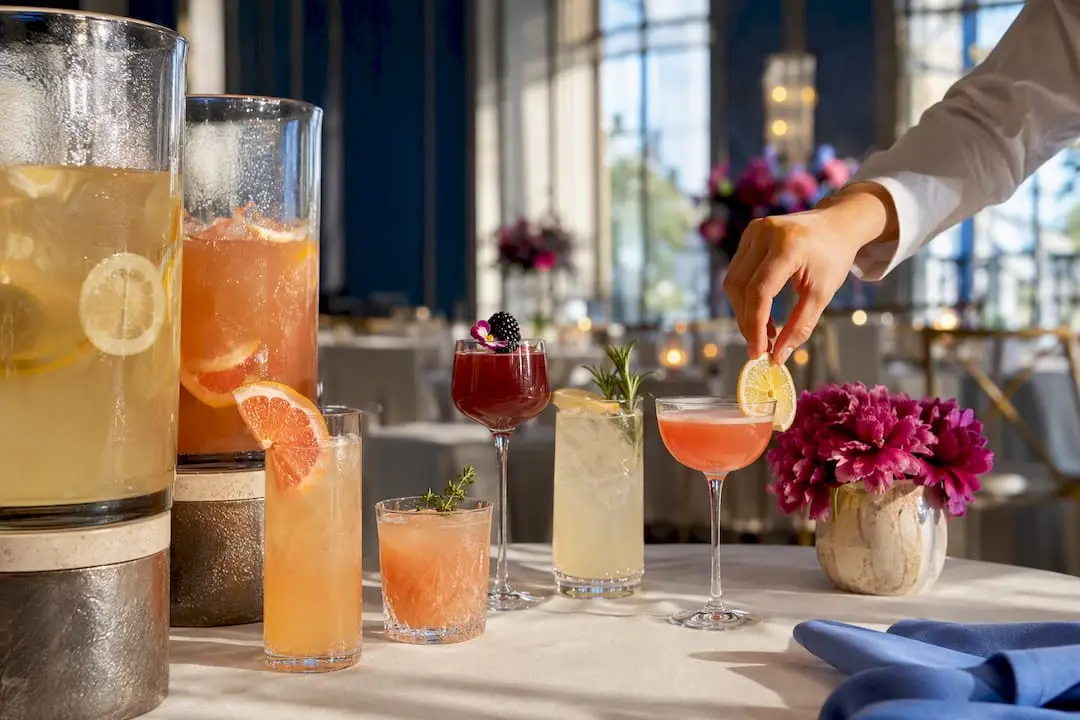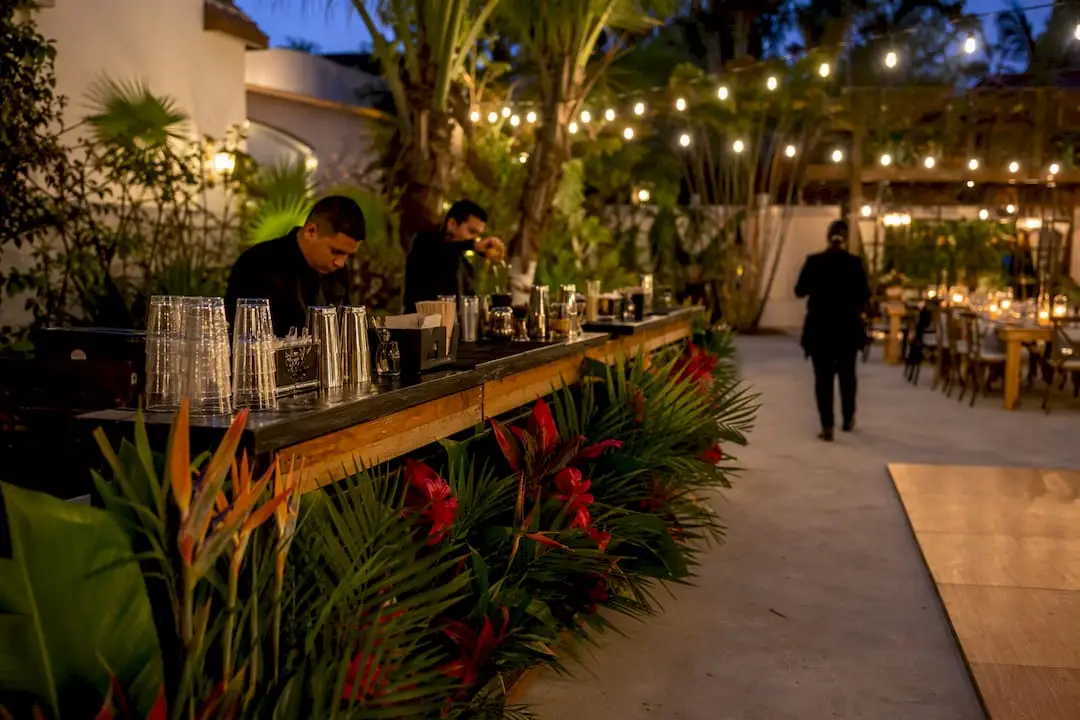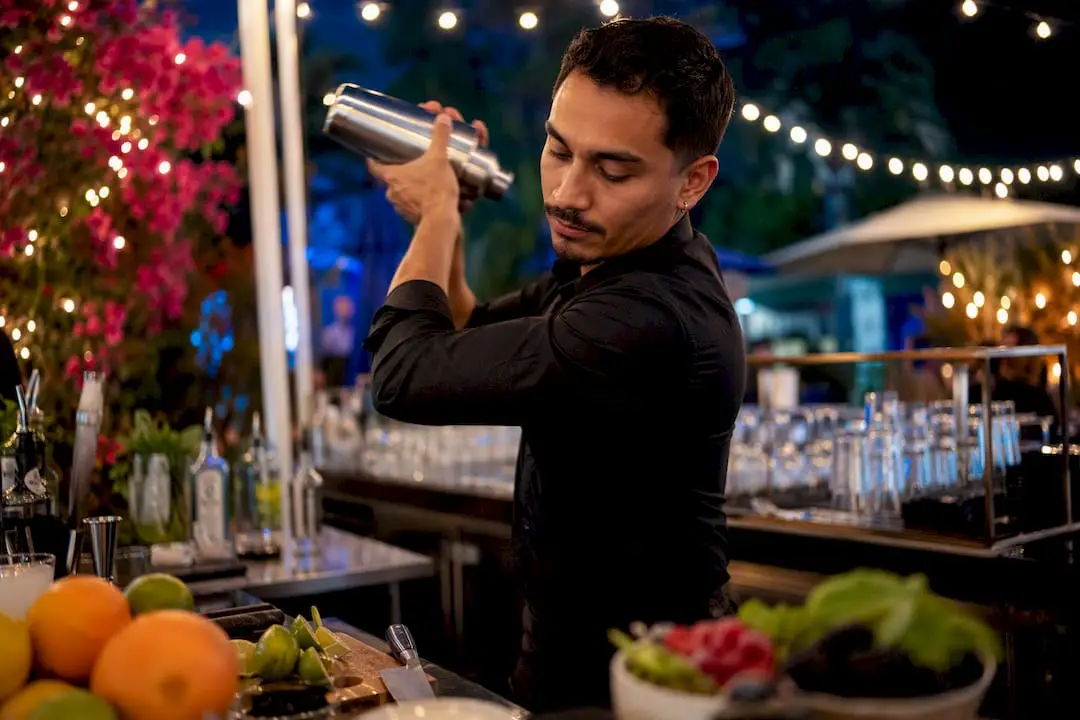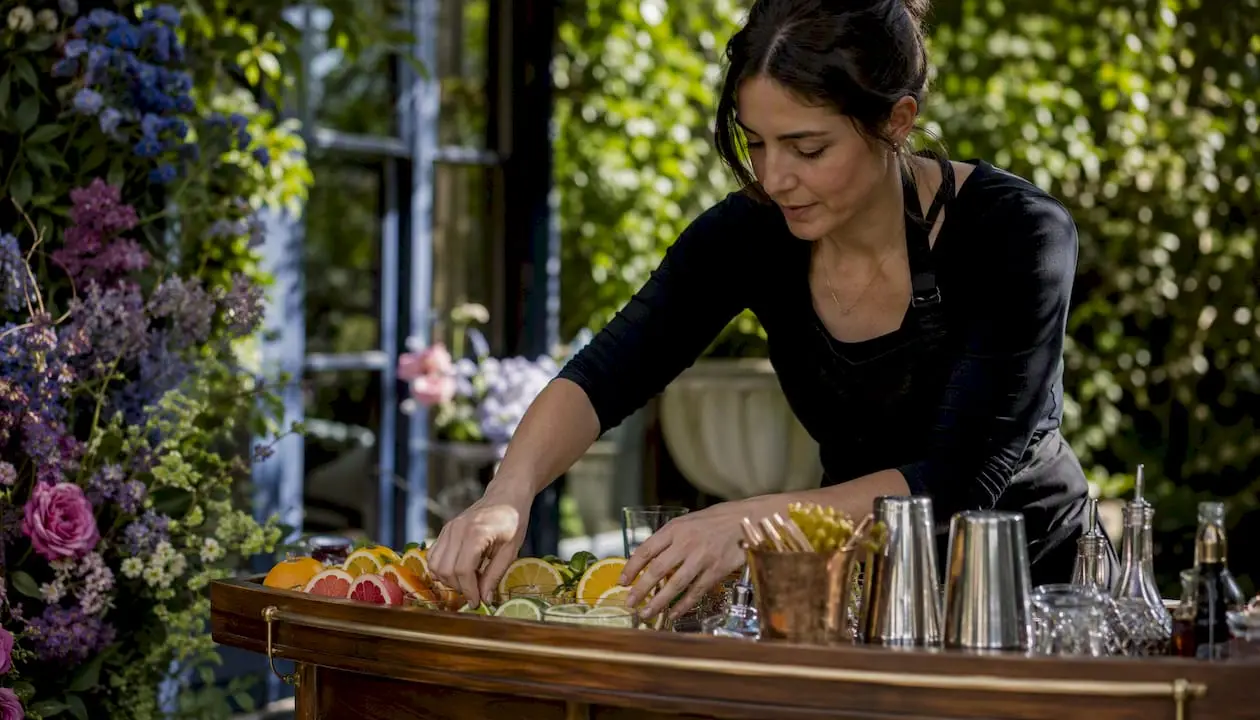
Hire a staffed event bar setup for your wedding, private party, or corporate event. You get predictable service speed, full compliance, and a guest experience that a self-serve cooler simply cannot match. Here is what a professional setup covers at a glance:
- Licensed, insured bartenders (lead bartender plus support staff)
- Portable mobile bar unit with speed rails and coolers
- Glassware or premium compostables
- Stocked spirits, beer, and wine with mixers and garnishes
- Ice strategy planned per guest count
- POS system and payment handling
- Insurance certificates and ID-check protocols
Cocktail-crew’s licensed bartending team handles all of the above, starting with a three-hour minimum so smaller events are never priced out.
Pro Tip: Book a menu workshop before the event. Tasting your signature cocktails in advance lets you catch balance issues and finalize quantities before the bar opens.
Table of Contents
- What does a staffed event bar setup actually include?
- How does the booking-to-bar-close flow work?
- What’s in a typical staffed bar package?
- How much does a staffed bar service cost?
- How do you choose the right bartending service?
- What add-ons are worth considering?
- Booking and day-of checklist for hosts
- Key Takeaways
- Why staffing is the variable most planners underestimate
- Ready to book a staffed bar for your event?
What does a staffed event bar setup actually include?
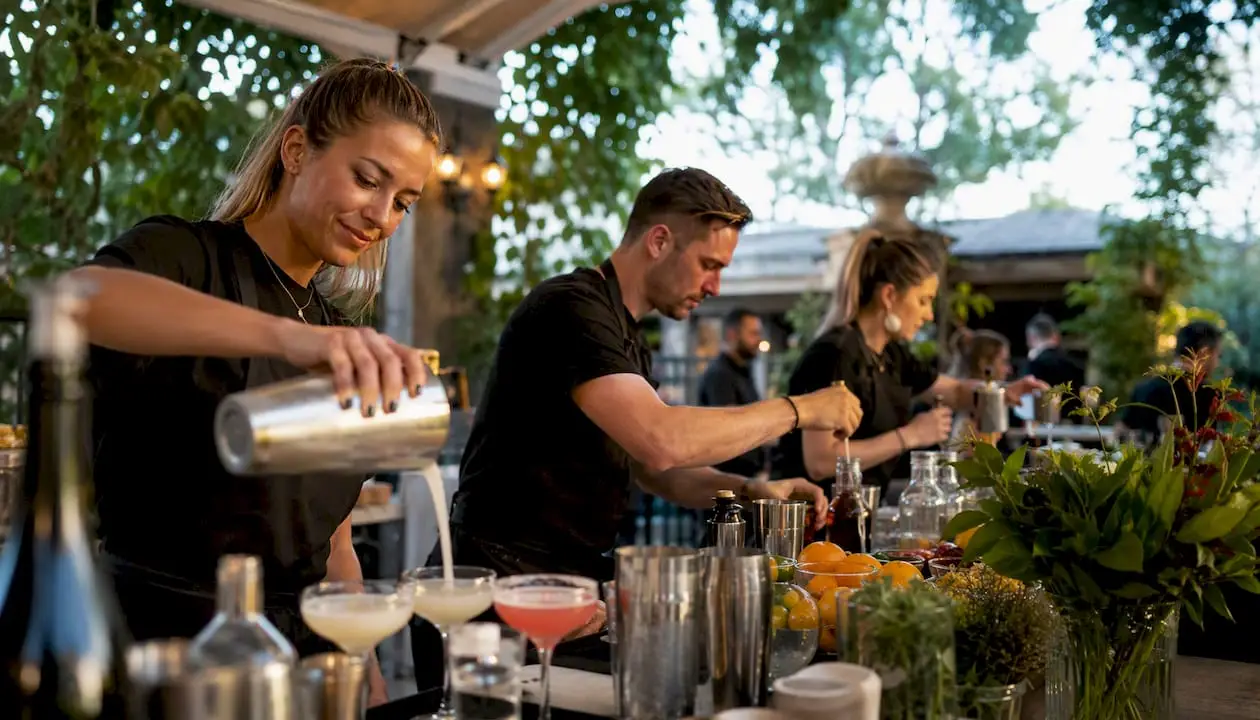
A staffed bar is a service bundle, not a furniture rental. You are hiring people, equipment, and compliance together. Treating it that way helps you compare quotes on equal terms and spot hidden fees before you sign anything.
Staff roles typically included:
- Lead bartender: runs the bar, manages pace, handles escalations
- Support bartenders: scaled to guest count and menu complexity
- Barback: restocks ice, glassware, and garnishes; one barback per two bartenders is standard
- Beverage manager (on larger events): coordinates timing with catering and venue staff
Equipment at the bar:
- Front bar surface with speed rails for high-volume spirits
- Rear station with coolers, blenders, and prep space
- Sanitation supplies (food-safe sanitizer, bar mats, hand-washing station)
- POS terminal for cashless payment if applicable
What is NOT included in most packages: venue furniture, decorative props, long-term bar rentals for the venue’s permanent fixture, and in many cases the alcohol itself. Confirm whether your provider is a licensed retailer who supplies liquor or whether you purchase it separately and they staff it.
Pro Tip: If your venue has a single bar location, ask about a satellite bar or welcome-tray service for the cocktail hour. Staffing ratios for high-volume events consistently show that peak demand in the first 20 minutes after a ceremony or first dance overwhelms a single station. A second pour point cuts that line in half.
How does the booking-to-bar-close flow work?
The full timeline runs from your first inquiry to the bartenders loading out after last call. Here is the sequence most professional services follow:
- Inquiry and proposal (8–12 weeks out for weddings; 4–6 weeks for smaller events)
- Deposit and signed contract (locks your date; typically 25–50% of total)
- Menu workshop or tasting (4–6 weeks out; finalize cocktail list, quantities, and any dietary needs)
- Confirmations with venue (2–4 weeks out; confirm load-in window, power, water, and permits)
- Final guest count and quantities (7–14 days out, per standard contract terms)
- Day-of load-in (60–120 minutes before service; staff sets bar, stages ice, and runs a pre-service check)
- Service hours (three-hour minimum is common; overtime rates apply beyond the contracted window)
- Bar close and breakdown (30–45 minutes post-service; staff clears, sanitizes, and loads out)
Contract essentials to confirm before signing:
- Deposit amount and refund terms
- Cancellation and force majeure policy
- Overtime rate per hour beyond the minimum
- Insurance certificate and permit responsibility
- Staffing backup plan if a bartender calls out
Pro Tip: Confirm your load-in window in writing with the venue before your bartending service does. Venues sometimes double-book dock access or restrict freight elevator hours. A 60-minute load-in that turns into 30 minutes because of a scheduling conflict creates a rushed setup and a late bar open.
What’s in a typical staffed bar package?
The table below reflects standard planning quantities drawn from industry bar service guidance. Use it to cross-check quotes and flag anything a provider leaves off.
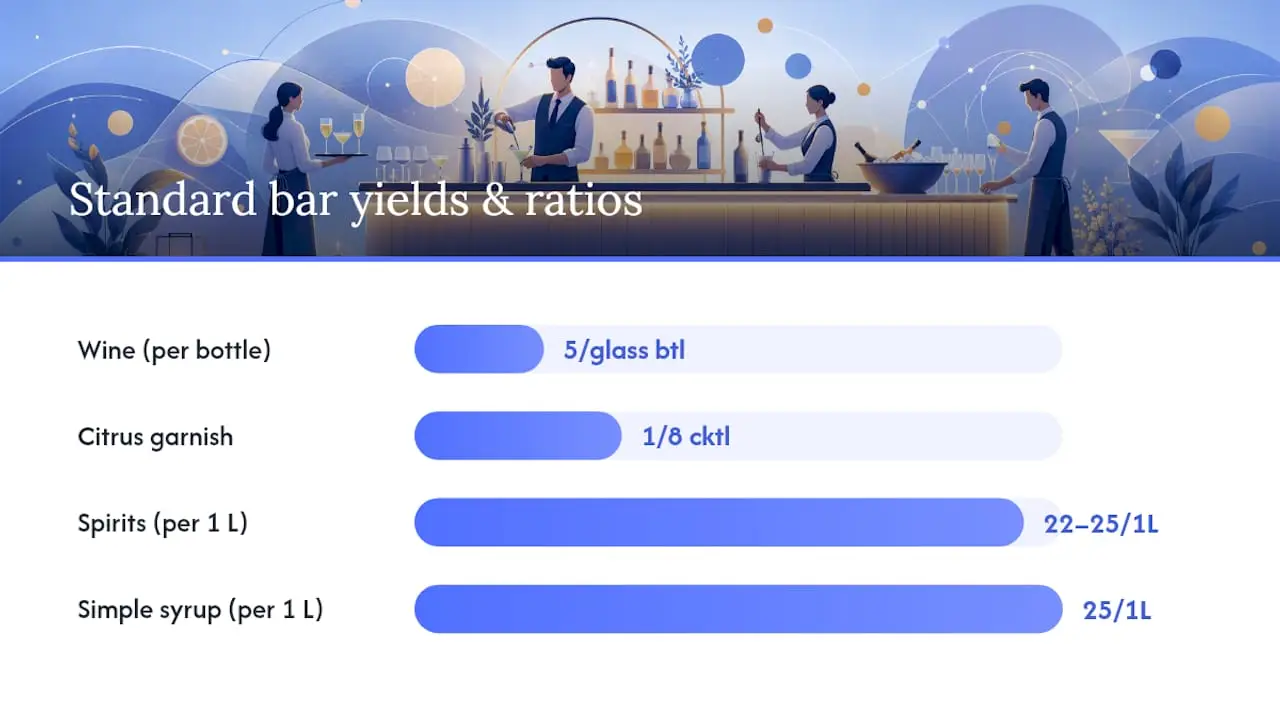
| Item | Standard Quantity / Assumption |
|---|---|
| Ice (mixed drinks, peak hour) | 1–1.5 lbs per guest per hour |
| Wine yield | 5 glasses per bottle |
| Spirits yield | 22–25 cocktails per 1 liter bottle |
| Citrus garnish | 1 lemon or lime per 8 cocktails |
| Simple syrup / house syrups | 1 liter per 25 cocktails |
| Staffing: full craft cocktails | 1 bartender per 40–60 guests |
| Staffing: batched signatures or simple mixed | 1 bartender per 60–75 guests |
| Staffing: beer and wine only | 1 bartender per 75–100 guests |
| Barback | 1 per 2 bartenders |
Most packages also include ID-check SOPs, insurance certificates, and coordination with venue rules on alcohol service. Professional bar services treat compliance as a standard inclusion, not an upgrade.
How much does a staffed bar service cost?
Price depends on five variables: staff level, hours, menu complexity, travel distance, and whether equipment is rented or owned. Menu complexity drives the biggest swings.
Cost drivers, ranked by impact:
- Menu type: Full craft cocktails require more skilled labor and prep time than a beer-and-wine bar.
- Hours: Most services charge hourly beyond a three-hour minimum. Overtime rates typically run higher per hour than the base rate.
- Guest count: Determines staffing ratios and therefore total labor cost.
- Equipment: Portable bar rental, glassware, and refrigeration may be line items or bundled.
- Travel and setup fees: Distance from the provider’s base and load-in complexity add cost.
Rough budget bands by menu type:
- Beer and wine only: lowest labor cost; one bartender handles 75–100 guests
- One or two batched signature cocktails plus beer and wine: moderate; reduces craft labor while keeping the experience elevated
- Full craft cocktail menu: highest labor and prep cost; plan for 1 bartender per 40–60 guests
Batch cocktails are the single most effective cost-control lever for hosts who want a craft experience without the full craft labor bill. Pre-batching your signature drinks lets fewer bartenders serve more guests without sacrificing quality.
Pro Tip: Offer one or two batched signatures alongside a standard beer-and-wine selection. You get the “wow” of a custom cocktail, the service speed of a simpler menu, and a lower staffing ratio — all at once.
How do you choose the right bartending service?
Prioritize licensed staff, proof of insurance, transparent contracts, and service minimums that fit your event length. Everything else is secondary.
Questions to ask every provider:
- Are your bartenders licensed and insured? Can you provide certificates?
- What is your staffing ratio for my guest count and menu?
- What is included versus billed as an add-on?
- Do you offer a menu tasting or workshop before the event?
- What is your backup plan if a bartender cancels day-of?
- What are your deposit, cancellation, and overtime terms?
- Can you share references or verified client reviews?
Red flags to walk away from:
- Vague contract language around staffing levels or included equipment
- No insurance certificate available on request
- Unclear or missing cancellation and force majeure terms
- No stated backup plan for staff no-shows
- Staffing ratios that seem too low for your menu type
Cocktail-crew publishes a detailed bartender hiring checklist that covers every one of these points. Require copies of insurance and permits before paying any deposit.
Pro Tip: Ask for the lead bartender’s bio or experience summary. A service that can name and describe the person running your bar is one that actually controls its staffing. A vague “we’ll assign someone” answer is a staffing-agency model, not a dedicated team.
What add-ons are worth considering?
Add-ons increase guest engagement but change your labor and space needs. Know what each one actually requires before you say yes.
Cocktail classes: A 45–90 minute guided session where guests make their own drinks. Requires extra counter space, additional tools per station, and a bartender who can teach while managing the group. Best for smaller gatherings of 20–40 guests.
Mocktail packages: A dedicated non-alcoholic bar or integrated NA menu. Mocktail service requires its own labeled station, separate prep, and ideally a batched base to keep service fast. Cocktail-crew’s elevated mocktail options handle sober-curious guests without making them feel like an afterthought.
Batch cocktails: Pre-mixed in large format before the event. Fastest service, lowest per-drink labor, and easy to scale. The right call when you have 100-plus guests, a tight timeline, or a single bar location. See Cocktail-crew’s batch cocktail guide for ratios and recipes.
Mixers package: For smaller events where full staffing is not needed, a curated mixers kit lets hosts self-serve with quality ingredients. Cocktail-crew offers this as a standalone option.
Pro Tip: Pair a batched signature cocktail with a mocktail bar version of the same drink. Same flavor profile, zero alcohol. Guests who don’t drink still feel included in the signature moment, and you only need to prep one flavor base.
Booking and day-of checklist for hosts
Follow this checklist to avoid last-minute surprises. Print it, share it with your venue contact, and confirm each item in writing.
Pre-booking:
- Confirm venue permits alcohol service and that your provider can obtain the required permits
- Verify power access (dedicated circuits for refrigeration and blenders)
- Confirm potable water availability or plan for food-safe water containers
- Lock in guest count estimate and menu direction before requesting quotes
- Review deposit schedule and cancellation terms before signing
Day-of:
- Confirm load-in window with venue staff the morning of the event
- Have ice staged or delivery confirmed (plan 1–1.5 lbs per guest per hour at peak)
- Set up ID-check station at bar entry point
- Confirm POS setup and cash/card handling with lead bartender
- Brief barback on restocking rotation and where supplies are stored
- Confirm bar close time and breakdown window with venue
Pro Tip: Build a 15-minute buffer between your contracted bar close and the venue’s hard-out time. Breakdown takes 30–45 minutes, and a rushed load-out is where equipment gets left behind or damaged.
Key Takeaways
A staffed event bar setup delivers the best guest experience when you match staffing ratios to your menu, lock in logistics early, and confirm compliance before the deposit clears.
| Point | Details |
|---|---|
| Match staffing to menu | Full craft cocktails need 1 bartender per 40–60 guests; beer and wine only needs 1 per 75–100. |
| Three-hour minimum is standard | Most professional services require a three-hour minimum; overtime rates apply beyond that window. |
| Confirm compliance upfront | Require insurance certificates, ID-check SOPs, and permit confirmation before signing any contract. |
| Batch cocktails control costs | Pre-batched signatures reduce labor needs and speed service for high-volume events. |
| Cocktail-crew covers it all | Cocktail-crew offers licensed bartenders, a cocktail calculator, mocktail packages, and a three-hour minimum for private events. |
Why staffing is the variable most planners underestimate
The bar is the one event element guests interact with repeatedly. They visit it at arrival, between courses, after toasts, and before they leave. A slow or disorganized bar does not just frustrate guests — it sets the emotional tone for the whole room.
Most planning guides focus on décor and catering. Staffing ratios, load-in logistics, and contract language get a footnote. That is backwards. A beautiful bar setup with one undertrained bartender for 120 guests is a line that never moves. The ratio matters more than the garnish tray.
Cocktail-crew’s approach — licensed bartenders, a menu workshop before the event, and planning tools like the cocktail calculator — addresses the variables that actually determine whether a bar runs well. The Shark Tank feature and the client reviews are trust signals, but the operational structure is what makes the difference on the day.
Ready to book a staffed bar for your event?
Cocktail-crew gives private hosts, couples, and corporate planners a staffed bar experience without the logistical guesswork. Licensed bartenders, a three-hour minimum that fits smaller events, a built-in cocktail calculator for quantities, and mocktail packages for every guest at the table.
The booking process starts with a quote request. From there, Cocktail-crew walks you through menu selection, a pre-event workshop, and final confirmations so nothing is left to chance on the day. Wedding hosts can explore wedding-specific bartending packages, and corporate planners can see custom cocktail event ideas built for professional settings.
Request a quote and get your event bar setup confirmed.