Batching is the right call for most private parties. It speeds up service, keeps every glass consistent, and frees your bartender to actually work the room. Three rules make or break it: add planned dilution (roughly 18–20% of your total spirit volume as cold water), never premix carbonated or foam elements, and have a professional bartender on-site to handle finishing and custom orders.
Quick checklist before you decide:
- Batch stirred, spirit-forward drinks and high-proof punches
- Keep fresh citrus, soda, tonic, and sparkling wine for last-moment finishing
- Plan multiple drinks per guest for the duration of your event
- Label every container with contents and prep time
- Have a pro bartender on-site for any event where guest experience is the priority
Table of Contents
- Why batching helps private events
- Which cocktails batch well — and which don’t
- How do you calculate volumes for a group?
- When should you make batches, and how long do they keep?
- Handling dilution, carbonation, and finishing at service
- What equipment do you need for batched cocktail service?
- When does hiring a professional bartender make sense?
- Ready-to-use batched recipes for 10–12 guests
- Key Takeaways
- Why professional bartenders actually prefer batching
- The Cocktail Crew runs your batched service so you don’t have to
- Useful sources
Why batching helps private events
The real payoff of batching isn’t speed alone. When ingredients marry over time, stirred drinks often taste more cohesive than their à-la-minute versions. A Negroni batched four hours before service is rounder and better integrated than one built to order in a rush.
For staffed events, batching changes the math on labor. A bartender who isn’t measuring and stirring every drink individually can manage guest flow, handle custom requests, and keep the line moving. That’s the operational shift hosts often miss when they think about batching purely as a prep shortcut.
Pro Tip: Build a hybrid menu: batch two or three high-volume drinks and keep one made-to-order option for guests who want something custom. The batched drinks carry the crowd; the craft option signals that the bar is staffed by someone who knows what they’re doing.
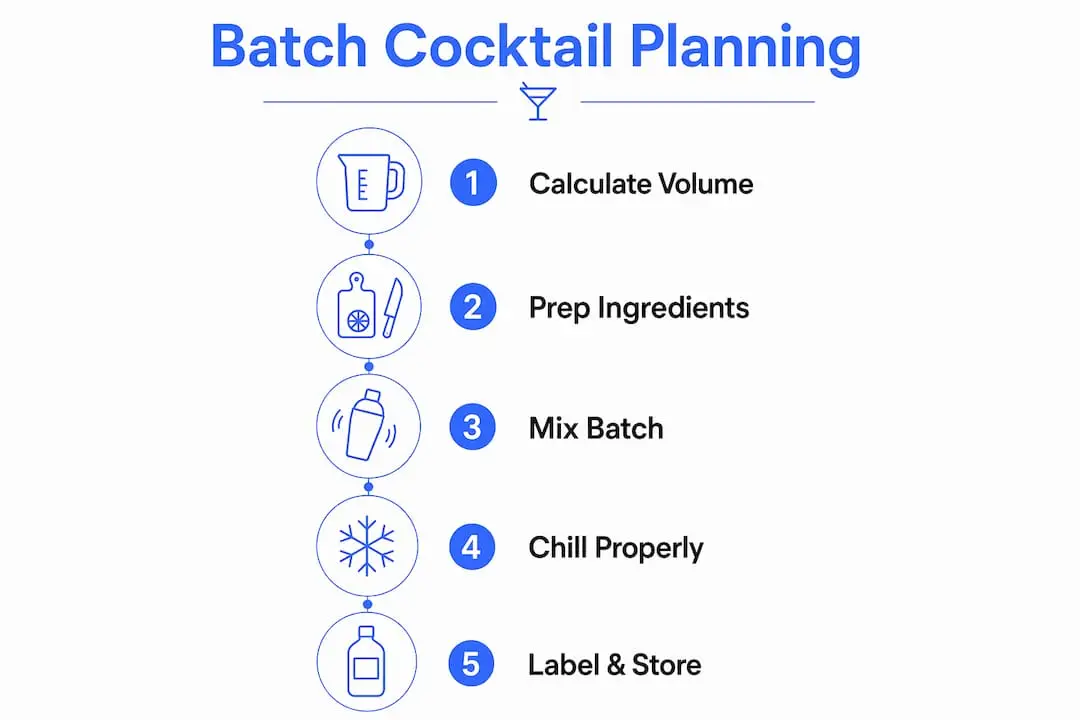
Which cocktails batch well — and which don’t
Not every drink belongs in a batch. The menu decision is as important as the prep.
Strong batch candidates:
- Negroni, Manhattan, Old Fashioned (stirred, spirit-forward, no texture loss)
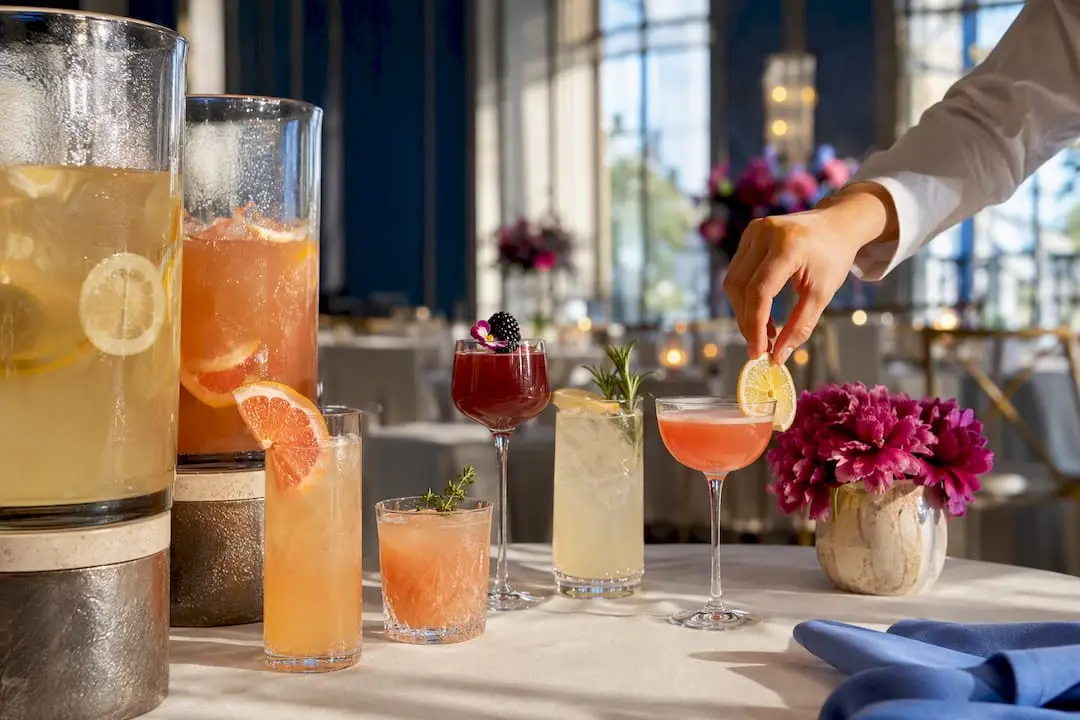
- Paloma-style punches and tequila-based pitchers
- Whiskey sour base without egg white (add fresh citrus same-day)
- Sangrias and wine-based punches (flavors improve with rest)
- Elevated mocktails: hibiscus agua fresca, cucumber-mint cooler, ginger lemonade
Poor batch candidates:
- Egg-white sours and any foam-topped drink (texture collapses within minutes)
- Mojitos and juleps (fresh mint bruises and turns bitter in bulk)
- Carbonated-forward drinks like Moscow Mules (the fizz is gone before the first pour)
- Delicate shaken sours where bright citrus is the whole point
For mocktail batching, the same logic applies. Batch the base, keep the sparkling element separate, and add it per glass. Fresh citrus loses brightness over hours, so juice same-day and store chilled, or keep the citrus portion separate until service.
How do you calculate volumes for a group?
Plan for 2–3 drinks per guest over a 2–3 hour event. A finished cocktail in the glass typically measures a moderate serving size. Use that to work backward from your guest count to batch volume.

Add your dilution water before chilling: a portion of the total spirit volume to mimic dilution. Always make a small test batch first, chill it, pour it over ice, and taste it before committing to a full-scale prep.
Use guest count and average drink volume to estimate batch size, adjusting spirit volume and dilution accordingly without specific numbers
Pro Tip: Always prep at least 20% more volume than your math says you need. Batches run out faster than hosts expect, especially in the first hour when guests are arriving and pouring freely.
Use The Cocktail Crew’s cocktail calculator to convert your guest count into a custom shopping list before you buy a single bottle.
When should you make batches, and how long do they keep?
Timing depends entirely on what’s in the batch.
| Batch type | Prep window | Storage | Max hold time |
|---|---|---|---|
| Spirit-only (Negroni, Manhattan) | 1–48 hours ahead | Sealed glass, refrigerated | 48 hours |
| Citrus-forward (Margarita base, Paloma) | Same-day | Sealed glass, refrigerated | 8 hours |
| Wine/sangria base | Up to 24 hours | Sealed glass, refrigerated | 24 hours |
| Mocktail base (no citrus) | Up to 24 hours | Sealed glass, refrigerated | 24 hours |
Stirred, spirit-forward batches hold for up to two days refrigerated. Citrus-forward batches are a same-day job. America’s Test Kitchen’s big-batch margarita method extends that window to 24 hours by using a stabilized citrus syrup instead of fresh juice.
Label every container: drink name, batch date, and time. Keep batches at 35–40°F and away from raw proteins if you’re sharing refrigerator space with food.
Handling dilution, carbonation, and finishing at service
Dilution is the step most hosts skip, and it’s the one that makes the biggest difference. When a cocktail is shaken or stirred over ice, it picks up about 18–25% dilution from melt. A batch sitting in a bottle gets none of that. Add cold water at 18–20% of spirit volume before chilling, then test a sample poured over ice to confirm mouthfeel.
Finishing checklist for service:
- Pour batched spirit base over ice in the glass (or ladle from a chilled dispenser)
- Top carbonated drinks (soda, tonic, Prosecco) per glass, never in the batch
- Add fresh citrus juice or a citrus squeeze as a finishing touch, not a batch ingredient
- Apply rim treatments (salt, Tajín, sugar) before pouring
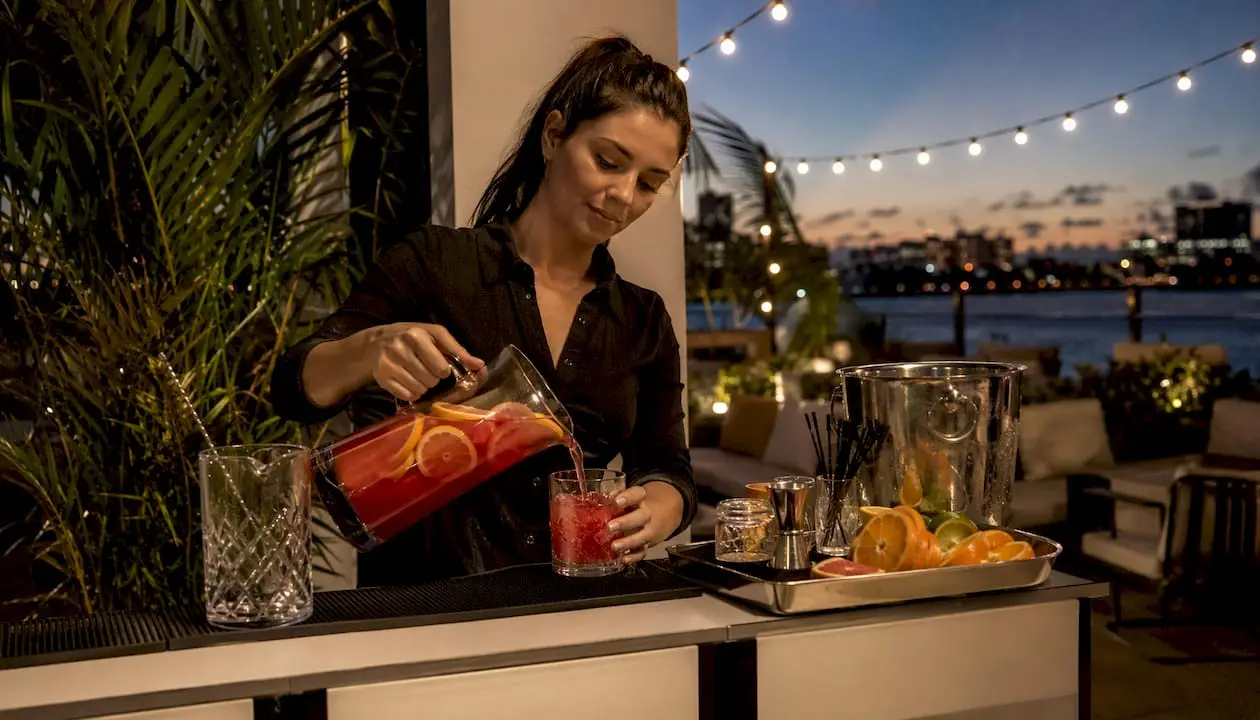
- Garnish from a pre-prepped station: citrus wheels, herbs, skewered fruit
Pro Tip: Set up a garnish station with pre-sliced citrus, herbs in damp paper towels, and rimmed glasses ready to go. A bartender who can grab and finish without hunting for a knife keeps the line moving and the presentation sharp.
What equipment do you need for batched cocktail service?
The right setup is what separates a batched bar that looks intentional from one that looks improvised.
Core equipment list:
- Lidded glass bottles or jugs (1L and 2L) for spirit batches
- Insulated beverage dispenser or punch bowl for high-volume service
- Julep strainers and ladles
- Plenty of large-format ice (clear cubes for spirit-forward, pebble ice for spritzes)
- Labeled containers for syrups, fresh juices, and garnishes
- Speed pourers for high-volume finishing
A professional bartending team typically brings bar tools, shakers, and strainers. Glassware, ice, and dispensers are usually the host’s responsibility or a rental. Confirm the split with your vendor before the event. For bar-height furniture and staging, bar table rentals can complete the setup without improvising with folding tables.
When does hiring a professional bartender make sense?
For any event where guest experience is the point, a pro is worth it. Weddings, milestone birthdays, and corporate gatherings all fall into that category. So does any menu that mixes batched drinks with made-to-order craft cocktails.
Questions to ask any bartending vendor:
- What is your minimum service time, and what does setup include?
- Who provides glassware, ice, and garnishes?
- How do you handle finishing for batched drinks (carbonation, citrus topping)?
- What is your staffing ratio for the guest count?
- Are you licensed and insured for private events?
What to expect from a team running batched service:
- Arrive early enough to chill batches and set up the finishing station
- Manage temperature throughout service (ice replenishment, dispenser insulation)
- Handle custom orders alongside the batched menu
- Monitor pour rates and flag when a batch needs replenishing
Knowing what to look for when hiring a bartender for a private party saves you from the wrong vendor conversation entirely.
Ready-to-use batched recipes for 10–12 guests
- Batched Negroni — Combine 500ml gin, 500ml sweet vermouth, 500ml Campari, and 300ml cold water. Stir, bottle, and refrigerate up to 48 hours. Serve: Pour 125ml over a large ice cube in a rocks glass. Express an orange peel over each glass. No carbonation needed.
- Paloma-style tequila punch — Combine 600ml blanco tequila, 400ml fresh grapefruit juice (same-day), 150ml fresh lime juice, 200ml agave syrup, and 200ml cold water. Refrigerate up to 8 hours. Serve: Pour 125ml over ice in a highball, top with 60ml grapefruit soda per glass, salt rim optional.
- Whiskey sour base (no egg white) — Combine 600ml bourbon, 300ml fresh lemon juice (same-day), 250ml simple syrup, and 180ml cold water. Refrigerate up to 8 hours. Serve: Pour 125ml over ice in a rocks glass, garnish with a lemon wheel. Scale linearly: multiply each ingredient by the same factor.
- Elevated mocktail: hibiscus ginger cooler — Combine 1L brewed hibiscus tea (cooled), 200ml fresh lime juice, 150ml ginger syrup, and 200ml cold water. Refrigerate up to 12 hours. Serve: Pour 125ml over ice in a highball, top with 60ml sparkling water, garnish with a lime wheel and candied ginger.
For each recipe, test a small sample batch first, chill it, taste it over ice, and adjust sweetness or acidity before scaling to full volume.
Key Takeaways
Batching works best when you plan dilution, keep fresh elements separate, and have a professional bartender handle finishing and custom orders at service.
| Point | Details |
|---|---|
| Plan dilution upfront | Add 18–20% of spirit volume as cold water before chilling every batch. |
| Keep carbonation for service | Add soda, tonic, or Prosecco per glass at the moment of pouring, never in the batch. |
| Juice citrus same-day | Fresh citrus degrades within hours; squeeze day-of and store chilled until service. |
| Match prep timing to drink type | Spirit-only batches hold 48 hours; citrus-forward batches hold 8 hours maximum. |
| The Cocktail Crew for staffed service | The Cocktail Crew’s bartenders run batched menus and made-to-order drinks from a three-hour minimum. |
Why professional bartenders actually prefer batching
The conventional wisdom treats batching as a compromise, a way to cut corners when you can’t staff a full bar. That framing gets it backwards. The bartenders who do this at the highest level batch because it raises the quality ceiling, not because it lowers the effort floor. Removing the repetitive measuring from the equation means every ounce of attention goes to the guest: reading the room, adjusting pours, catching the person who wants something off-menu, and keeping the energy right. The batch handles the volume; the bartender handles the experience. Those are two different jobs, and conflating them is what produces mediocre event bars. The test run matters more than most hosts realize. A batch that hasn’t been tasted cold, over ice, in the actual glass it will be served in is a batch that hasn’t been finished. That step is where craft lives in a batched service, and it’s the step a professional never skips.
The Cocktail Crew runs your batched service so you don’t have to
Pulling off a batched cocktail menu at a private event is genuinely manageable when you have the right team behind it. The Cocktail Crew’s bartenders arrive with the tools, the technique, and the experience to run a batched menu and still handle made-to-order drinks for guests who want something custom. The minimum is three hours, which covers setup, full service, and breakdown without locking you into a long-term commitment.
The Cocktail Crew supplies bar tools and finishing equipment; you handle glassware, ice, and any specialty rentals. Their optional mixers package covers small events where you want a curated selection without sourcing every ingredient yourself. Before you book, use the cocktail calculator to convert your guest count into exact volumes and a shopping list. When you’re ready to move from planning to booking, see how professional bartending transforms your event and get a quote for your date.
Useful sources
- VinePair: How to Batch Cocktails at Home — Covers dilution math, flavor integration, and the test-batch workflow. The most practical technical primer available.
- Serious Eats: How to Batch Cocktails for a Crowd — Detailed guidance on citrus handling, storage, and scaling ratios for large groups.
- Pegshops: How to Batch Cocktails for a Party — Solid overview of timing windows, storage best practices, and per-guest quantity planning.
- America’s Test Kitchen: Big-Batch Margaritas — Tested recipe using stabilized citrus syrup to extend the prep window to 24 hours.
- Delish: 15 Big-Batch Cocktails — Recipe inspiration for scaling classics and seasonal punches.
Before scaling any recipe to full event volume, run a small test batch, taste it cold over ice, and adjust. The Cocktail Crew’s cocktail calculator handles the volume math once you’ve locked in your recipe.
Scottsdale, Nashville, Austin, Miami, Charleston, Savannah, Los Angeles & Orange County, San Diego, Palm Springs, Destin & 30A — wherever you’re celebrating, The Cocktail Crew will be there. Check your date, book The Cocktail Crew, and get ready for a night worth remembering. Cheers.