Table of Contents
- Types of Drink Tickets for Events
- Why Use Drink Tickets Instead of an Open Bar?
- How Many Drink Tickets Should You Give Guests?
- Distributing Drink Tickets Without Awkwardness
- Bar Staff Procedures for Redeeming Drink Tickets
- What to Ask Ticket Vendors for: Specs and Security
- How Professional Bartenders Run a Ticketed Bar
- What Happens to Leftover Drink Tickets After the Event
- Legal and Compliance Rules for Drink Ticket Programs
- Tracking Drink Tickets With Event Software and Apps
- What I’ve Learned Running Ticketed Bars
- Let The Cocktail Crew Handle Your Ticketed Bar
- Sources
The Concept of Drink Tickets
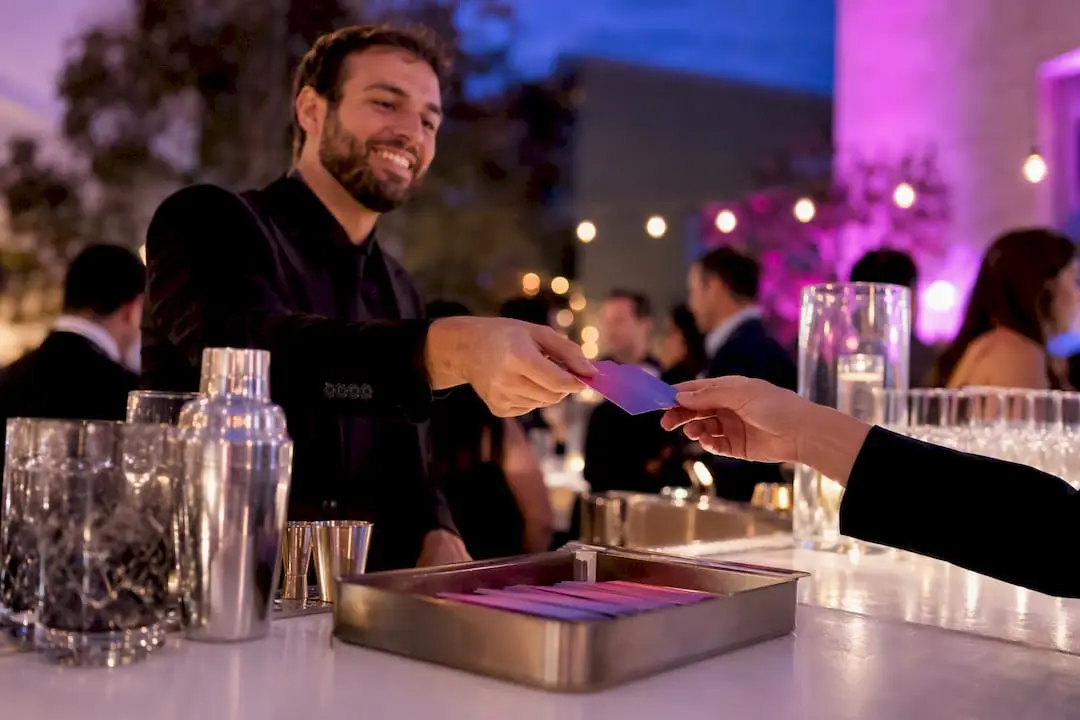
Drink tickets for events are vouchers that guests exchange with a bartender for eligible beverages. Event organizers use them to manage drink allowances, plan beverage budgets, and establish clear guidelines for bar service at weddings, corporate gatherings, private parties, and other celebrations. Depending on the event setup, each ticket may cover a specific drink or one beverage from an approved menu. Hosts can decide how many tickets to distribute per guest, which drinks are included, and whether guests can purchase additional beverages after using their tickets. With clear rules and an organized redemption process, drink tickets can make event bar service easier to manage while helping guests understand their options.
Three reasons planners reach for them:
- Fixed, predictable beverage budget instead of an open-ended tab
- Faster bar lines because bartenders aren’t processing payments
- A built-in stop point that discourages overserving
Pricing insight: A single drink ticket typically covers one standard cocktail, beer, or glass of wine, so your total ticket order should match your actual pour count, not your guest count.
If you’re choosing between an open bar, a cash bar, and tickets, tickets usually win when you want control over cost without making guests reach for a wallet mid-party. For a full breakdown of when each model makes sense, see this comparison of cash bar vs open bar setups.
Key Takeaways
Drink tickets give hosts a fixed beverage budget and faster bar service, and the system only works as well as the counting, staffing, and distribution plan behind it.
| Point | Details |
|---|---|
| Pick the right format | Rolls suit large events, wristbands suit moving crowds, place cards suit seated dinners, QR codes suit high security events. |
| Budget with a buffer | Use (cost per drink × tickets per guest × guest count) plus a 10% buffer to avoid running short. |
| Standard counts | Two tickets for a two hour event, three to four for a four to five hour reception. |
| Reconcile every ticket | Numbered stubs let staff count redeemed against issued tickets at night’s end to catch shortages. |
| Hire pros for execution | Cocktail-crew’s bartenders manage redemption, pacing, and mocktail options so hosts aren’t running the bar themselves. |
Types of Drink Tickets for Events
The format you pick depends on your guest count, your venue layout, and how much fraud protection you actually need.
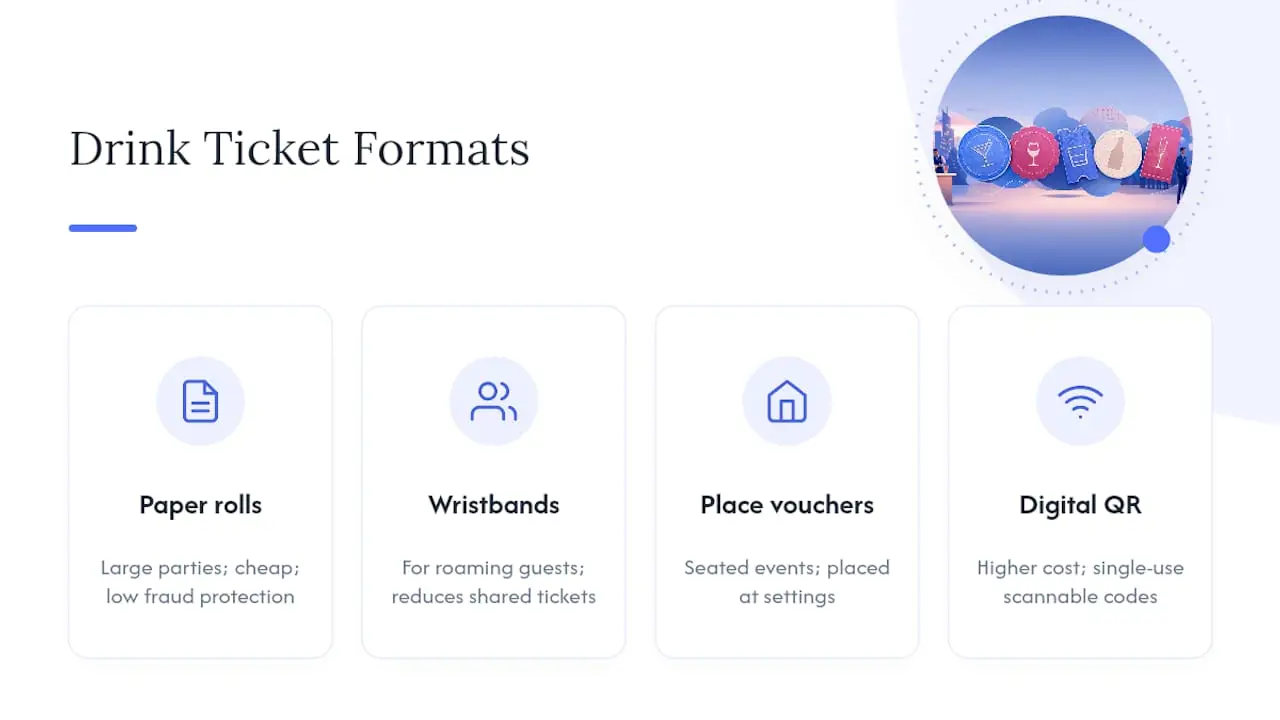
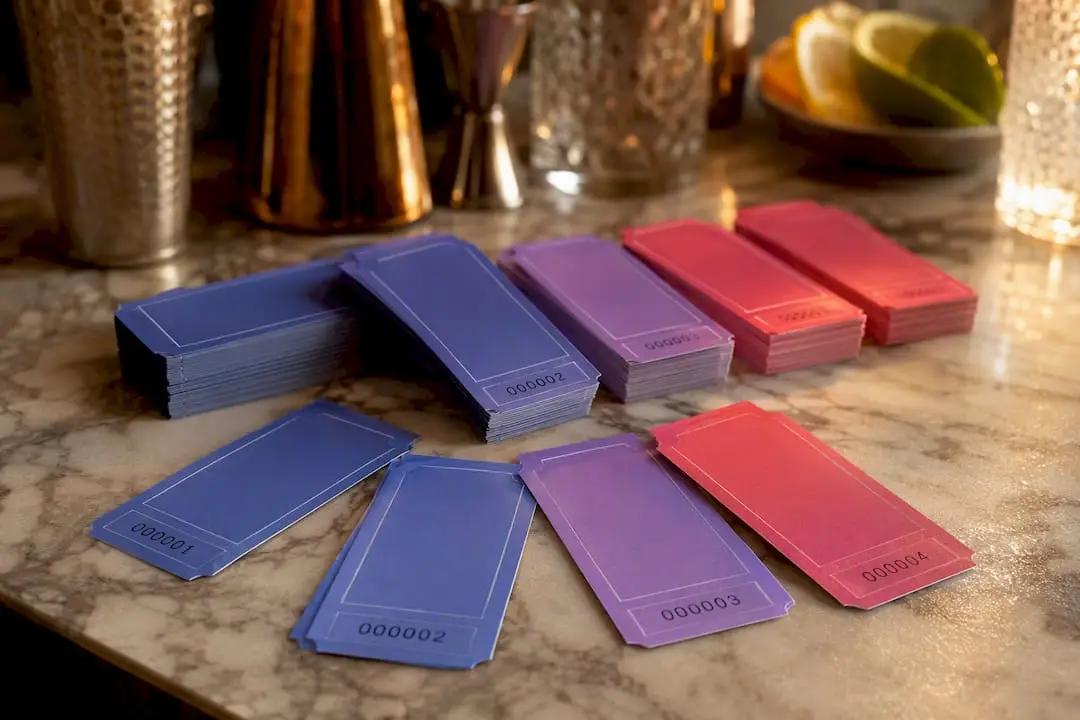
Paper rolls and sheets are the workhorse option for large parties. They’re cheap, fast to print, and easy to hand out at a door or table. Most vendors sell them in rolls of 500 to 1,000, consecutively numbered, which makes end of night counting simple.
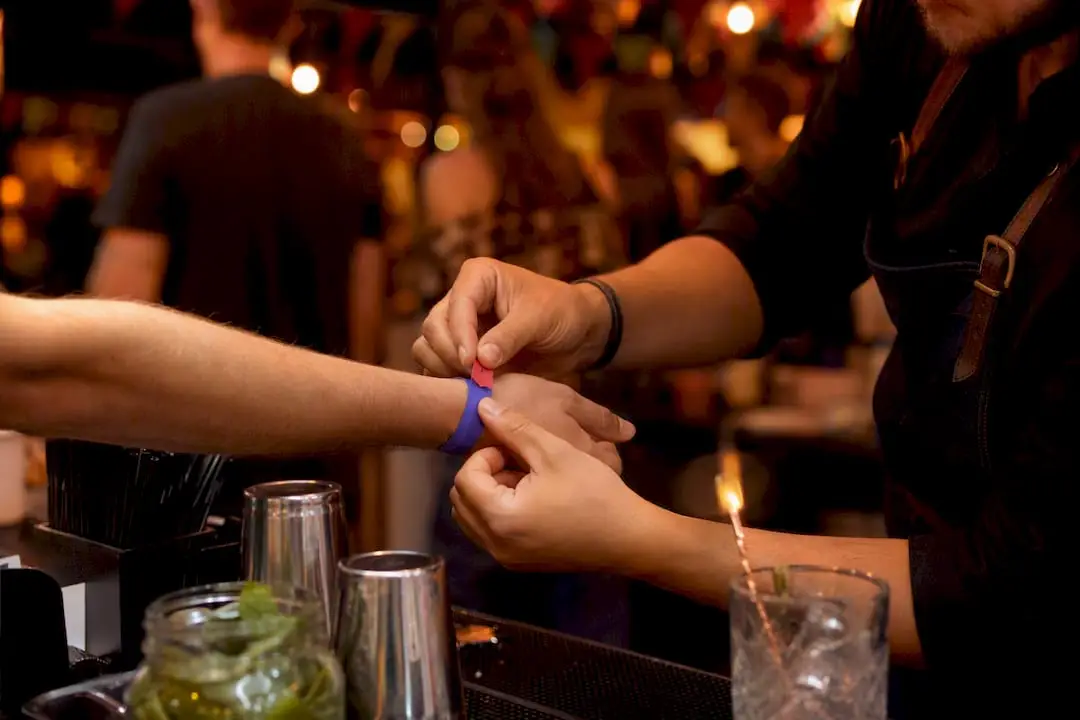
Wristband stubs work better for events where guests wander, festivals, multi room corporate mixers, block parties. Bartenders check a visual stub attached to the wristband instead of managing loose paper, which cuts down on lost or shared tickets.
Printed place setting vouchers suit seated events like weddings. They land on the table alongside the menu card, feel intentional rather than restrictive, and can be color coded or designed to match a wedding’s theme.
Digital or QR vouchers cost more and take more lead time, but they’re the only format that resists screenshot or photocopy fraud, since each code can be tied to a single guest and scanned once.
Pro Tip: Match the format to your venue’s movement pattern. A seated dinner wants place cards. A cocktail party with guests circulating wants wristbands or rolls, not table cards nobody sees again.
Why Use Drink Tickets Instead of an Open Bar?
Tickets solve a math problem hosts hate: not knowing what the bar tab will look like until the invoice arrives. Buying a fixed number of tickets locks in your maximum spend before the event starts.
They also move lines faster. Bartenders aren’t running cards or making change, they’re just collecting a stub and pouring. On a busy cocktail hour, that difference shows up as shorter waits.
There’s a safety upside too. A hard cap on drinks per guest naturally limits overconsumption, which matters for corporate events with liability concerns or family weddings with a wide age range.
The tradeoffs are real, though:
- Some guests read tickets as stingy, especially at a wedding where open bar is the cultural default
- Leftover tickets mean wasted spend if you overordered
- Someone has to manage distribution, counting, and reconciliation, which is extra logistics on an already busy night
How Many Drink Tickets Should You Give Guests?
Start with event length, not guest count. A shorter event needs fewer tickets per person; a long reception needs more, and you’ll want a buffer no matter what.
- Two hour cocktail hour or happy hour: two tickets per guest covers most drinking patterns without excess.
- Four to five hour reception or dinner: three to four tickets per guest is the standard range.
- Adjust for guest mix: a crowd skewing older or more sober curious will use fewer tickets than a 20s and 30s crowd; build in mocktail options so non drinkers still get something from their allotment.
- Add a buffer: industry guidance recommends ordering 5 to 10% more tickets than your estimate, since running out mid event is worse than a small surplus.
Worked example: 150 guests, four hour reception, three tickets each, $12 average cost per drink.
150 × 3 = 450 tickets. 450 × $12 = $5,400.
Distributing Drink Tickets Without Awkwardness
How you hand out tickets shapes how guests feel about the whole system. A stack of loose tickets at the door reads as transactional. A small envelope with a warm line of text reads as thoughtful.
Common distribution points:
- At the entrance or check-in table, alongside a program or seating card
- Tucked into place settings for seated dinners
- In a welcome envelope at hotel room drop for destination weddings
- In a VIP packet for sponsors or wedding party members who get extra tickets
A short line on the invite or table card does most of the work: “Enjoy two drinks on us, cash bar available after.” That framing turns a limit into a gift.
Match the ticket design to your event’s aesthetic. Kraft paper and script fonts for a rustic wedding, clean geometric print for a corporate mixer.
Pro Tip: Give the bar staff a few extra tickets to quietly hand to guests who clearly need one more, a toast, a best man’s speech, a nervous parent. Rigid enforcement creates more friction than it prevents.
Bar Staff Procedures for Redeeming Drink Tickets
A clean redemption process keeps lines moving and keeps your ticket count honest.
- Guest hands over one ticket per drink ordered; bartender checks ID if the drink is alcoholic and the guest looks under 30.
- Bartender places the redeemed ticket in a locked or sealed collection box, never a loose pile that can get recounted or reused.
- At intervals, a designated staffer counts collected tickets against the numbered range issued for that shift.
- At night’s end, total redeemed tickets get reconciled against total tickets ordered to confirm the count and catch shortages early.
Watch for these red flags:
- Torn or taped tickets, a common sign of an attempted reuse
- Tickets outside the numbered range issued for that event
- Guests presenting a photo of a ticket instead of the physical stub
Brief temporary staff before doors open: confirm the redemption rule (one ticket, one drink), the ID policy, and where the collection box lives. Five minutes of briefing avoids most disputes.
What to Ask Ticket Vendors for: Specs and Security
Standard drink tickets run about two inches square, sold in rolls of 500 to 1,000 with consecutive numbering and perforation for easy tearing at the bar.
Ask vendors for these security features when your event or ticket value justifies it:
- UV reactive ink patterns, visible only under blacklight, to deter photocopying
- Micro numbering that’s hard to reproduce at normal print resolution
- Barcode or QR serials for scan based redemption at larger events
Custom orders from print shops typically require minimums between 50 and 10,000 tickets with turnaround measured in days, not hours, so order early if you want branding or specific colors. For same week needs, retail value packs sold in bulk assortments cover last minute or budget conscious events, though they skip the customization and security add ons. Digital vouchers solve fraud risk entirely for high value events where a screenshot or forwarded photo of a paper ticket is a real threat.
How Professional Bartenders Run a Ticketed Bar
A professional bartending crew turns ticket logistics into something invisible to guests. They handle pacing, so the bar never backs up during a toast, they manage the collection box and count, and they flag when a ticket type is running low before it becomes a guest complaint.
Where this gets genuinely useful is in the planning stage; learning about the role of food in hospitality helps shape beverage workflows and guest experience. A cocktail calculator style tool helps hosts figure out pour counts and drink mix before printing a single ticket, so the ticket order actually matches what will get poured. Pairing that with an elevated mocktail menu means sober curious guests redeem tickets for something worth drinking instead of feeling like an afterthought.
- Pre-event: staff help estimate ticket counts against guest list and event length
- Mid-event: staff manage pacing and flag low stock in real time
- Post-event: staff reconcile redeemed tickets against the issued count
A ticketed bar only works as well as the person running it. The best systems fail in the hands of an untrained bartender who loses count by hour two, and the simplest paper roll system succeeds when the staff running it actually knows how to reconcile a stub count.
What Happens to Leftover Drink Tickets After the Event
Unused tickets are the most overlooked part of ticket planning, and hosts rarely think about them until the party’s over and there’s a stack sitting on the gift table.
For paper tickets you printed or bought outright, there’s usually no refund path. Print vendors sell in fixed roll or batch quantities, so a partially used roll is simply a sunk cost. That’s part of why the 10% buffer math matters: better to eat a small surplus than run short at hour three.
A few practical options for what’s left over:
- Collect and reuse. If your ticket rolls weren’t dated or branded to a specific event, unnumbered generic stock can carry over to a future party, assuming the design doesn’t reference the occasion.
- Offer them at the door on the way out. Some hosts let departing guests grab a leftover ticket to redeem at a nearby bar or for a to-go drink, turning surplus into a small parting gesture.
- Track the count for next time. The gap between tickets ordered and tickets redeemed is the single best data point for right sizing your next event. If 150 guests used 380 tickets against a 495 ticket order, that’s real intel for planning a similar sized party.
Digital vouchers behave differently. Unredeemed digital codes can often be voided or reissued since they’re tied to a system rather than physical stock, which is one more argument for going digital on higher value or recurring events. If you’re working with a vendor who issued serialized tickets, ask about their policy before the event, some allow exchanges on unopened bulk orders, most don’t. Building that question into your initial order conversation saves a frustrating call the week after.
Legal and Compliance Rules for Drink Ticket Programs
Drink Tickets and Alcohol Laws
- Drink tickets don’t exempt anyone from alcohol law.
- A ticket controls quantity and cost, it does not replace the ID check, the service refusal, or the liability that comes with serving alcohol at a private or corporate event.
State, Municipal, and Venue Requirements
- Every state and municipality sets its own rules around alcohol service, and many require a licensed server or a permit for events where alcohol is sold or provided, even indirectly through a ticket system.
- If your event is at a private residence with no ticket sale involved, requirements differ from a corporate event at a rented venue or a wedding where guests technically “pay” for tickets bundled into an entry fee.
- Check your venue’s own policy and your local Alcoholic Beverage Control agency before finalizing any ticket program, since venue insurance often hinges on compliant service.
Age Verification Requirements
- Age verification stays non negotiable regardless of ticket format.
- Bar staff need to check ID on any guest who appears under 30, ticket or no ticket, and a ticket should never be treated as proof of age.
- Build that check into your front of house procedure and brief every staffer, including temporary or day of hires, on the policy before doors open.
Liability and Ticket Limits
- Liability doesn’t disappear with a ticket cap either.
- Hosts serving alcohol, directly or through hired staff, can carry legal exposure if a guest is overserved and causes harm afterward, a concept many states address through dram shop or social host liability laws.
- A hard ticket limit helps reduce that risk by capping how much any one guest can consume, but it works best paired with trained staff who know when to stop serving a guest regardless of how many tickets they’re still holding.
Additional Considerations for Corporate Events
- Corporate events carry extra scrutiny since companies often have their own alcohol policies layered on top of local law, particularly around client entertainment or work related gatherings.
- Loop in HR or legal counsel early if you’re planning a ticketed bar for a company event, well before you order a single roll.
Tracking Drink Tickets With Event Software and Apps
1. Paper Tickets vs. Digital Tracking
– Paper tickets work fine for most events, but larger or recurring ones benefit from software that tracks issuance and redemption in real time instead of relying on an end of night manual count.
2. Digital and QR-Based Ticket Systems
Digital and QR based systems are the easiest to integrate with event management platforms, since each code can be logged, tied to a guest record, and marked redeemed the moment it’s scanned.
That gives hosts a live view of consumption instead of waiting until the bar closes to find out whether 200 tickets or 400 got used.
For events with a guest list already managed in an event planning app, syncing ticket allotments to that same guest record avoids the disconnect between who’s invited and how many drinks they’re entitled to.
3. Spreadsheet-Based Ticket Tracking
Even without dedicated software, a simple spreadsheet tracking tickets issued by batch number, tickets redeemed by hour, and remaining stock gives a planner most of the same visibility.
The point of any tracking system, digital or manual, is catching a shortage or an unusual redemption pattern before it becomes a mid event crisis rather than an end of night surprise.
4. Tracking for Corporate Events with Multiple Bars
For corporate events with multiple bars or stations, software based tracking becomes more valuable because it consolidates redemption data across locations into one dashboard instead of forcing staff to compare paper counts by hand at the end of the night.
That’s the point where the extra cost of a digital system starts paying for itself in reduced reconciliation headaches alone.
What I’ve Learned Running Ticketed Bars
Most ticket problems come from underordering, not overordering. Guests forgive a slightly generous surplus. They don’t forgive a bar that runs dry at hour three. Presentation matters more than people expect, too, a tasteful envelope beats a stack of loose paper every time.
Let The Cocktail Crew Handle Your Ticketed Bar
Running a ticket system well means someone has to count stock, brief staff, watch pacing, and reconcile numbers at 1 AM while you’re saying goodbye to guests. The Cocktail Crew removes that burden entirely by putting a licensed, experienced bartender behind the whole operation, not just pouring drinks but managing the redemption flow from first ticket to last call.
Every booking starts with a three-hour minimum, which fits a cocktail hour, a full reception, or a corporate happy hour without forcing you into an oversized package. Staff come ready to run ticket counts, pace consumption, and offer an elevated mocktail menu so sober curious guests get real options instead of soda water. If you’re weighing whether hiring pros makes sense for your event size, see how professional bartending changes the guest experience and check availability for your date.
Frequently Asked Question
What are drink tickets for events?
Drink tickets are vouchers guests exchange for eligible beverages at an event bar, helping organizers manage drink allowances and beverage costs.
How many drink tickets should you give each guest?
The number depends on the event duration, guest preferences, beverage options, and budget. Set a reasonable allowance based on your event needs.
How do you calculate a drink ticket budget?
Multiply the guest count by the tickets per guest and the estimated cost per drink. Include taxes, service fees, and staffing costs separately.
Are drink tickets better than an open bar?
Drink tickets can help control beverage spending, while an open bar offers guests more flexibility. The best option depends on your budget and event style.
What happens to unused drink tickets?
Unused tickets typically remain unredeemed. Refunds or credits depend on the event’s billing arrangement and the provider’s policy.
Sources
- What Are Drink Tickets? (Eventgroove)
- 2″ x 2″ Cheers Drink Roll Ticket — Admit One Products
- Good For One Drink Tickets — Walmart product page
Recommended
- How Many Drinks Per Person: Party Planning Guide
- Batch Cocktails for Parties: A Planner’s How-To
- Bartender Cost for Private Events: 2026 Guide
- What to Look for When Hiring a Bartender for a Private Party