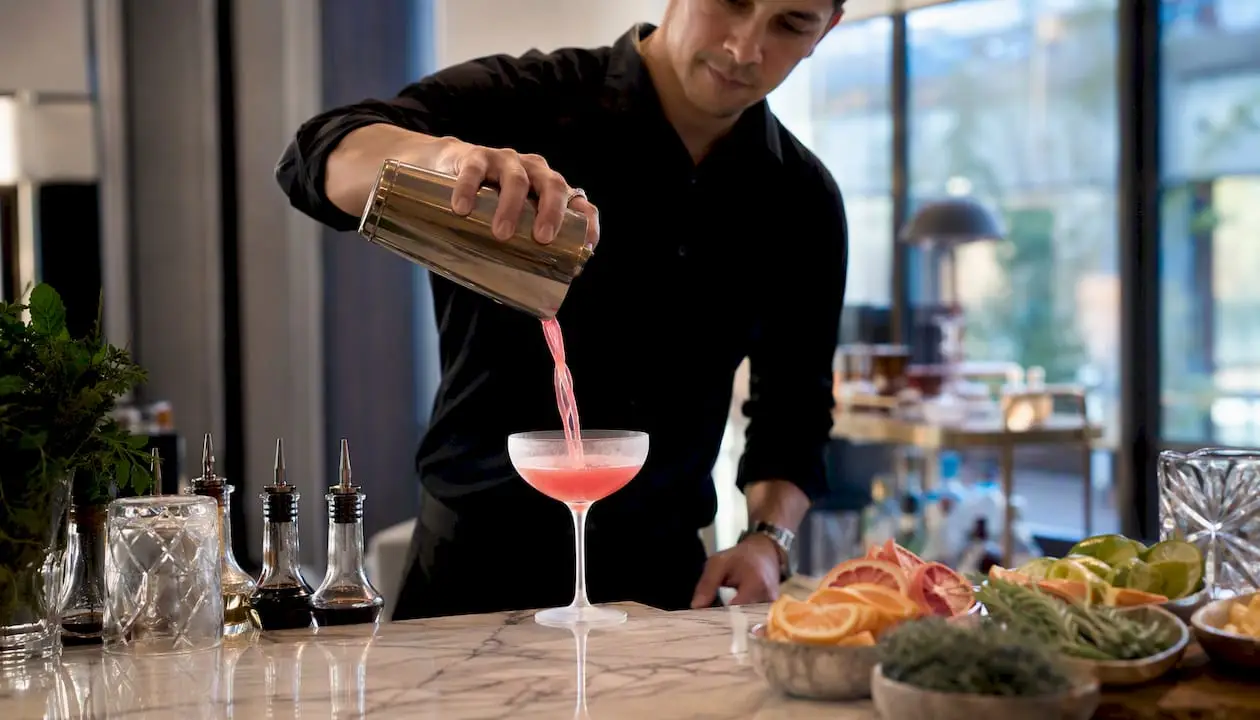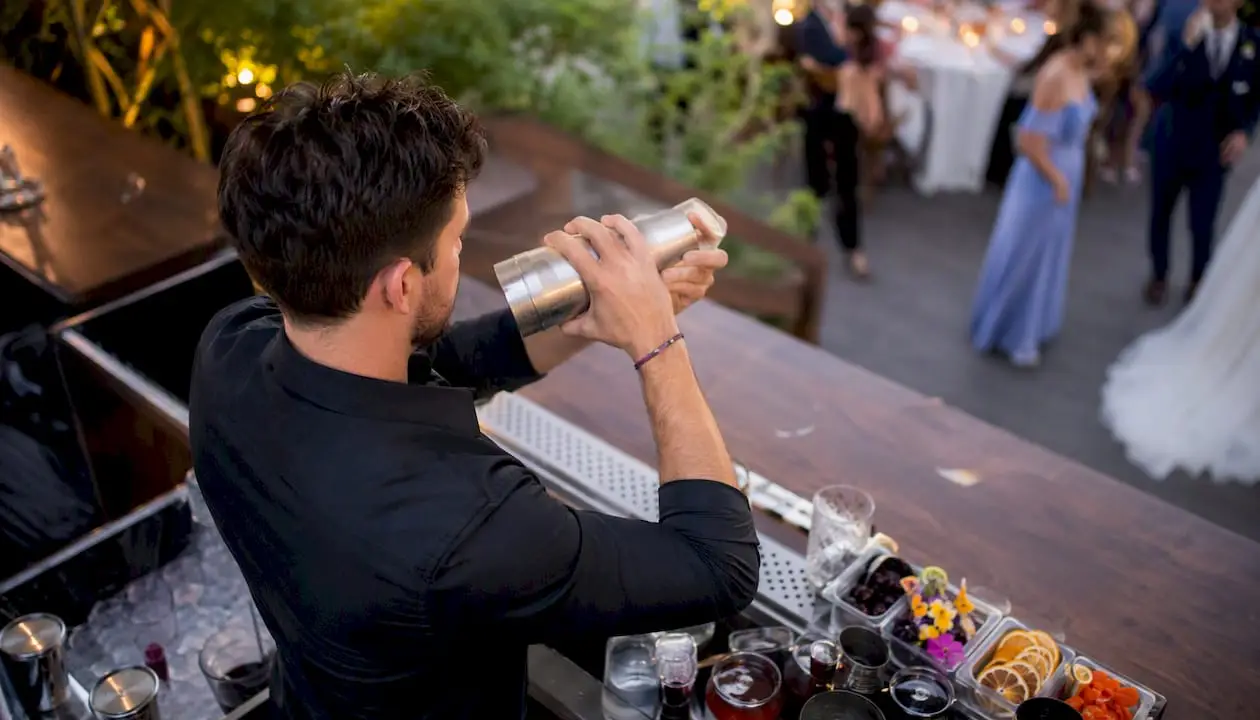
Serve a small selection of signature wedding cocktails. That’s the standard, and it holds up for almost every wedding size and budget. One drink makes a bold, cohesive statement. Two lets you do a “his and hers” split or cover both a light and a spirit-forward option. Three gives breadth without turning your bar into a full cocktail menu. The fastest way to pick: start with the season, then the couple’s favorite drink, then ask whether it can be batched.
Quick picks to get you started:
- Formal evening wedding: Champagne spritz with elderflower and a lemon twist
- Beach or outdoor summer wedding: Classic Mojito or a coconut-lime sparkling punch
- Spring garden wedding: Lavender lemonade with vodka or gin
- Fall barn or vineyard wedding: Apple cider bourbon smash with cinnamon
- Winter celebration: Spiced cranberry Bellini or a warm spiked cider
Key Takeaways
Serve one to three signature wedding cocktails, pick by season and the couple’s favorite drink, and always offer an elevated mocktail twin presented with the same glass and garnish.
| Point | Details |
|---|---|
| How many to serve | One to three signature cocktails; one is bold and cohesive, two covers “his and hers,” three suits large weddings. |
| How to pick | Filter by season first, then venue, then the couple’s favorite spirit; favor drinks that can be batched. |
| Mocktail parity | Every signature cocktail needs a zero-proof twin in the same glass with the same garnish and menu placement. |
| Batching saves service | Pre-batch the base 24 hours ahead; add carbonation only at service; stage garnishes separately. |
| Cocktail-crew | Cocktail-crew provides menu consultation, batch handling, mocktail parity, and staffing for weddings with flexible three-hour minimums. |
Table of Contents
- Why signature wedding cocktails are worth the effort
- How to pick the right signature cocktail for your wedding
- How many signature cocktails should you actually serve?
- Signature cocktail ideas grouped by style and season
- Big-batch cocktails and self-serve bar plans
- Elevated mocktails and zero-proof options
- Naming ideas and presentation tips
- Practical logistics: timeline, prep, staffing, and cost
- When to hire a pro and what to ask them
- Six signature cocktail recipes to hand to your bartender
- A bartender’s honest take on what actually matters
- Cocktail-crew makes the execution easy
- Sources
Why signature wedding cocktails are worth the effort
A signature cocktail does something a full open bar cannot: it tells guests something specific about the couple. That personalization is the main reason couples choose one, but it’s far from the only benefit.
- Cost control. A curated signature drink, paired with wine and beer, often costs less per head than a fully stocked open bar. You’re buying volume of a few ingredients rather than a full spirits inventory.
- Presentation. A single drink, styled with the right glass and garnish, photographs beautifully and gives guests a visual cue that the bar is intentional.
- Thematic cohesion. The drink can mirror the wedding’s color palette, season, or venue. A lavender gin fizz at a garden wedding feels designed. A random selection of well drinks does not.
- Guest experience. Arriving guests get a ready-made drink in hand before they’ve found their seat. That moment sets the tone for the whole reception.
- Reduced bar complexity. Fewer SKUs mean faster service, less waste, and a shorter setup list for your bartender.
Many couples use a signature cocktail as the centerpiece of a hybrid bar: one or two custom drinks plus wine, beer, and a non-alcoholic option. The Knot’s editorial guidance recommends keeping it to two or three signature options and pairing them with wine and beer to keep the bar manageable. That model gives guests real choice without the overhead of a full spirits bar.
How to pick the right signature cocktail for your wedding
Start with the couple’s favorite drink. If one of you orders an Aperol Spritz every time you sit down at a restaurant, that’s your answer. If neither of you has a strong preference, season and venue will get you there.
Step-by-step decision flow:
- Season first. Season and venue are the most reliable guides for welcome-drink choices. Summer calls for lemonade bases, coconut water, and light spritzers. Winter favors spiced Bellinis and warm cider. Spring leans into sparkling rosé and floral lemonades. Fall pairs naturally with apple cider and ginger.
- Venue second. A rooftop bar wedding can handle a spirit-forward Negroni. A beach ceremony needs something light, refreshing, and easy to hold in the sun. A formal ballroom supports a classic Champagne cocktail.
- Guest profile third. Older guests often prefer familiar spirits (bourbon, gin, vodka). Younger crowds tend to embrace lower-ABV and tropical options. A mixed crowd? Pick something crowd-neutral like a citrus vodka spritz.
- Dietary and allergy check. Flag any egg whites, nut liqueurs, or sulfite-heavy wines. Swap egg white for aquafaba in sours. Avoid nut-based liqueurs unless clearly labeled.
- Logistics last. Can this drink be batched? Does it require a blender or a specialty ingredient that’s hard to source in bulk? If the answer to either is “yes, and it’s complicated,” simplify the recipe before you commit.
Pro Tip: When working with a hired bartender, favor drinks that can be pre-batched or have no more than four ingredients. A five-ingredient cocktail that requires individual shaking for 150 guests creates a queue. A batched punch or a two-step build (pour over ice, top with sparkling) keeps service moving.
How many signature cocktails should you actually serve?
One is often sufficient. Two is common for larger weddings or couples with different tastes. Three is usually the maximum before the bar starts feeling like a full cocktail menu rather than a wedding.
| Number | Best for | Trade-off |
|---|---|---|
| 1 | Intimate weddings, strong theme, tight budget | Bold and cohesive, but no variety for guests who dislike that spirit |
| 2 | “His and hers,” mixed guest preferences, 100+ guests | Covers more palates; slightly more prep and staffing |
| 3 | Large weddings (150+), multi-course receptions | Maximum breadth, but risks bar congestion and higher ingredient cost |
For guest count, a rough rule: one bartender per 50 guests handles a signature drink plus wine and beer service comfortably. Add a second bartender if you’re running two or more signature cocktails simultaneously, or if your venue has a single bar station. Offering just one signature cocktail at a 100-person wedding with one bartender is very manageable. Add a second drink and you’ve effectively doubled the build time per order unless one of them is pre-batched.
Signature cocktail ideas grouped by style and season
These are organized by category so you can scan for what fits your venue, palette, and season. Each entry includes the core ingredients and a best-for label. For a deeper look at what’s trending right now, current wedding cocktail trends cover low-ABV, floral, and zero-proof directions gaining traction.
Bubbles and sparkling
| Cocktail | Core ingredients | Best for |
|---|---|---|
| Elderflower Champagne Spritz | Champagne, elderflower liqueur, lemon twist | Formal evening, spring/summer |
| Spiced Cranberry Bellini | Prosecco, cranberry purée, cinnamon syrup | Winter, holiday weddings |
| Rosé Aperol Spritz | Rosé, Aperol, soda, orange slice | Summer, outdoor garden |
| Lavender French 75 | Gin, lavender syrup, lemon juice, Champagne | Spring garden, daytime |
| Peach Bellini | Prosecco, peach purée, fresh mint | Summer brunch wedding |
Citrus and spritzes
| Cocktail | Core ingredients | Best for |
|---|---|---|
| Grapefruit Paloma | Tequila, grapefruit juice, lime, soda | Summer, outdoor, casual |
| Lemon Vodka Spritz | Vodka, lemon juice, simple syrup, soda | All-season crowd-pleaser |
| Blood Orange Margarita | Tequila, blood orange juice, triple sec, lime | Fall/winter, colorful theme |
| Limoncello Spritz | Limoncello, Prosecco, soda, basil | Italian-inspired, summer |
Tropical and beach
| Cocktail | Core ingredients | Best for |
|---|---|---|
| Classic Mojito | White rum, lime, mint, sugar, soda | Beach, outdoor summer |
| Coconut Lime Punch | Coconut rum, lime juice, pineapple, soda | Tropical, destination wedding |
| Mango Mint Mojito | White rum, mango purée, mint, lime, soda | Spring/summer, garden |
| Pineapple Mezcal Smash | Mezcal, pineapple juice, jalapeño, lime | Outdoor, adventurous couple |
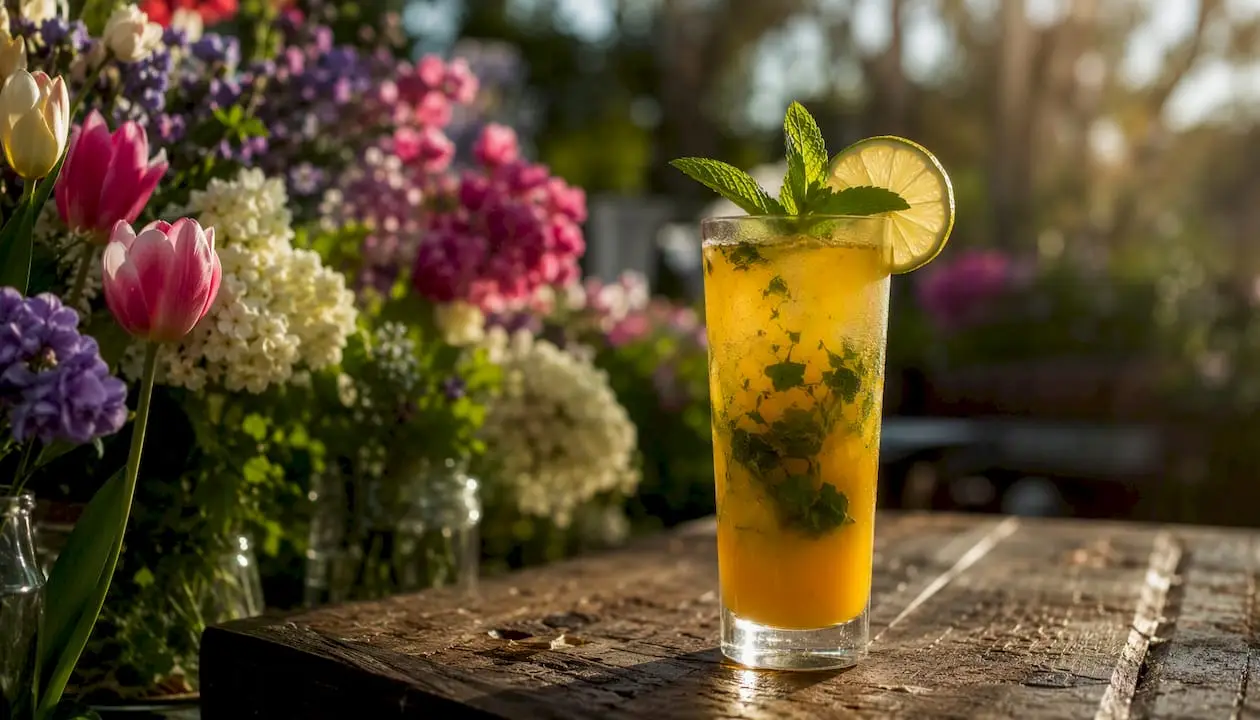
The Mango Mint Mojito is a particularly strong choice for spring and early summer: it batches cleanly and the color photographs well against floral arrangements.
Whiskey and cozy
| Cocktail | Core ingredients | Best for |
|---|---|---|
| Apple Cider Bourbon Smash | Bourbon, apple cider, lemon, cinnamon | Fall, barn, vineyard |
| Honey Whiskey Sour | Bourbon, lemon juice, honey syrup, egg white | Year-round, spirit-forward crowd |
| Smoked Old Fashioned | Bourbon, smoked simple syrup, bitters, orange | Winter, formal, intimate |
| Maple Manhattan | Rye whiskey, maple syrup, sweet vermouth, bitters | Fall/winter, upscale venue |
Garden and floral
| Cocktail | Core ingredients | Best for |
|---|---|---|
| Lavender Lemon Drop | Vodka, lavender syrup, lemon juice, sugar rim | Spring garden, daytime |
| Rose Gin Fizz | Gin, rose syrup, lemon juice, egg white, soda | Garden, romantic theme |
| Cucumber Basil Gimlet | Gin, cucumber juice, basil, lime | Summer, outdoor, herb garden |
| Hibiscus Margarita | Tequila, hibiscus syrup, lime, salt rim | Colorful, tropical, summer |
Low-ABV and refreshing
| Cocktail | Core ingredients | Best for |
|---|---|---|
| Aperol Spritz | Aperol, Prosecco, soda, orange | All-season, mixed crowd |
| Elderflower Lemonade Spritz | St-Germain, lemon juice, soda | Daytime, garden, spring |
| White Wine Sangria | White wine, peach, mint, soda | Summer, outdoor, large groups |
| Ginger Beer Mule (low-ABV) | Light vodka, ginger beer, lime | All-season, casual venue |
Dessert and coffee-based
| Cocktail | Core ingredients | Best for |
|---|---|---|
| Espresso Martini | Vodka, espresso, coffee liqueur, simple syrup | Evening reception, late-night bar |
| Salted Caramel White Russian | Vodka, coffee liqueur, cream, caramel | Winter, dessert hour |
| Tiramisu Cocktail | Amaretto, espresso, cream, cocoa rim | Italian-themed, winter |
Big-batch cocktails and self-serve bar plans
Batching saves time and staff when planned properly. A pre-batched punch or pitcher cocktail means your bartender is pouring and garnishing rather than building each drink from scratch, which cuts service time dramatically during cocktail hour.
Three batch recipes worth knowing:
-
Citrus Vodka Punch (serves 25)
Combine 750ml vodka, 2 cups fresh lemon juice, 1 cup simple syrup, and 2 cups cold water in a large pitcher or drink dispenser. Stir well and refrigerate. Add 1 liter of soda water just before serving. Garnish station: lemon wheels, fresh mint. Shelf life: base holds 24 hours refrigerated; add soda only at service. -
Sparkling Rosé Sangria (serves 30)
Combine two 750ml bottles of dry rosé, 1 cup peach schnapps, 2 cups white grape juice, and sliced peaches and strawberries. Refrigerate overnight. Add one 750ml bottle of Prosecco at service. Shelf life: 24 hours once fruit is added; do not add sparkling until service. -
Apple Cider Bourbon Punch (serves 20)
Combine 750ml bourbon, 4 cups apple cider, ½ cup lemon juice, and ¼ cup honey syrup. Chill. Top each glass with a splash of ginger beer at service. Garnish with a cinnamon stick and apple slice. Shelf life: base holds 48 hours refrigerated; add ginger beer per glass.
For detailed batch ratios and yield planning, batch cocktails for parties covers the math for scaling from 20 to 200 guests.
Batching checklist:
- Chill the base mixture at least four hours before service, ideally overnight
- Never add carbonated mixers (soda, Prosecco, ginger beer) to the batch; add them per glass or at the last moment
- Account for dilution: batched cocktails skip the shaking/stirring step, so add 15–20% water by volume to replicate it
- Stage garnishes in small prep bowls at the station, not floating in the batch
- Label every container clearly with the drink name and whether it contains alcohol
Self-serve station tips:
- Use a drink dispenser with a spigot rather than a pitcher; it reduces spills and looks cleaner
- Post a small card at the station listing ingredients and allergens
- Keep a dedicated ice bucket at the station with tongs; never let guests reach into a shared ice bin
- Set a sampling control: a small “taste cup” option reduces waste and helps guests commit before filling a full glass
- Assign one staff member to monitor the station during peak cocktail hour, even if it’s self-serve
Elevated mocktails and zero-proof options
Every signature cocktail should have an elevated mocktail twin, presented the same way. Same glass, same garnish, same menu placement. Anything less signals that the non-drinking guests are an afterthought, and that’s a guest-experience miss that’s easy to avoid.
Industry guidance is clear on this: offer alcohol-free options that are equally presented alongside every signature cocktail so all guests feel included and the bar looks intentional. For a full breakdown of mocktail presentation and service, mocktail bar ideas covers setup, glassware, and menu copy.
Mocktail ideas with ingredient cues:
- Sparkling Lavender Lemonade: Lavender syrup, fresh lemon juice, soda water, edible flower garnish. Welcome drink, spring/summer.
- Virgin Mojito: Lime juice, mint, sugar, soda water, lime wheel. Welcome drink, beach/outdoor.
- Cucumber Mint Cooler: Cucumber juice, mint syrup, lime, soda. Reception, garden wedding.
- Spiced Apple Fizz: Apple cider, cinnamon syrup, ginger beer, apple slice. Fall/winter, welcome drink.
- Hibiscus Agua Fresca: Hibiscus tea, lime juice, agave, soda. Tropical, colorful theme.
- Peach Basil Spritz: Peach purée, basil syrup, white grape juice, soda. Summer, dessert hour.
- Espresso Tonic (zero-proof): Cold brew concentrate, tonic water, orange peel. Late-night bar, evening reception.
For zero-proof spirits, brands like Seedlip, Ritual Zero Proof, and Monday Gin offer convincing botanical bases that hold up in shaken or stirred builds. They cost more per bottle than a standard mixer, but they let you build a genuinely complex mocktail rather than a juice-and-soda afterthought.
Pro Tip: Match the mocktail garnish to the alcoholic version exactly. If the signature gin fizz gets a sprig of rosemary and a lemon wheel, the mocktail gets the same. Guests notice when the non-alcoholic drink looks like it was assembled as an afterthought. For more on mocktail presentation and bartender technique, the details are in the garnish and the glass.
Naming ideas and presentation tips
The name is the first thing guests read on a menu card, and it does real work. A good signature cocktail name is short (two to four words), easy to say aloud, and means something to the couple. “The Malibu Sunset” works if you got engaged in Malibu. “The Golden Hour” works if your wedding is at dusk. “The Biscuit” works if your dog is named Biscuit and your guests will get it.
Naming conventions lean into personal storytelling: references to pets, first-date locations, hobbies, and puns are the most common approaches. Real-wedding examples show couples frequently choose drinks inspired by places and memories, with signage and matching glassware amplifying the effect.
Naming strategies and examples:
- Pet names: The Biscuit, The Mochi, The Copper (for a red dog)
- Location references: The Napa Nuptial, The Brooklyn Fizz, The Charleston Sip
- Date or anniversary: The June 14th, The Leap Year
- First-date reference: The Rooftop Rendezvous, The Corner Booth
- Color-based: The Blush Hour, The Golden Fizz, The Midnight Blue
- Pun-forward: Tying the Rye, Mint to Be, Sip Happens, Love on the Rocks
- Shared hobby: The Trail Mix (hiking couple), The Curtain Call (theater lovers)
- His and hers split: The Groom’s Punch / The Bride’s Garden, His Old Fashioned / Her French 75
Presentation checklist:
- Glassware: Match the glass to the drink’s personality. Coupes for sparkling and floral. Highballs for tropical and citrus. Rocks glasses for spirit-forward. Copper mugs for mules.
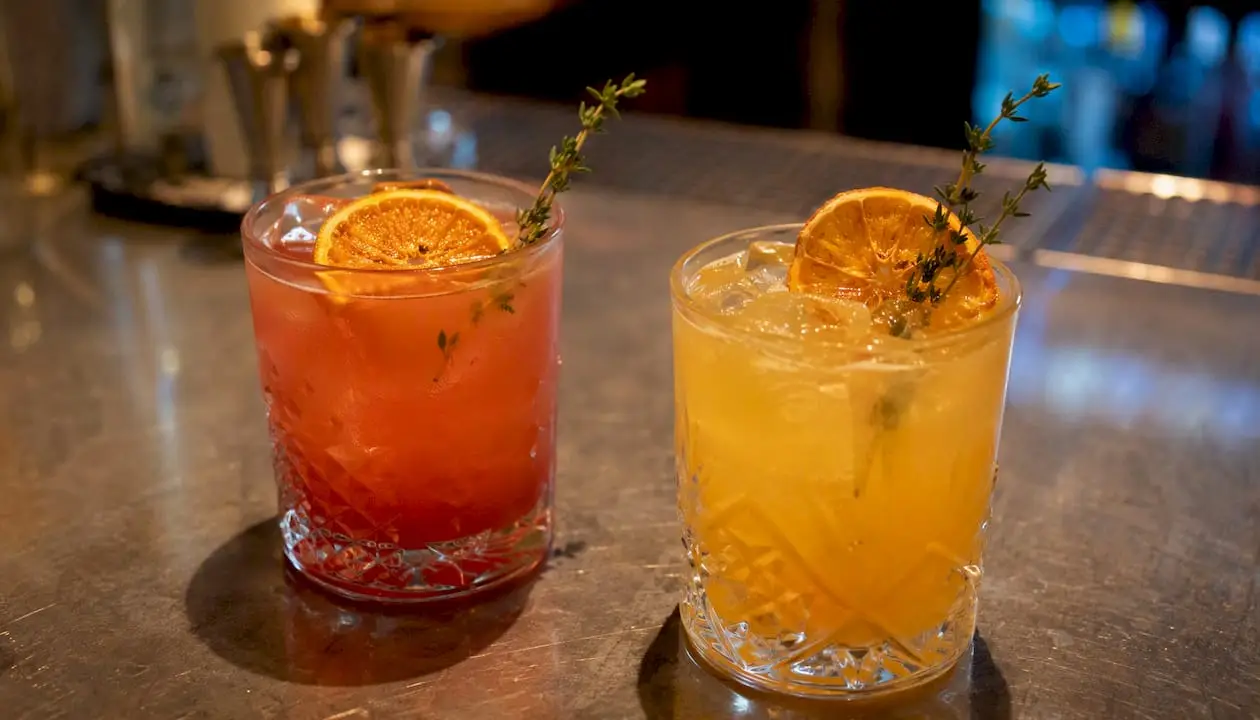
- Garnish: One or two elements maximum. A garnish that echoes the wedding florals (a sprig of rosemary, an edible flower, a dried citrus wheel) ties the drink to the event design.
- Signage: A small card or chalkboard sign with the drink name, a one-line description, and the ingredient list. Include allergen callouts in small text below.
- Color coordination: If your wedding palette is dusty rose and sage, a hibiscus-pink drink in a coupe with a sage sprig is a deliberate design choice, not an accident.
- Menu placement: List the signature cocktail at the top of the bar menu, above wine and beer. It’s the hero item; treat it that way.
Presentation details like edible flowers, custom stirrers, and monogrammed glassware are frequently what elevate a signature drink from “a cocktail at a wedding” to a moment guests photograph and remember.
Pro Tip: A garnish that shares an aromatic compound with the base spirit amplifies perceived flavor without changing the recipe. Rosemary with gin, orange peel with bourbon, mint with rum. Your bartender can match garnish to aroma to make the drink taste more complex than it is.
Practical logistics: timeline, prep, staffing, and cost
Plan the recipe six to eight weeks out. Order specialty ingredients two to four weeks out. Do a tasting one to two weeks before the wedding. That’s the minimum viable timeline for a signature cocktail that actually works on the day.
| Timeline | Task |
|---|---|
| 6–8 weeks before | Finalize recipe, confirm with bartender, order specialty spirits or syrups |
| 4–6 weeks before | Test batch recipe at home or with bartender; adjust ratios |
| 2–4 weeks before | Order all ingredients in bulk; confirm glassware and garnish plan |
| 1 week before | Prep any infused syrups, shrubs, or infusions; confirm staffing count |
| Day before | Batch base cocktail; chill; prep garnish station |
| Day of | Add carbonation at service; set up signage; brief bartender on pour volume |
Staffing rule of thumb: one bartender per 50 guests for a signature drink plus wine and beer. If you’re running two signature cocktails, or your venue has a single bar point, add one bartender per 75 additional guests. A second bartender at a 150-person wedding is not a luxury; it’s the difference between a 2-minute wait and a 10-minute queue at cocktail hour.
Cost considerations:
- A batched cocktail using mid-shelf spirits typically runs $3–$6 per serving in ingredient cost, depending on garnish and glassware.
- Premium spirits, fresh-squeezed juice, and specialty garnishes (edible flowers, custom stirrers) push that figure higher.
- Renting specialty glassware (coupes, copper mugs) adds cost but significantly improves presentation.
- Buying spirits in 1.75L bottles rather than 750ml cuts per-ounce cost by roughly 20–25%.
Pro Tip: Ask your bartender for a cocktail calculator or shopping list tool before you buy anything. Overbuying spirits is one of the most common and avoidable budget mistakes at weddings.
When to hire a pro and what to ask them
Hire a professional bartender when you want consistent quality, speed, and elevated presentation without managing it yourself. A pro handles batching, pacing, and guest interaction simultaneously. That’s not something a well-meaning friend behind a folding table can replicate at scale.
Questions to ask before booking:
- Do you have experience bartending at weddings specifically?
- Can you provide a sample signature cocktail menu or suggest options based on our theme?
- Are you licensed and insured for private events in this state?
- What is your minimum service time, and what does it include?
- Can you batch our signature cocktail in advance, and do you handle the shopping?
- Do you offer mocktail parity, and will the non-alcoholic options be presented the same way?
- What is your staffing plan for our guest count?
- Can you provide a run sheet for the bar timeline?
Red flags to watch for:
- No sample menu or unwillingness to discuss recipe options before booking
- Vague or verbal-only pricing with no written contract
- No proof of liability insurance or licensing
- Mocktails treated as an afterthought (“we can do juice and soda”)
- Inability to describe a batching plan for your guest count
A professional bartender typically includes setup, breakdown, ice, and basic garnishes in their rate. What they deliver beyond the drink itself is a service experience that keeps guests engaged and the bar moving. For a clear picture of what separates a skilled event bartender from a general hire, what makes a great event bartender breaks down the specific skills that matter at weddings.
Six signature cocktail recipes to hand to your bartender
These are tested, bartender-friendly recipes built for easy scaling. Each one includes a zero-proof swap note.
1. Lavender Lemon Drop
Best for: spring/summer garden weddings, daytime receptions
- 2 oz vodka
- ¾ oz lavender simple syrup
- ¾ oz fresh lemon juice
- Sugar rim, edible flower garnish
Prep: Shake with ice, strain into a chilled coupe. Sugar the rim before pouring.
Zero-proof swap: Replace vodka with Seedlip Spice 94 or sparkling water.
Batch note: Combine vodka, lavender syrup, and lemon juice in a 3:1.5:1.5 ratio. Refrigerate. Shake individual portions over ice at service.
2. Apple Cider Bourbon Smash
Best for: fall barn weddings, vineyard receptions
- 2 oz bourbon
- 1 oz fresh apple cider
- ½ oz lemon juice
- ¼ oz honey syrup
- Ginger beer splash, cinnamon stick garnish
Prep: Shake bourbon, cider, lemon, and honey with ice. Strain into a rocks glass over a large ice cube. Top with ginger beer.
Zero-proof swap: Replace bourbon with Monday Whiskey (zero-proof) or omit and double the cider.
3. Sparkling Rosé Sangria (batch, serves 30)
Best for: summer outdoor weddings, brunch receptions
- 2 bottles dry rosé (750ml each)
- 1 cup peach schnapps
- 2 cups white grape juice
- 2 cups sliced peaches and strawberries
- 1 bottle Prosecco (add at service)
Prep: Combine rosé, schnapps, grape juice, and fruit in a large container. Refrigerate overnight. Pour Prosecco in at service. Ladle into wine glasses over ice.
Zero-proof swap: Replace rosé and schnapps with sparkling white grape juice and a splash of peach nectar.
Yield: Approximately 30 servings at 5 oz each.
4. Coconut Lime Punch
Best for: beach weddings, tropical destination receptions
- 1½ oz coconut rum
- 1 oz fresh lime juice
- 2 oz pineapple juice
- Soda water to top
- Lime wheel and toasted coconut rim
Prep: Shake rum, lime, and pineapple with ice. Strain into a highball glass. Top with soda.
Zero-proof swap: Replace coconut rum with coconut water and a splash of coconut extract.
5. Espresso Martini
Best for: evening receptions, late-night bar service
- 2 oz vodka
- 1 oz fresh espresso (cooled)
- ½ oz coffee liqueur (Kahlúa)
- ¼ oz simple syrup
- Three espresso beans garnish
Prep: Shake hard with ice for 15 seconds (the foam depends on it). Double-strain into a chilled coupe.
Zero-proof swap: Replace vodka with Ritual Zero Proof Tequila Alternative and omit coffee liqueur; use cold brew concentrate instead.
Allergy note: Contains coffee; flag for caffeine-sensitive guests.
6. Cucumber Basil Gimlet
Best for: summer garden weddings, herb-forward themes
- 2 oz gin
- ¾ oz fresh lime juice
- ½ oz simple syrup
- 4 cucumber slices, 3 basil leaves (muddled)
- Cucumber ribbon garnish
Prep: Muddle cucumber and basil in a shaker. Add gin, lime, and syrup. Shake with ice, double-strain into a coupe.
Zero-proof swap: Replace gin with Seedlip Garden 108.
Batch note: Muddle cucumber and basil in bulk, strain the juice, and combine with gin, lime, and syrup in a 2:0.75:0.5 ratio. Refrigerate up to 24 hours.
A bartender’s honest take on what actually matters
The couples who end up happiest with their bar aren’t the ones who spent the most on premium spirits. They’re the ones who made one decision early: pick a drink that can be batched, and let the bartender focus on presentation and pacing instead of building every cocktail from scratch. Timing is everything at cocktail hour. A queue at the bar during the first 20 minutes of a reception sets a tone that’s hard to recover from. The fix is almost always batching the base and staging garnishes in advance, not adding more staff. Presentation matters just as much as flavor. A drink that arrives in the right glass with a single intentional garnish reads as a premium experience even when the ingredients cost $4. And mocktail parity isn’t optional anymore. Guests who don’t drink notice immediately when their option is an afterthought, and they remember it. Give the zero-proof drink the same glass, the same garnish, and the same name on the menu card.
Cocktail-crew makes the execution easy
Planning the perfect signature cocktail is one thing. Executing it for 100 guests during a 45-minute cocktail hour is another. Cocktail-crew’s professional wedding bartending service handles the gap between the two, with flexible three-hour minimums that fit weddings of almost any size.
What you get when you book Cocktail-crew for your wedding bar:
- Menu consultation: Bartenders help you choose and refine your signature cocktail based on season, venue, and guest count
- Batch handling: The team preps and chills the base cocktail before guests arrive, so service is fast from the first pour
- Mocktail parity: Every alcoholic signature comes with an elevated zero-proof twin, presented identically
- Staffing plan: Cocktail-crew matches bartender count to your guest list so queues stay short
- Presentation: Glassware, garnish staging, and signage are part of the service, not an add-on
Ready to lock in your signature drink and hand the execution to a pro? Request a sample wedding menu or get a quote and a Cocktail-crew bartender will follow up with options tailored to your date and venue.
Sources
- Your ultimate signature cocktail finder
- 21 Signature Wedding Cocktail Recipes
- Welcome drink ideas for weddings
- His and Hers Cocktails: Real Weddings
- 25 Creative Signature Cocktails for Any Wedding