Table of Contents
- What are the best his and hers cocktail pairings for a wedding?
- How do you choose the right cocktails for your wedding?
- How many drinks should you plan and when should you batch?
- How do you make your signature drinks look great at the bar?
- How do you include guests who don’t drink?
- Five recipe pairs with batch scaling notes
- Should you add an “Ours” shared drink to the bar?
- Why simple choices and a skilled bartender make the biggest difference
- Cocktail-crew makes your signature drinks stress-free
- Sources
His and hers cocktails are two signature drinks chosen to reflect a couple’s individual tastes, shared memories, or wedding theme. Couples often select complementary options, such as a bold, spirit-forward cocktail paired with a light, citrusy or sparkling drink, to offer guests a variety of flavors. When choosing his and hers wedding cocktails, consider your favorite ingredients, the season, the venue, and how easily each drink can be prepared for your guests. You can also personalize the cocktail names and presentation to make the drinks more meaningful. The “his and hers” labels are simply a way to introduce the pair; any guest can order either cocktail.
Three things to lock in before you talk to a bartender:
- Choose your pair from the shortlist below, prioritizing flavor contrast over gender convention.
- Decide batch vs. single-serve: batch the simpler drink for speed; shake the showier one to order.
- Brief your bartender with exact measurements, garnish specs, and a name for each drink that guests can actually remember.
Pro Tip: Write both drink names on a single card with a one-line flavor description. Guests who can read “smoky bourbon, honey, lemon” will order confidently without asking the bartender to explain the menu.
Key Takeaways
The most effective his-and-hers cocktail setup pairs one spirit-forward drink with one bright or sparkling option, batches the simpler recipe 24–48 hours ahead, and names both drinks with a story guests can remember.
| Point | Details |
|---|---|
| Choose by contrast | Pair one spirit-forward drink with one bright, sparkling, or citrus-driven cocktail for the best guest experience. |
| Batch the simpler drink | Prepare the base 24–48 hours ahead; add carbonation the day of the event to preserve fizz. |
| Plan quantities carefully | Budget roughly one drink per guest per hour for the first two hours, then 0.75 per hour after that. |
| Name drinks with a story | Names tied to a place or memory photograph better and are easier for guests to order and remember. |
| Cocktail-crew handles execution | Cocktail-crew’s professional bartenders arrive prepped to run your his-and-hers bar, with batching, mocktails, and a cocktail calculator included. |
What are the best his and hers cocktail pairings for a wedding?
The twelve pairs below cover every spirit base, season, and crowd size. Each pair is built around contrast: one drink is spirit-forward or stirred, the other is bright, sparkling, or citrus-driven. All ten must-feature cocktails appear across the list.
Pro Tip: Pair by flavor contrast, not by who “should” drink what. A smoky mezcal Old Fashioned next to a floral French 75 is a better pairing than two sweet drinks — and mixologists agree that flavor variety is what makes guests comfortable crossing over.
12 His and Hers Cocktail Pairing Ideas
Quick flavor notes by pair:
- Pair 1: Caramel-bitter bourbon meets crisp, lemony champagne. The most photogenic contrast on a bar.
- Pair 2: Silky citrus whiskey alongside the bittersweet orange fizz that wedding roundups consistently rank as a crowd-pleaser.
- Pair 3: Bitter-herbal Negroni next to a delicate champagne cocktail with a sugar cube and bitters. A winter wedding’s best pairing.
- Pair 4: Smoky, spicy mezcal Margarita beside a clean vodka soda lifted with elderflower liqueur. Works at any outdoor summer wedding.
- Pair 5: Heat from jalapeño tequila, then the gentle sweetness of a mimosa. Great for brunch receptions.
- Pair 6: The copper-mug Moscow Mule and the espresso martini station are the two most-requested pairings at late-night receptions.
- Pair 7: Muddled bourbon with mint and lemon, next to a lavender-honey gin fizz. Both batch beautifully.
- Pair 8: Spiced rye Manhattan versus a light, floral elderflower spritz. Ideal for fall or winter indoor venues.
- Pair 9: Ginger-dark rum against a grapefruit-tequila Paloma. Both are easy to batch for a beach or outdoor event.
- Pair 10: The classic Margarita and a fruit-forward rosé sangria cover every guest preference at a summer outdoor wedding.
- Pair 11: Mezcal Negroni’s smoke and bitterness against a sweet peach Bellini. A fall reception standout.
- Pair 12: The espresso martini as the bold pick, a citrus vodka soda as the refreshing counterpart. Both are vodka-based, so one spirit order covers the bar.
How do you choose the right cocktails for your wedding?
Six criteria narrow the list fast. Work through them in order and you will land on your pair before the end of the conversation.
1. Season and Temperature
Season and temperature come first. A Negroni or Old Fashioned reads as warm and cozy at a December indoor reception. A Paloma or Aperol Spritz wilts in a winter ballroom but shines at a July garden party. Match the drink’s weight to the weather.
2. Venue Logistics
Venue logistics matter more than most couples expect. An outdoor tent with no power rules out blended drinks. A small venue with one bartender rules out anything that requires more than three steps to build. Ask your venue coordinator whether the bar has a sink, a speed rail, and refrigeration before you commit to a recipe.
3. Guest Profile
Guest profile shapes the menu more than personal preference. A crowd of mostly beer drinkers will appreciate a Whiskey Sour or a Moscow Mule over a Negroni. A cocktail-forward crowd can handle a Mezcal Margarita or an Espresso Martini. When in doubt, one crowd-pleaser and one adventurous pick is the safest split.
4. Staffing and Skill Level
Staffing and skill level determine what is actually executable. A single bartender serving 100 guests cannot shake every drink to order. Batch the simpler cocktail; reserve the shaken or built drink for single-serve. Two bartenders at a 150-person wedding can handle both signature drinks plus beer and wine without a line.
5. Budget Per Drink
Budget per drink is often the deciding factor. Champagne-based cocktails like the French 75 or Mimosa cost more per serving than a vodka soda or a batched punch. If the budget is tight, choose one premium signature and one batchable crowd-pleaser.
6. Story and Personal Meaning
Story and personal meaning are what make the drinks worth naming. Signature drinks work best when they reference something real: the bar where you met, the city where you got engaged, a flavor one of you grew up with. That story goes on the sign, and guests remember it.
Pro Tip
– Ask your bartender two specific questions before finalizing: “Can you batch this recipe for our guest count?” and “How many staff do you need to execute both signature drinks plus a beer and wine bar without a line?” The answers will tell you whether your pair is realistic.
How many drinks should you plan and when should you batch?
A standard planning rule for a full-bar wedding is one drink per guest per hour for the first two hours, then roughly 0.75 drinks per guest per hour after that. For a 100-person, four-hour reception, that is roughly 350 drinks total across all options. How many drinks per person you need depends on whether signature cocktails are the only option or one of several.
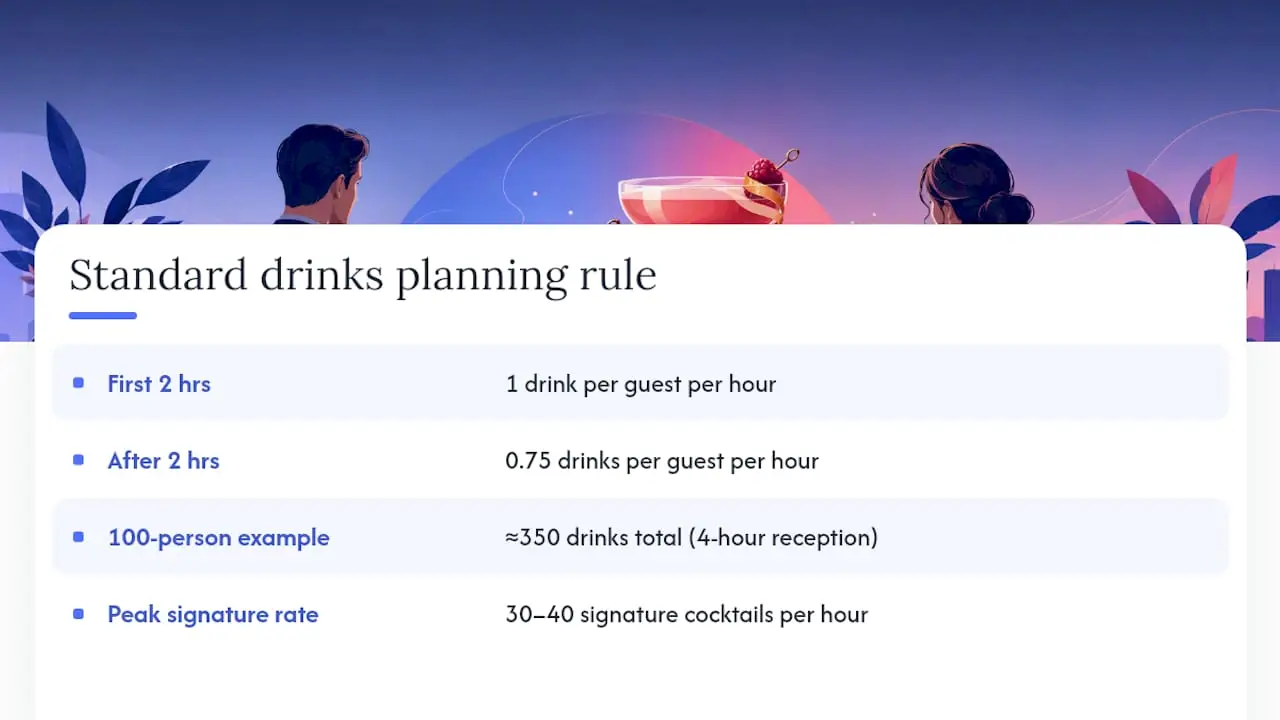
That means roughly 30–40 signature cocktails per hour at a 100-person event during peak service.
Batch vs. single-serve: the decision tree
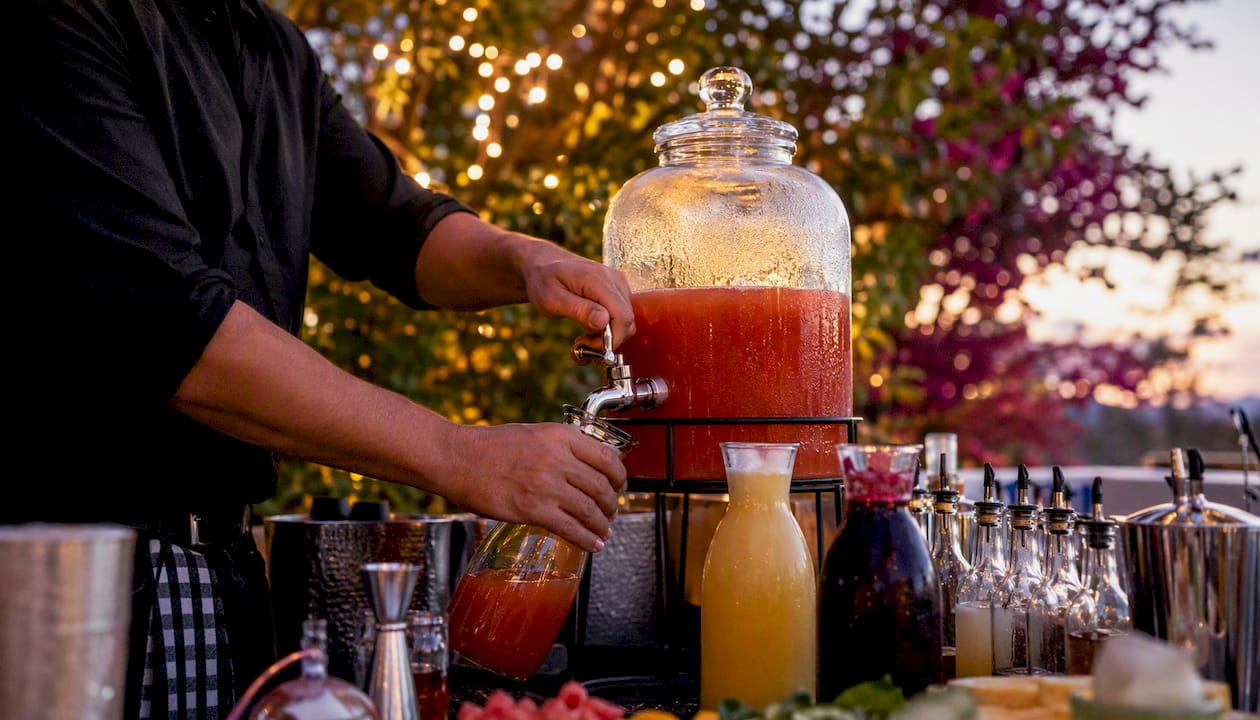
Batch when the recipe has no carbonation, no egg white, and no fresh-shaken element. An Old Fashioned, a Whiskey Sour base (without egg), a Negroni, and a Margarita all batch cleanly. Batch cocktails made 24–48 hours ahead let flavors integrate and cut day-of labor significantly. Add any carbonated element — ginger beer, champagne, sparkling water — the day of the event to preserve fizz.
Single-serve works for drinks that need a shaker for texture (Espresso Martini, Whiskey Sour with egg white) or for interactive presentations where the build is part of the experience (Moscow Mule with a copper mug and fresh mint).
Pro Tip: Prep your citrus juice, simple syrups, and garnish trays 24 hours ahead and refrigerate them. Fresh-squeezed juice holds well for 24 hours. Garnishes like citrus wheels, sugared herbs, and cocktail picks can be prepped the night before and stored in airtight containers.
A hybrid approach works well for most weddings: batch the simpler drink in a large-format dispenser or pitcher, and offer the second as a single-serve shaken option. Batching one punch and offering a second cocktail as single-serve cuts staffing needs while keeping variety on the bar.
How do you make your signature drinks look great at the bar?
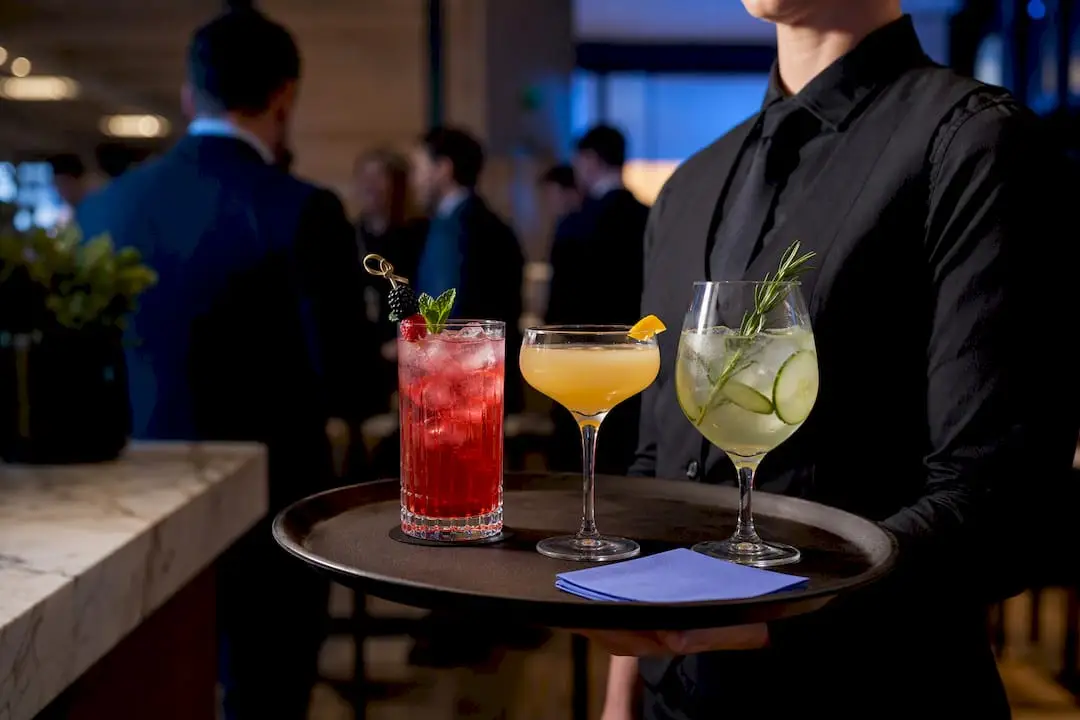
Presentation is what turns two cocktails into a moment. The drinks need to look like they belong together even when they taste completely different.
Glassware by drink style:
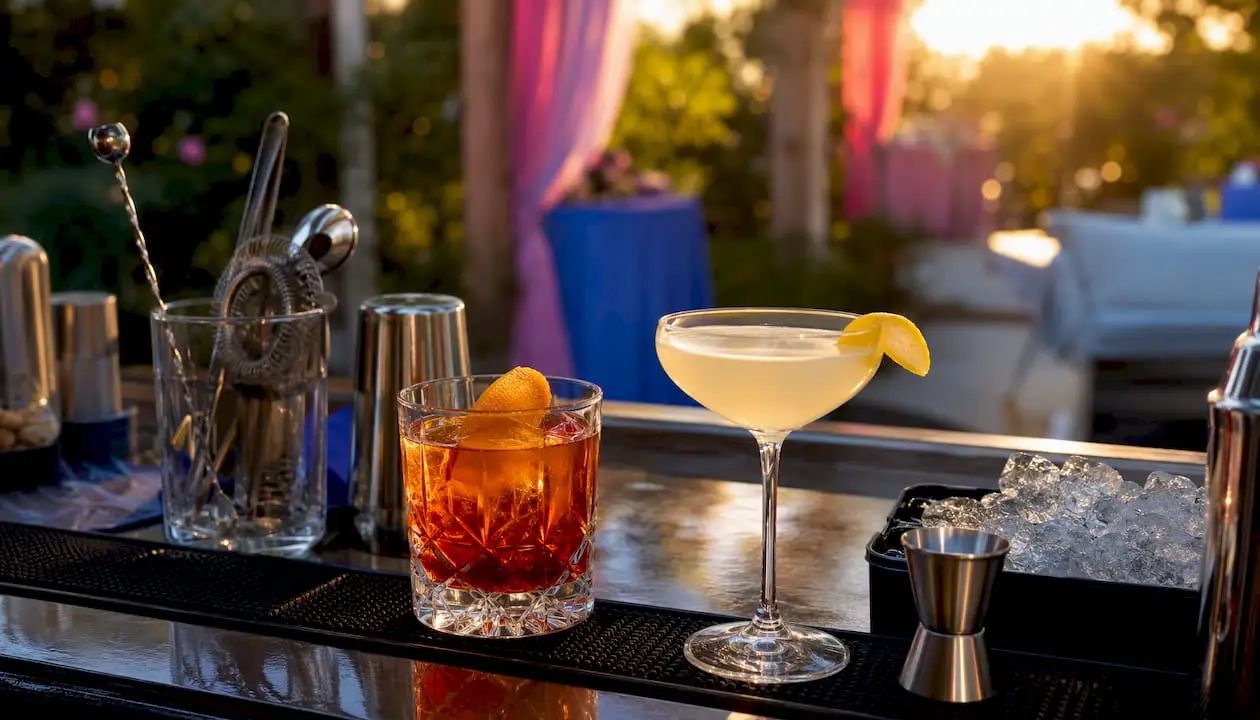
- Old Fashioned, Negroni, Mezcal Margarita: rocks glass (double old fashioned)
- French 75, Champagne Cocktail, Peach Bellini: coupe or champagne flute
- Moscow Mule: copper mug (non-negotiable for the visual)
- Mimosa, Aperol Spritz: wine glass or large balloon glass
- Espresso Martini, Whiskey Sour: coupe or Nick and Nora glass
- Vodka Soda, Paloma: highball glass
Matching the glassware finish (matte copper + clear glass, or all clear coupes) creates visual cohesion even when the drinks are different colors. Coordinated glassware and a uniform color palette make two very different drinks read as a deliberate, designed offering.
Garnish ideas that photograph well:
- Citrus peel expressed and draped over the rim (Old Fashioned, Negroni)
- Fresh herb sprigs: rosemary, thyme, or mint pressed against the inside of the glass
- Edible flowers on a cocktail pick (French 75, Lavender Gin Fizz)
- Tajín or smoked salt rim (Margarita, Paloma)
- Espresso beans floating on the foam (Espresso Martini)
- Dehydrated citrus wheel clipped to the rim (Aperol Spritz, Vodka Soda)
Signage and naming:
Names that reference a place or memory photograph and share better than purely descriptive names. “The Savannah Sunset” lands better than “Bourbon Smash.” Keep the menu copy short: name, two-word flavor note, and spirit base. Guests need to read it in three seconds while holding a clutch and talking to their aunt.
Bar staging and furniture layout affect how guests approach and order. A bar with clear sightlines to the signage and garnish trays reduces confusion and speeds up service.
Visual bar setup checklist:
- Printed or calligraphed sign with both drink names and a one-line flavor description
- Garnish tray visible to guests (not hidden behind the bar)
- Matching glassware for each drink, pre-staged in rows
- A sample tasting pour of each drink set out during cocktail hour
- Cohesive color palette across napkins, signage, and any florals on the bar
Pro Tip: Put the mocktail option on the same sign as the signature cocktails, not on a separate card. Guests who don’t drink shouldn’t have to ask.
How do you include guests who don’t drink?
Every guest at your wedding should feel celebrated, not accommodated as an afterthought. The best approach is to build mocktail versions that mirror the flavor profile of each signature cocktail, then list them on the same bar sign.
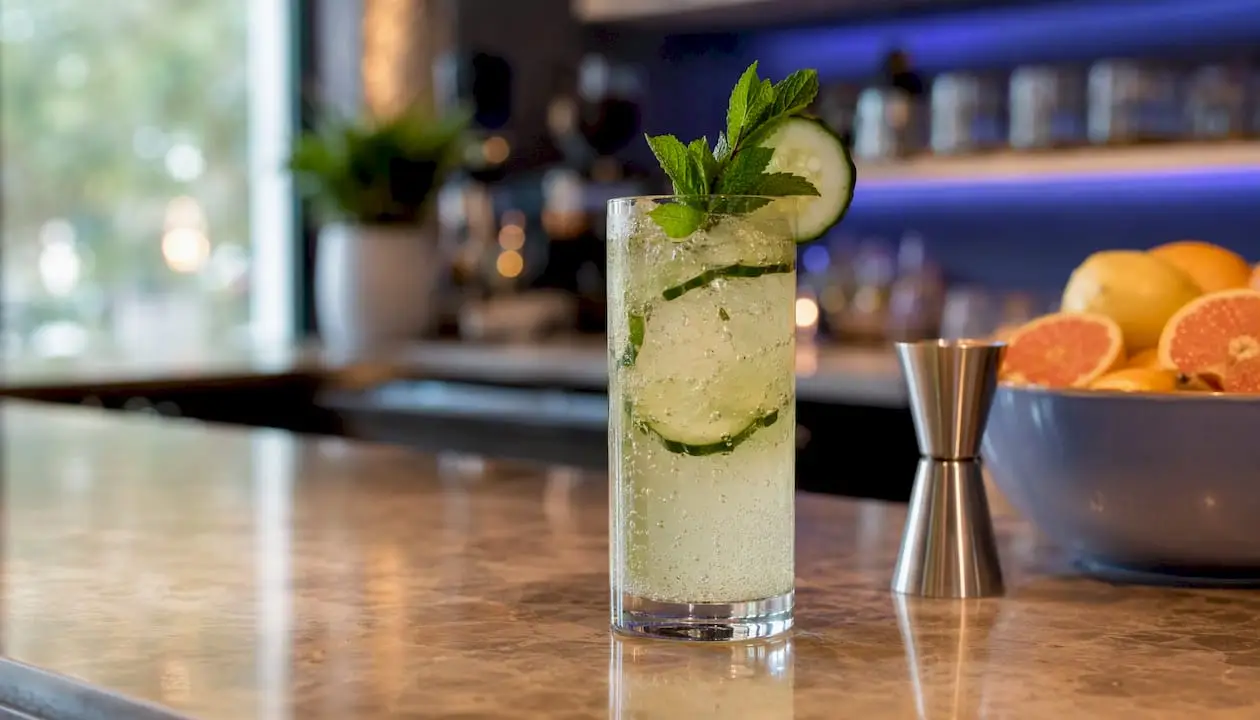
Mocktails that echo the flavors of signature cocktails make non-drinking guests feel included rather than sidelined. Three templates cover most signature profiles:
Sparkling botanical (mirrors French 75, Aperol Spritz, Elderflower Spritz):
Combine 2 oz elderflower cordial, 1 oz fresh lemon juice, and top with sparkling water. Garnish with a lemon twist or edible flower. Batch the base (cordial + lemon) and add sparkling water to order.
Citrus-ginger (mirrors Moscow Mule, Paloma, Whiskey Sour):
Combine 1 oz fresh lime juice, 1 oz ginger syrup, and top with ginger beer. Garnish with a lime wheel and fresh mint. Fully batchable: mix lime juice and ginger syrup ahead, pour over ice, top with ginger beer at service.
Spiced punch (mirrors Old Fashioned, Negroni, Manhattan):
Combine 2 oz black cherry juice, 0.5 oz orange juice, 2 dashes aromatic bitters (non-alcoholic), and a splash of sparkling water. Garnish with an orange peel. Batch the juice and bitters base up to 48 hours ahead.
How to list mocktails on the bar sign:
Hers: The Garden Party (French 75) | Ours: The Garden Party, No Proof (Sparkling Elderflower)
Placing the mocktail beside its alcoholic counterpart with a clear “No Proof” or “Spirit-Free” label removes the stigma and makes ordering easy. For more mocktail bar ideas and station setups, a dedicated resource covers the full range of nonalcoholic options.
Pro Tip: Batchable mocktails are the highest-impact inclusion move for large events. One pre-mixed pitcher of sparkling elderflower or citrus-ginger punch serves 20 guests with zero extra labor during peak service.
Five recipe pairs with batch scaling notes
Short, tested recipes with clear single-serve measurements are the most useful format for briefing a bartender. Each pair below includes a single-serve recipe, garnish, and batch scaling for 25, 50, and 100 servings.
Pair A: Old Fashioned + French 75
His: Old Fashioned
2 oz bourbon, 0.25 oz simple syrup, 2 dashes Angostura bitters. Stir with ice, strain into a rocks glass over a large ice cube. Garnish: expressed orange peel.
Hers: French 75
1.5 oz gin, 0.75 oz fresh lemon juice, 0.5 oz simple syrup, top with 2 oz champagne. Shake gin, lemon, and syrup with ice; strain into a coupe; top with champagne. Garnish: lemon twist.
Batch note: Pre-mix Old Fashioned (bourbon + syrup + bitters) up to 48 hours ahead; refrigerate. Add ice at service. Batch French 75 base (gin + lemon + syrup) up to 24 hours ahead; add champagne to order.
Pair B: Whiskey Sour + Aperol Spritz
His: Whiskey Sour
2 oz bourbon, 0.75 oz fresh lemon juice, 0.75 oz simple syrup. Shake hard with ice; strain into a coupe. Garnish: lemon wheel and a cherry.
Hers: Aperol Spritz
3 oz Prosecco, 2 oz Aperol, 1 oz sparkling water. Build in a wine glass over ice. Garnish: orange half-wheel.
Batch note: Whiskey Sour base (bourbon + lemon + syrup) batches well; shake individual servings to order for best texture. Aperol Spritz is built to order — pre-portion Aperol in small carafes so bartenders pour fast.
Pair C: Spicy Margarita + Mimosa
His: Spicy Margarita
2 oz jalapeño-infused tequila, 1 oz fresh lime juice, 0.75 oz triple sec, 0.25 oz agave syrup. Shake with ice; strain into a rocks glass with a Tajín rim. Garnish: lime wheel and jalapeño slice.
Hers: Mimosa
3 oz champagne, 3 oz fresh orange juice. Build in a flute. Garnish: orange twist.
Batch note: Infuse tequila with jalapeño 24 hours ahead (taste-test for heat level). Batch Margarita base without ice; add Tajín rims to glasses ahead of service. Pre-pour OJ into a pitcher for Mimosa service.
Pair D: Moscow Mule + Espresso Martini
His: Moscow Mule
2 oz vodka, 0.75 oz fresh lime juice, top with 4 oz ginger beer. Build in a copper mug over ice. Garnish: lime wheel and fresh mint.
Hers: Espresso Martini
2 oz vodka, 1 oz fresh espresso (cooled), 0.5 oz coffee liqueur, 0.25 oz simple syrup. Shake hard with ice; double-strain into a coupe. Garnish: three espresso beans.
Batch note: Moscow Mule vodka-lime base batches well; add ginger beer to order. Espresso Martini is best shaken to order for foam — pull espresso shots in batches and cool them 30 minutes before service. Seasonal cocktails with batchable templates like the Mule work especially well for holiday party drinks and office holiday party menus.
Pair E: Negroni + Champagne Cocktail
His: Negroni
1 oz gin, 1 oz Campari, 1 oz sweet vermouth. Stir with ice; strain into a rocks glass over a large cube. Garnish: expressed orange peel.
Hers: Champagne Cocktail
1 sugar cube soaked in 2 dashes Angostura bitters, placed in a flute; top with 5 oz champagne. Garnish: lemon twist.
Batch note: Negroni batches perfectly — combine equal parts gin, Campari, and vermouth up to 48 hours ahead and refrigerate. Champagne Cocktail is built to order in under 30 seconds; pre-soak sugar cubes with bitters the night before.
Pro Tip: For any batch that includes citrus, taste it after 24 hours. Citrus juice can turn bitter if left too long. If you’re prepping more than 24 hours ahead, use citric acid solution (1 tsp citric acid per 1 cup water) in place of fresh juice for stability.
Should you add an “Ours” shared drink to the bar?
A third shared option turns a his-and-hers bar into a full story: individuality plus togetherness. Three ways to execute it:
- Three signature cocktails: His, Hers, and Ours — each with a name and a sign. Works best with two bartenders and a guest count under 150.
- Two cocktails plus a shared beer or wine: Simpler to execute, lower cost, and most guests already know how to order a beer. Label the shared option “Ours” on the sign.
- One shared punch plus two personal sips: The punch is batchable and self-serve from a dispenser; the two signature cocktails are poured by the bartender. This is the most efficient setup for large events.
Display checklist for a three-option bar:
- One sign with all three options, each with a name and a two-word flavor note
- Separate glassware for each drink, clearly staged
- “Ours” labeled prominently in the center of the sign to reinforce the story
- Portion control for the punch: use a ladle or spigot dispenser, not a self-pour tap, to manage consumption
- A small card at the punch station explaining the flavor profile and whether it contains alcohol
When “Ours” should be batchable: always, unless it is a champagne cocktail served at a small gathering of under 30 guests. For anything larger, a punch or pre-batched pitcher is the only practical choice. Coordinated signage and glassware make three options look intentional rather than cluttered.
Bar layout and furniture choices also affect how guests navigate a three-option setup. A bar with two service points — one for the shaken cocktails, one for the punch dispenser — prevents bottlenecks during peak cocktail hour.
Why simple choices and a skilled bartender make the biggest difference
1. Choosing the Right Signature Cocktails
The couples who end up happiest with their bar are almost never the ones who chose the most elaborate cocktails. They are the ones who picked two drinks they genuinely love, made sure those drinks were executable at scale, and hired someone who had done it before.
2. Cocktail Preparation and Service Speed
A signature cocktail that photographs beautifully but takes four minutes to build is a liability at a 120-person wedding.
A bartender who has batched 200 Negronis for a Saturday reception knows to pre-chill the batch, pre-stage the garnishes, and pour in under 30 seconds. That is the difference between a cocktail hour that flows and one where guests wait in line through the first dance.
3. Bartender-to-Guest Ratio
The staffing ratio that works consistently: one bartender per 50 guests for a full bar, one per 75 if you are running a simplified signature-plus-beer-and-wine setup.
If you are adding an espresso martini station or any shaken drink, add a dedicated station bartender rather than asking the main bar to absorb it.
4. Bar Preparation and Organization
Prep moves that bartenders appreciate most: pre-batched bases in labeled, dated containers; garnish trays organized by drink; and a printed recipe card for each signature cocktail with the single-serve measurements and the batch ratio.
Clear single-serve measurements with a batch-scaling note are the format that actually gets used on the day.
Cocktail-crew makes your signature drinks stress-free
Choosing the pair is the fun part. Executing it for 100 guests during a two-hour cocktail hour is where most couples hit friction — a bartender who has never batched a Negroni, a venue with no speed rail, a garnish tray that runs out by 6:30 PM.
Cocktail-crew handles the execution so you don’t have to troubleshoot it on your wedding day. Their professional bartenders arrive briefed, prepped, and ready to run your his-and-hers bar from the first pour to the last call. Services include event bartending with flexible three-hour minimums, batching expertise for any recipe on this list, elevated mocktail service for sober-curious guests, and a cocktail calculator that builds your shopping list automatically.
- Event bartending: experienced bartenders who engage guests and keep the line moving
- Batching and prep: your signature cocktails pre-batched and ready to pour on arrival
- Elevated mocktails: spirit-free versions that match your signature cocktail’s flavor profile
- Cocktail calculator: custom shopping lists so you buy exactly what you need
- Cocktail classes: learn to make your signature drinks yourself before the big day
See how professional bartending transforms your event and get a quote for your date. Or go straight to private event bartending to check availability and book.
Frequently Asked Questions
What are his and hers cocktails?
His and hers cocktails are two signature drinks chosen to reflect a couple’s individual tastes, favorite flavors, or shared memories. They are often served at weddings and engagement celebrations.
What are the best his and hers cocktails for a wedding?
Popular pairings include an Old Fashioned and French 75, a Whiskey Sour and Aperol Spritz, or a Moscow Mule and Espresso Martini. Choose drinks that complement each other and suit your guests.
How do you choose his and hers signature drinks?
Start with your favorite cocktails, then consider the wedding season, venue, budget, and guest preferences. Select two drinks with contrasting flavors and recipes that your bartending team can prepare efficiently.
What are some creative names for his and hers cocktails?
You can name drinks after your first date, favorite vacation, shared hobby, pets, or meaningful memories. Options include “Mint to Be,” “The Golden Hour,” and “The First Date Fizz.”
Can you have his and hers mocktails instead of alcoholic cocktails?
Yes. Couples can choose two completely alcohol-free signature drinks or offer mocktail versions alongside alcoholic options. Match the presentation and garnishes to create a cohesive menu.
How many signature cocktails should you serve at a wedding?
Two signature cocktails are a practical starting point for a his-and-hers menu. You can add beer, wine, or nonalcoholic options depending on your budget, guest preferences, and bar setup.
Can wedding signature cocktails be prepared in advance?
Some cocktail bases can be prepared ahead and refrigerated safely, while sparkling ingredients are generally added close to serving. Follow the recipe, ingredient-storage guidance, and your bartender’s preparation recommendations.
Sources
- 30 His and Hers Cocktails to Inspire Your Own Signature Drink
- For Valentine’s Day: The His-and-Hers Gin and Tonics
- The Ultimate Easy Holiday Cocktail Party Ideas for Grown-Ups
- 20 Festive Cocktails and Cozy Sips to Make Your Holiday Parties Sparkle (Punch)
- His-n-Hers Cocktails Recipe