Yes, mocktails can be halal, as long as they skip alcohol entirely, use halal-certified or transparently listed ingredients, and avoid cross-contamination with alcoholic drinks during prep. That’s the whole rule. The tricky part is verification, not the drink itself.
- No alcohol, including trace amounts from extracts or flavorings
- Halal-certified syrups, mixers, and garnishes where possible
- Separate tools (shakers, strainers, glassware) if alcohol is served nearby
Below are the recipes, the label rules, and where to actually buy this stuff.
Key Takeaways
Halal mocktails require alcohol-free, verifiably sourced ingredients and separate tools to avoid cross-contamination, and batching them right depends on timing carbonation at the last minute.
| Point | Details |
|---|---|
| Verify before you trust | Check for halal certification or contact the manufacturer if the label is vague. |
| Watch for hidden alcohol | Bitters, certain extracts, and fermented juices are the most common overlooked sources. |
| Batch smart | Mix syrup and citrus bases ahead, but add soda or sparkling elements right before serving. |
| Use dedicated tools | Separate shakers and glassware prevent cross-contamination at mixed bars. |
| Hire it out for scale | Cocktail-crew builds event-scaled halal mocktail service with sourcing and hygiene handled for you. |
Table of Contents
- What Makes a Mocktail Halal
- Ingredients to Avoid and How to Read Labels
- Bartender-Tested Halal Mocktail Recipes for Parties
- Where to Buy Halal-Friendly Syrups and Mixers
- Let a Professional Handle the Batching and the Cross-Contamination Risk
- Frequently Asked Questions
- Sources
What Makes a Mocktail Halal
The core requirement is simple: no intoxicants, period. That rules out obvious things like rum-based syrups, but it also rules out ingredients most people never think to check. Halal certification is the fastest way to trust a packaged mixer, because it removes the guesswork. Absent a certification mark, you’re relying on ingredient transparency and, sometimes, a phone call to the manufacturer.
The gray areas cause most of the confusion. Bitters often carry high alcohol content used as a preservative. Some vanilla and almond extracts are alcohol-based. Fermented juices can develop trace alcohol without anyone intending it. None of this shows up on the front label.
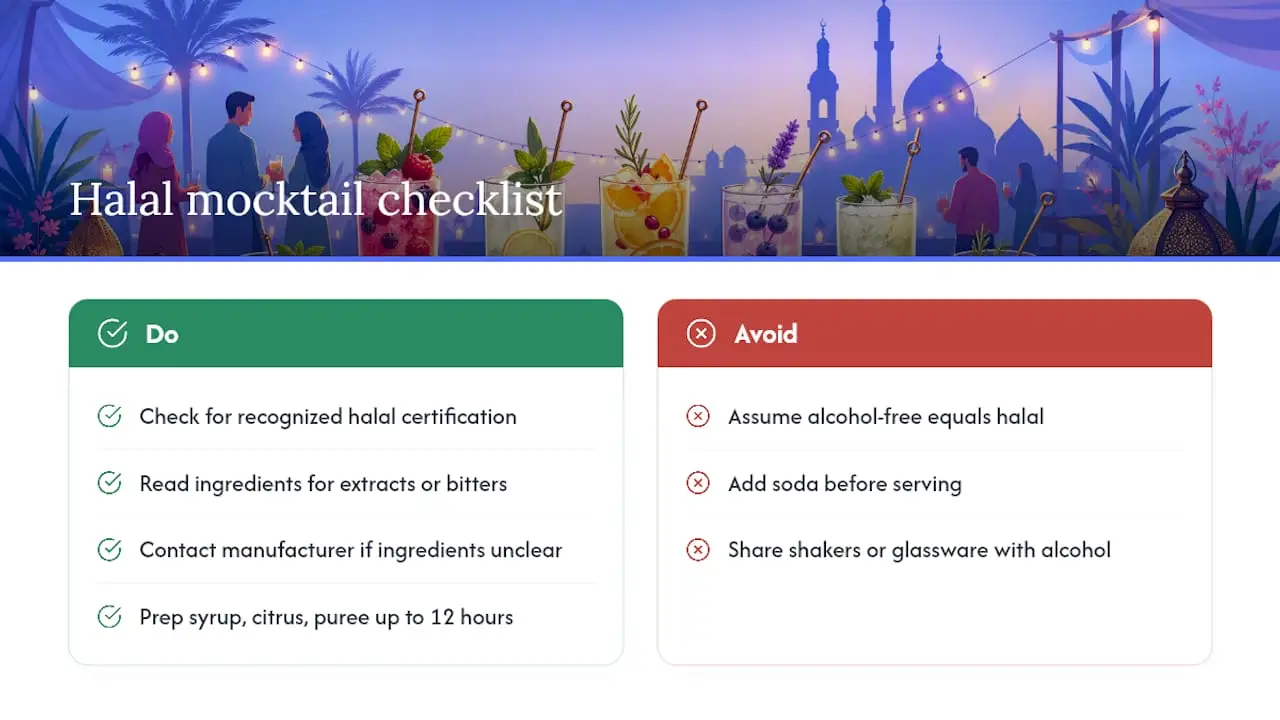
Checklist before you serve or order:
- Scan for “contains alcohol” or an ABV percentage on the label
- Look for a halal certification logo from a recognized body
- Ask directly if the ingredient list is vague (“natural flavors,” unspecified glycerin)
- Use separate utensils if alcohol is poured anywhere nearby
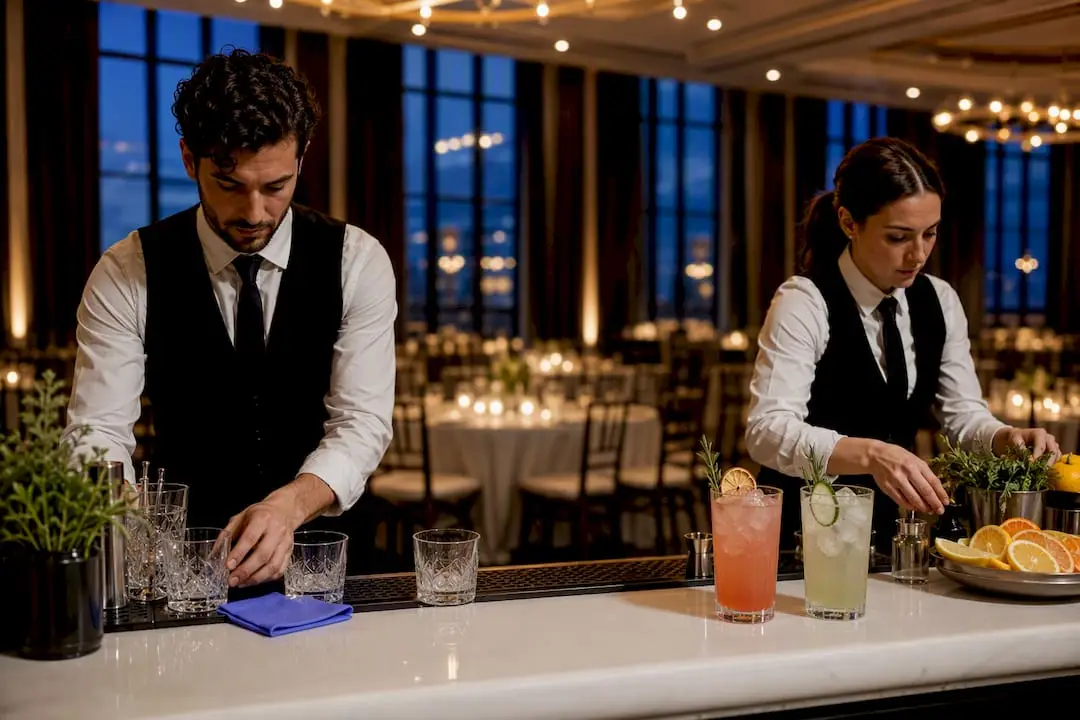
Pro Tip: If you’re hosting an event where alcohol is also being served, keep a dedicated shaker, strainer, and set of glassware just for the halal mocktail station. Cross-contamination from a shared bar tool is one of the most common oversights, and it’s completely avoidable with a $15 second shaker.
Ingredients to Avoid and How to Read Labels
Most hidden alcohol problems trace back to five categories: cocktail bitters, certain extracts (vanilla, almond, lemon), fermented fruit juices, glycerin sourced from non-halal fats, and flavoring tinctures used in commercial syrups. None of these announce themselves. A syrup bottle can say “alcohol-free” on the front and still list a trace-alcohol flavoring buried in the ingredients.
Here’s what actually matters when you’re standing in a store aisle or scrolling a product page:
- Check for an explicit “contains alcohol” warning or listed ABV, not just marketing copy
- Treat “natural flavors” as a flag to investigate further, not a green light
- Search for a halal certification seal, then verify it against a known certifying body like IFANCA
- If nothing is disclosed, email or call the manufacturer before buying in bulk
One catch worth knowing: a “0% ABV” claim on a label doesn’t always mean zero alcohol was ever present. Some products use fermentation-adjacent processes or trace amounts that fall under a regulatory rounding threshold rather than true zero content. When in doubt, halal certification removes that ambiguity far more reliably than reading a percentage on a bottle.
Bartender-Tested Halal Mocktail Recipes for Parties
These recipes scale, hold up in a pitcher, and don’t rely on anything alcohol-adjacent. Each one uses halal-certified extracts or straightforward, verifiable ingredients.
- Virgin mango mojito. Fresh mango pulp, mint, lime juice, and soda water, with no rum in the mix. It’s naturally halal-friendly and easy to batch for a crowd since the base can be mixed ahead and topped with soda right before serving.
- Basil lemon spritz. Muddled basil, fresh lemon juice, a light simple syrup, and sparkling water. Bright, herbal, and works especially well in hot weather.
- Orange ginger punch. Fresh orange juice, ginger syrup, and a splash of soda. Batches beautifully in a large dispenser for buffet-style service.
- Cucumber colada. Blended cucumber, coconut cream, and pineapple juice over ice. A creamier option that balances out citrus-heavy drinks on the same table.
- Mango mint mojito, party-scaled. For a batch suitable for multiple guests, mix mango puree, lime juice, and mint syrup in a large pitcher, refrigerate, and add soda per glass at service. This step-by-step mango mint recipe works as a template for adjusting sweetness and dilution to taste.
Timing makes or breaks a batched mocktail. Carbonated elements should go in last, right before serving, so the fizz doesn’t die in a pitcher sitting on a table for two hours. Citrus and syrup bases, on the other hand, can be mixed and refrigerated 6 to 12 hours ahead without losing quality.
A few things that separate an amateur pitcher from a bartender-quality batch:
- Add fresh herbs just before serving, not during the batching stage, so they stay vibrant instead of wilting
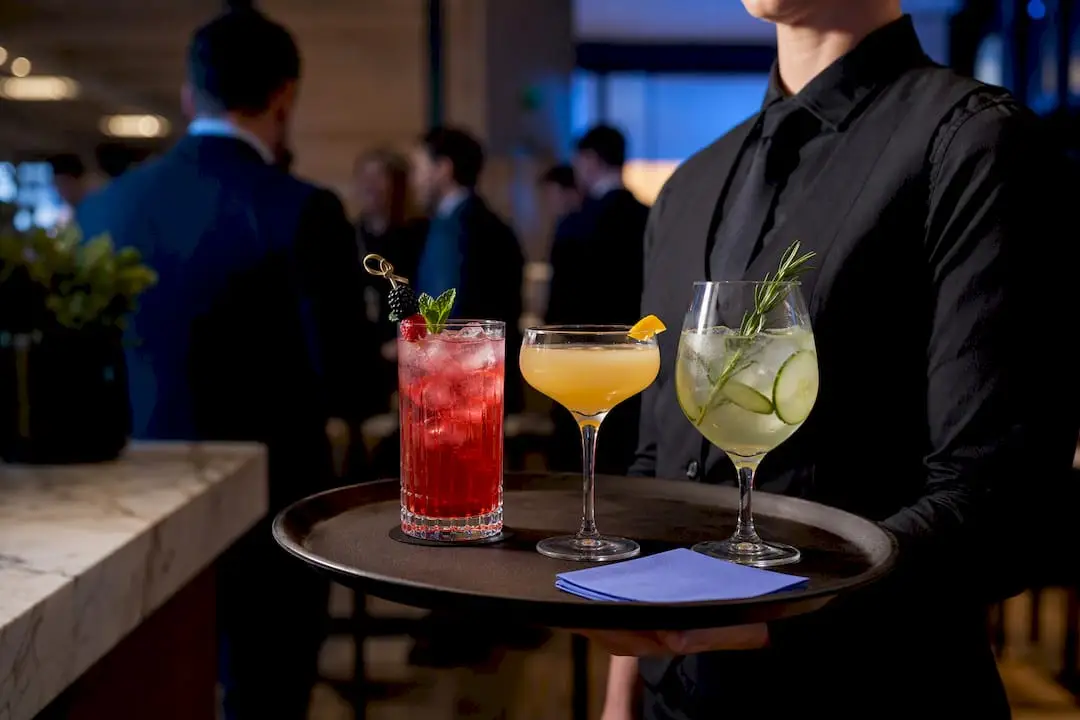
- Garnish with something that signals the drink at a glance (a mint sprig, a citrus wheel) so guests can identify halal-friendly options fast
- Skip alcohol-based flavor tinctures entirely. If a recipe calls for something like orange bitters, swap in a halal-certified extract or a reduced citrus syrup instead
Pro Tip: For weddings and larger gatherings, batch your citrus and syrup base the night before, then keep soda separate in chilled bottles. Your bartender (or you, if you’re DIY-ing it) adds the fizz glass by glass, which keeps every pour looking fresh instead of flat.
Where to Buy Halal-Friendly Syrups and Mixers
Halal grocers and specialty Middle Eastern or South Asian markets are usually your best bet for rose syrups, orange blossom water, and other traditional mixers that already carry certification. Mainstream grocery chains increasingly stock halal-certified beverage lines too, especially in the syrup and flavored soda aisle.
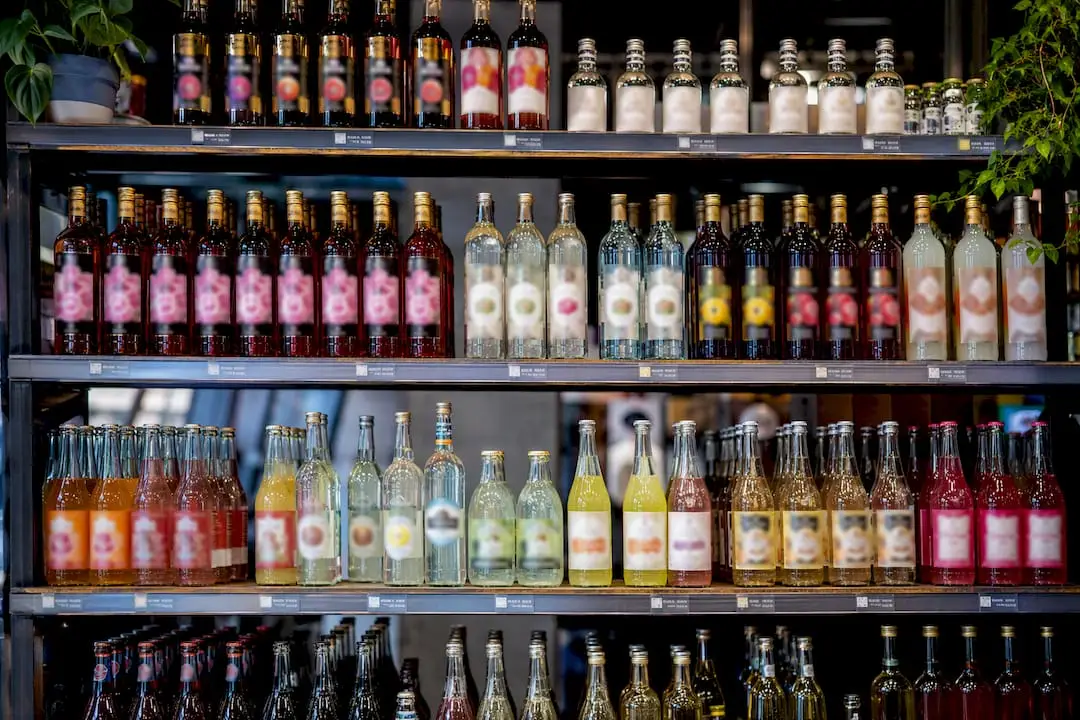
When shopping, prioritize three things: a visible halal certification mark, an ingredient list you can actually read without guessing, and a vendor willing to answer questions about alcohol content. Online marketplaces work fine for specialty syrups, but read the product page closely. If a listing doesn’t disclose whether an extract is alcohol-based, message the seller before ordering, especially for event quantities.
Pro Tip: Buying for a wedding or large party? Request a certificate of analysis or a spec sheet directly from the manufacturer. Most beverage suppliers will send one on request, and it settles any doubt faster than reading a label under store lighting.
Host Perspective: Why Halal Mocktails Matter at Events
Guests notice when a host thought ahead. Offering halal mocktails isn’t a workaround, it’s a signal that every guest was considered when the menu got built. It also simplifies planning: one well-made halal-friendly station covers guests who don’t drink for religious reasons, health reasons, or no reason at all. A bartender who understands cross-contamination controls makes that station look intentional, not like an afterthought bolted onto the bar.
Let a Professional Handle the Batching and the Cross-Contamination Risk
Making one pitcher of mango mojito at home is easy. Keeping a halal-only station clean, fresh, and properly staffed for 80 wedding guests over four hours is a different job entirely. That’s where a dedicated bartending team earns its cost, especially when the stakes include cross-contamination and guest trust.
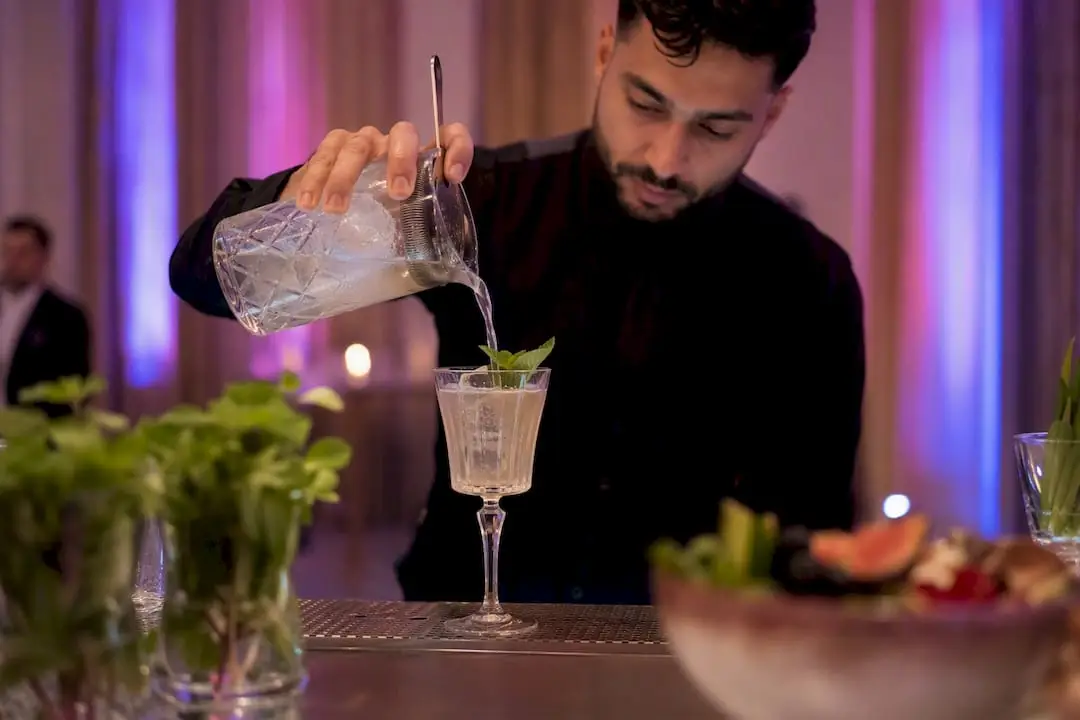
Cocktail-crew’s bartenders build event-scaled mocktail service around exactly the concerns this article covers: sourcing halal-certified syrups, timing carbonation so drinks stay fresh for hours, and keeping dedicated tools for alcohol-free stations when a full bar is running nearby.
- Elevated mocktail packages built for sober-curious and halal-observant guests alike
- Bartenders trained in hygiene practices that prevent cross-contamination at mixed bars
- Batching scaled for anywhere from 10 to 200+ guests, with fresh garnish and presentation
- Guest engagement that treats the mocktail station as a feature, not a fallback
If you’re planning a wedding, iftar gathering, or corporate event and want this handled without babysitting a pitcher all night, book a private event bartender and get a mocktail menu built around your guest list.
Frequently Asked Questions
Are all non-alcoholic drinks automatically halal?
No. A drink can be alcohol-free by volume and still contain haram-adjacent ingredients like alcohol-based extracts, non-halal glycerin, or trace fermentation byproducts. Zero-alcohol labeling and halal status aren’t the same guarantee.
What’s the safest way to verify a store-bought mixer is halal?
Look for a recognized halal certification mark first. If there isn’t one, check the ingredient list for extracts, bitters, or fermented components, and contact the manufacturer directly if anything is unclear.
Can I batch halal mocktails ahead of a party?
Yes, for the base. Mix your syrup, citrus, and puree components up to 12 hours ahead and refrigerate. Hold off on soda or sparkling additions until right before serving so the drink stays fizzy.
Do I need special equipment if I’m also serving alcohol at the same event?
Yes. Use separate shakers, strainers, and glassware for the halal-only station to eliminate cross-contamination risk entirely, rather than relying on a quick rinse between uses.
Sources
- Are Mocktails Really Halal? A Mixologist’s Perspective – Anything Halal
- Mango Mojito Mocktail Recipe (Virgin) | MMA Farms
- 5 Insanely Refreshing Halal Mocktails You NEED During This Heatwave – Muslim Box Co.