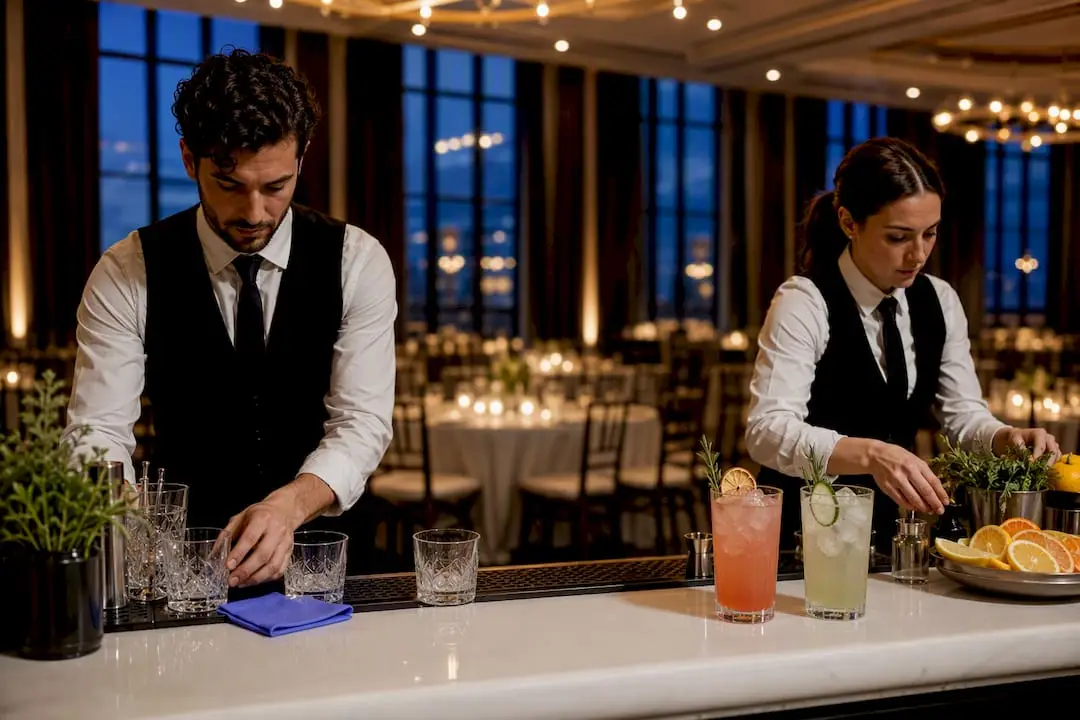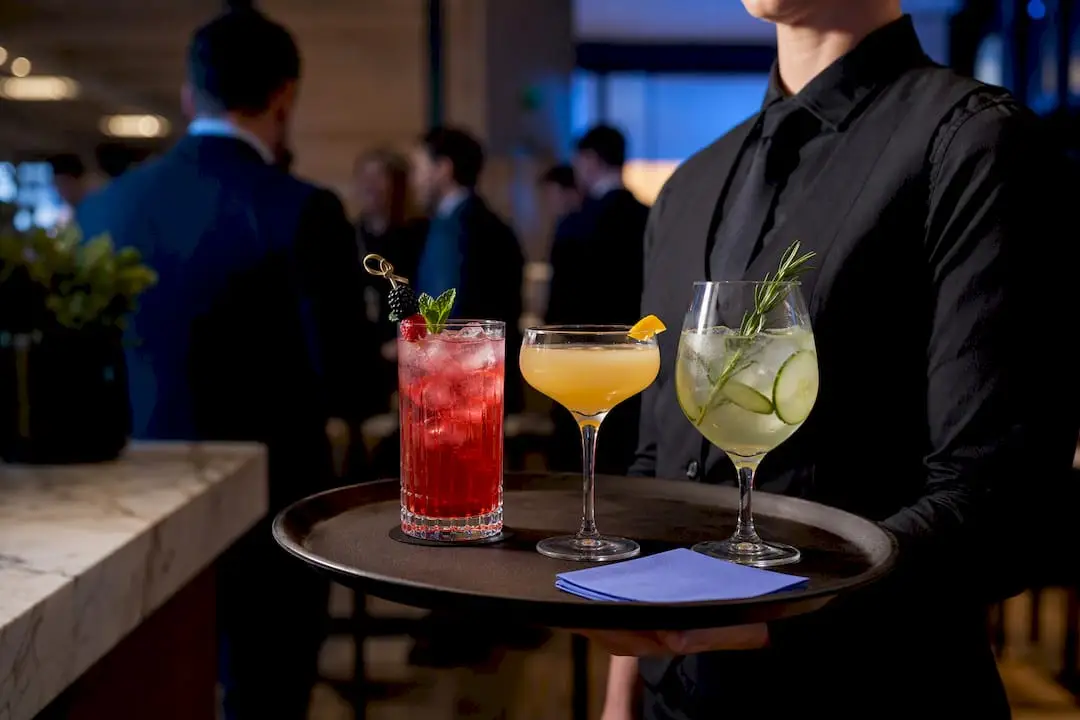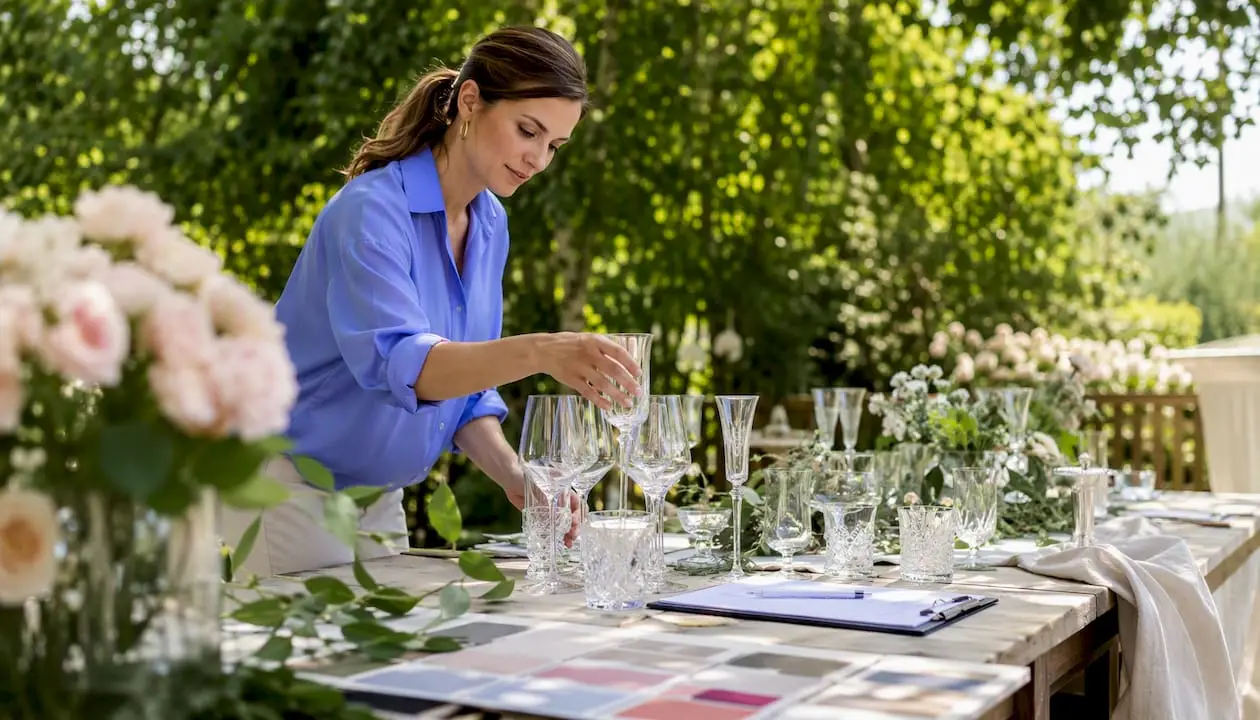
Every reception needs at minimum five glass types: a water goblet, a red or white wine glass, a champagne flute or coupe for toasts, a highball for cocktails, and a rocks glass for spirits. Order 1.25× your guest count for each type you plan to use — that buffer covers breakage, misplaced glasses, and guests who want a fresh pour.
Your baseline glassware set for most receptions:
- Water goblet — one per place setting, stays on the table all evening
- Wine glass (red, white, or a universal bowl) — one per seat; two if you’re serving both
- Champagne flute or coupe — for the toast; can be preset or tray-served
- Highball — for cocktail hour and the bar program
- Rocks/old-fashioned glass — for spirits, whiskey service, or low-ABV builds
Renting covers most of this list cleanly: professional-grade rental glassware arrives polished, packed in protective racks, and ready to place — no post-event dishwashing required. Pairing rentals with a professional bartending team takes the coordination burden off your plate entirely.
Pro Tip: If your bar menu is still undecided, lock the water, wine, and flute counts first. Bar stems can be added or adjusted later once your cocktail program is set.
Table of Contents
- What are the different types of wedding glasses?
- How do you match glassware to your wedding theme?
- Crystal, glass, or acrylic: which material is right for you?
- How many glasses do you actually need to order?
- Should you rent, buy, or buy secondhand?
- How do you coordinate glassware with your bartenders?
- What do rental pros and bartenders know that most couples don’t?
- Your glassware ordering checklist and timeline
- What does wedding glassware actually cost?
- Key Takeaways
- Why glassware is the detail that actually changes how a wedding feels
- Professional bartending that takes glassware off your plate
- Useful sources
What are the different types of wedding glasses?
Knowing what each glass does prevents over-ordering and keeps your table composition clean. Here’s how the common shapes break down by function and service moment.
| Glass Type | Capacity | Primary Use | Service Moment |
|---|---|---|---|
| Water goblet | — | Still or sparkling water | All evening, preset |
| Red wine glass | — | Full-bodied reds | Dinner service |
| White wine glass | 10–14 oz | Whites, rosé, lighter reds | Dinner service |
| Universal wine glass | 14 oz | Any wine | Dinner; simplifies counts |
| Champagne flute | 6 oz | Sparkling wine, toasts | Cocktail hour, toast |
| Champagne coupe | 6 oz | Sparkling wine, cocktails | Toasts, cocktail hour |
| Highball | 10–14 oz | Tall cocktails, sodas, mocktails | Bar program |
| Rocks/old-fashioned | — | Spirits, low-ABV builds | Bar program |
| Martini/coupe cocktail | 4 oz | Stirred or shaken cocktails | Bar program |
| Cordial/shot glass | 1–2 oz | Digestifs, shots | Late night, optional |
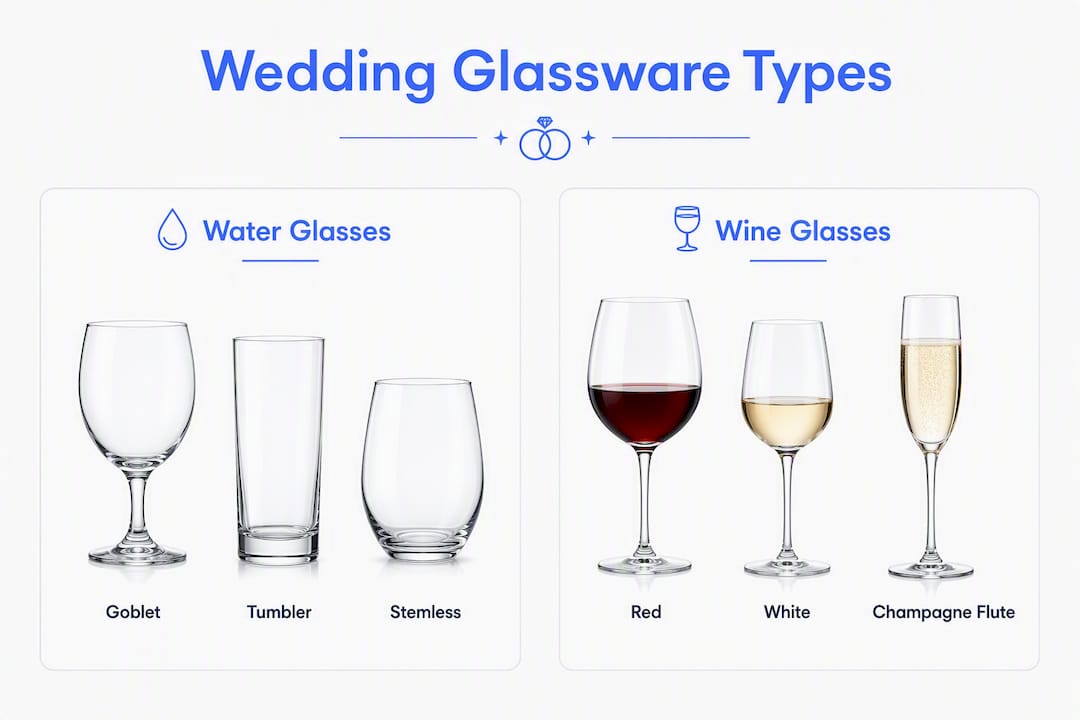
Flute vs. coupe for toasts is the most common debate couples face. The flute wins on function: its narrow shape preserves carbonation longer than a coupe, which matters when guests are holding glasses through a five-minute speech. The coupe wins on aesthetics — it photographs beautifully and suits vintage or Art Deco themes. If your toast is short and your photos matter more than the fizz, the coupe is a perfectly defensible choice.
A few notes on bar-only stems:
- Highballs and rocks glasses live at the bar, not on the table — count them separately from your place-setting inventory
- Martini and coupe cocktail glasses are optional unless your signature drink calls for one
- Cordial glasses are a nice touch for late-night digestif service but rarely worth renting unless your caterer specifically plans that course
How do you match glassware to your wedding theme?
Glassware is one of the few table elements guests actually pick up and hold, so the shape and finish you choose communicates your aesthetic more directly than most centerpiece choices.
Classic/formal receptions call for tall, thin-stemmed crystal or fine glass — a traditional flute, a Bordeaux-style red wine glass, and a clean water goblet. Keep finishes consistent: all clear, all polished, no mixing of colored or etched pieces unless they’re identical.
Modern/minimalist weddings work well with stemless wine glasses or low-profile tumblers. The clean silhouette reads contemporary on a white or slate table, and stemless glasses are more stable on outdoor surfaces. The tradeoff is that stemless pieces warm up faster from hand heat — worth knowing if you’re serving delicate whites.
Vintage and eclectic themes are where coupes shine. Mismatched vintage coupes sourced from estate sales or secondhand shops create an intentional, collected look. The key to keeping it cohesive: stick to one era (all 1920s Art Deco, all mid-century) rather than mixing periods randomly.
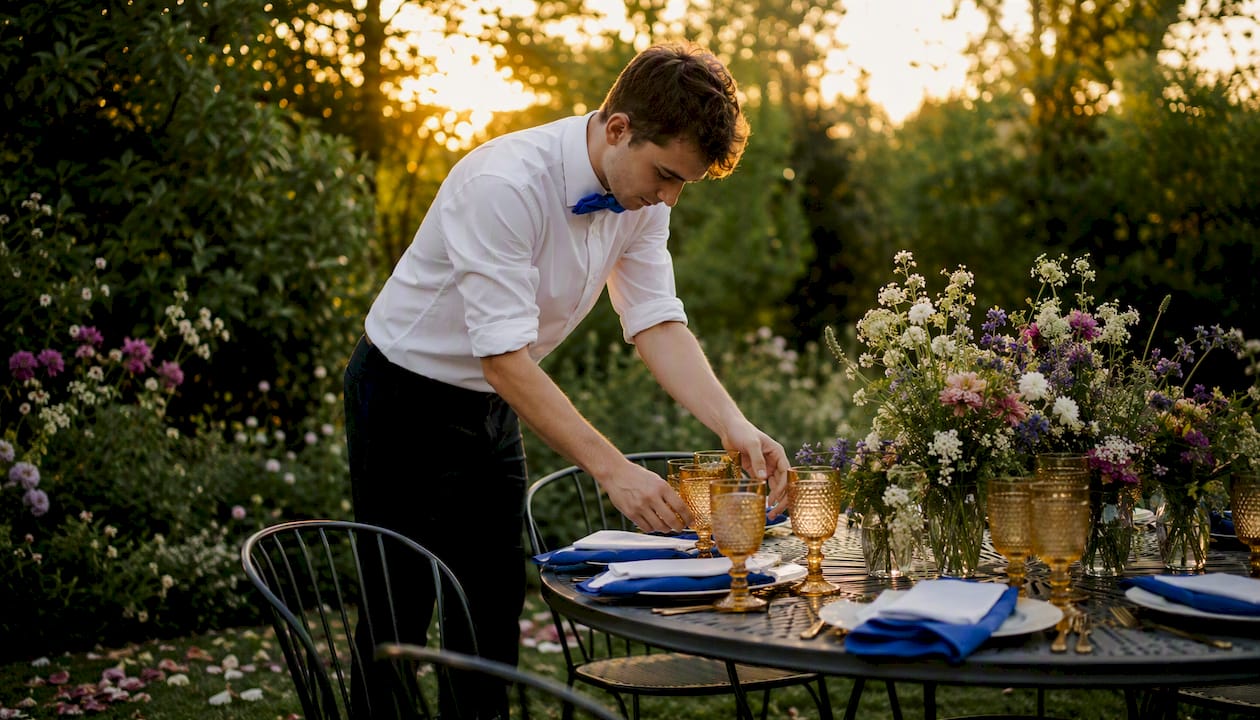
Boho/garden receptions pair well with textured glass, hammered finishes, or amber-tinted stems. High-quality acrylic in clear or smoked finishes also works here — it photographs well outdoors and eliminates breakage risk on grass or gravel.
Pro Tip: For table photography, vary the height of your stems deliberately. A tall flute next to a shorter wine glass next to a water goblet creates visual layering. Flat, same-height glassware reads as a lineup in photos.
A few mix-and-match rules that hold across themes:
- Limit yourself to two glass silhouettes per place setting (e.g., a stemmed wine glass and a stemless water tumbler) — three or more creates visual noise
- Match finishes within a category: if one wine glass has a gold rim, all wine glasses should
- Colored glass works as an accent piece (a single tinted water goblet), not as the primary stem
Crystal, glass, or acrylic: which material is right for you?
The material you choose affects how the table photographs, how much you’ll spend, and how much stress you’ll carry through the evening.
Lead-free crystal is the premium choice. It has a higher refractive index than standard glass, which means it catches light and sparkles in photos. It’s also thinner and lighter, which makes it feel more refined in the hand. The downsides: it’s more fragile, rarely dishwasher-safe at high temperatures, and costs more to rent or buy. Reserve it for formal seated dinners where breakage risk is lower.
Commercial soda-lime glass is what most rental vendors stock as their standard tier. It’s durable, dishwasher-safe, and significantly cheaper than crystal. For most receptions, it’s the right call — guests won’t notice the difference once the table is styled, and the rental company handles cleaning.
High-quality acrylic has improved dramatically. The best pieces are virtually indistinguishable from glass in photos and hold up to outdoor conditions, uneven surfaces, and the occasional drop. Use it for:
- Outdoor ceremonies or receptions on grass, gravel, or sand
- Events with children present
- Cocktail-hour stations where high traffic increases breakage risk
- Budget-conscious receptions where the visual difference is acceptable
| Material | Clarity | Durability | Dishwasher-safe | Relative cost | Best for |
|---|---|---|---|---|---|
| Lead-free crystal | Excellent | Fragile | Usually no | Highest | Formal, seated dinners |
| Soda-lime glass | Very good | Good | Yes | Moderate | Most receptions |
| Acrylic | Good | Excellent | Yes (low heat) | Lowest | Outdoor, casual, budget |
One practical note on stackability: acrylic and some soda-lime tumblers stack for storage and transport. Crystal and fine-stemmed glass never should — stacking chips rims and scratches bowls.
How many glasses do you actually need to order?
The one-sentence rule: order 1.25× your guest count for each glass type in your program. That 25% buffer accounts for breakage during setup, glasses that get misplaced during service, and guests who want a fresh glass for a second pour rather than reusing their first.
Rental vendors commonly note that full-service weddings go through three to four glasses per guest across an evening when you account for cocktail hour, dinner, and the toast — which is exactly why the 1.25× rule exists as a minimum, not a ceiling.
Adjustments by service style:
- Preset place settings (glasses already on the table when guests sit): count every stem in your place setting at 1.25× guest count, no exceptions.
- Tray service for toasts: you can reduce flute count slightly if a dedicated server is collecting and washing between pours — but only if your venue has a dishwasher on-site and the timeline allows it.
- Bar-only stems: highballs and rocks glasses turn over faster than table stems. If your bar is high-traffic, consider ordering 1.5× for those two types.
Should you rent, buy, or buy secondhand?
For most couples, renting wins. Buying a full glass set for a large guest count runs into thousands of dollars, requires storage before and after the event, and leaves you with hundreds of glasses you probably don’t need again. Renting costs a fraction of that per piece and the vendor handles cleaning, polishing, and transport.
| Factor | Rent | Buy new | Buy secondhand |
|---|---|---|---|
| Per-piece cost | Low (see budget section) | Moderate to high | Low to moderate |
| Storage needed | None | Yes | Yes |
| Cleaning burden | Vendor handles it | You handle it | You handle it |
| Breakage risk | Covered by damage waiver | Your loss | Your loss |
| Resale potential | N/A | Low | Low |
| Best for | Most weddings | Couples who entertain often | Vintage/eclectic themes |
Rental policies to check before you sign:
- Minimum order quantities (some vendors require 50 units minimum for flutes)
- Whether a damage waiver is included or costs extra
- Return condition requirements — most vendors require glasses to be rinsed and repacked upright in original racks
- Pickup window (most vendors collect the morning after the event)
- Delivery logistics — whether they deliver to a prep kitchen or require a loading dock
Questions to ask every rental vendor:
- What is your per-piece replacement cost if a glass breaks beyond the waiver?
- Do you deliver and set up, or drop-and-go?
- Are glasses polished and sanitized before delivery?
- What happens if my final count changes two weeks before the event?
Secondhand buying makes the most sense for vintage-themed receptions where mismatched coupes or etched stems are part of the aesthetic. Estate sales, Facebook Marketplace, and thrift stores can yield beautiful pieces at low cost — but budget extra time for sourcing, washing, and inspecting for chips.
How do you coordinate glassware with your bartenders?
Your bartender’s menu determines which bar stems you actually need. Before you finalize any rental order, share your cocktail program with your bartending team and ask them to flag any glass requirements you haven’t accounted for.
The bar absolutely needs:
- Highball glasses for any tall drink (gin and tonic, mojito, sparkling mocktail)
- Rocks glasses for spirits served neat or on the rocks
- A coupe or martini glass if you’re serving a signature stirred or shaken cocktail
Optional, depending on your menu:
- Shot glasses for late-night service
- Copper mugs for Moscow mules (usually provided by the bartender or rented separately)
- Pilsner glasses if you’re doing a beer program beyond cans and bottles
Questions to ask your bartending team before locking counts:
- Will you be providing any glassware, or should all stems come from the rental order?
- Does our signature cocktail require a specific glass shape?
- How many bar glasses do you prefer to have staged per 50 guests?
- Will you be handling tray service for the toast, and if so, how many flutes do you need pre-staged?
- Do you have a preference between flute and coupe for the toast based on the cocktail menu?
For toast logistics, the two standard approaches are preset (flutes already at each place setting when guests sit down) and tray service (bartending staff circulate with filled flutes just before the toast). Tray service looks more polished and keeps carbonation fresher, but it requires enough staff to cover the room in under three minutes. If you’re working with a professional bartending team, ask them directly how many servers they recommend for your guest count before you decide.
For couples planning a cocktail-forward wedding bar, the glass list can expand quickly. A signature cocktail in a coupe, a sparkling mocktail in a highball, and a whiskey program in rocks glasses can triple your bar stem count. Build the list with your bartender, not around them.
What do rental pros and bartenders know that most couples don’t?
The operational details that trip up first-time planners are almost never about the glasses themselves — they’re about how glasses move through an event.
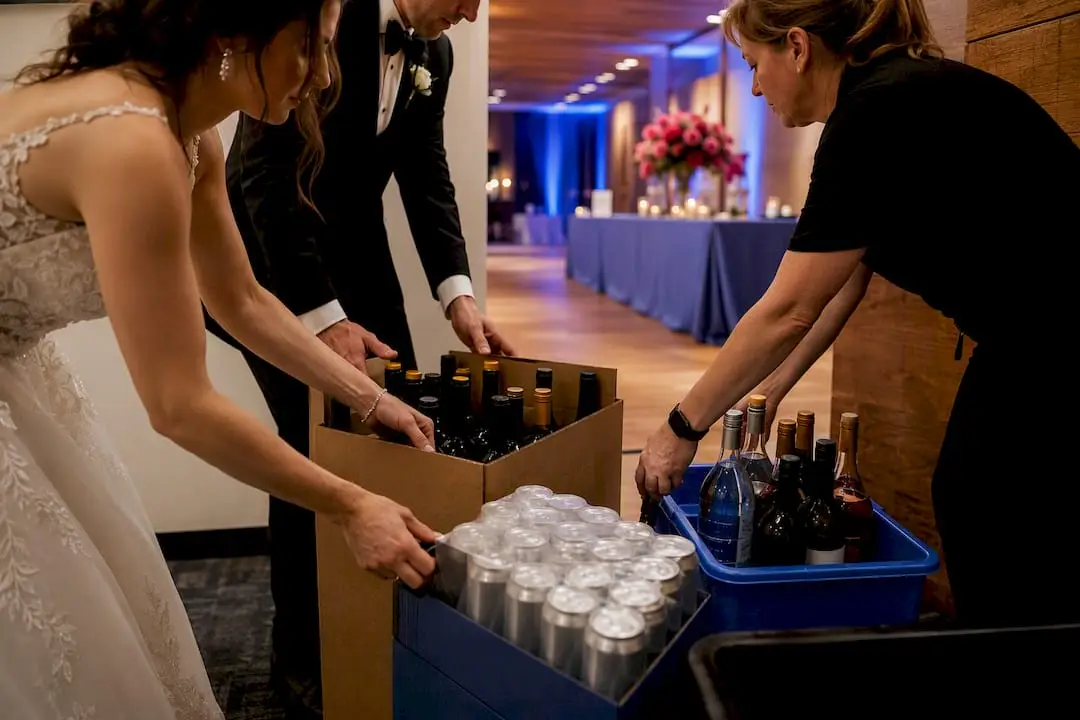
Rack delivery changes everything about setup. Rental vendors ship glassware in sectioned racks with foam dividers, and those racks are designed to be staged directly in a prep kitchen or back-of-house area. When glasses arrive in racks and are stored in a secure prep area, setup is faster, breakage during transport drops to near zero, and your catering staff can pull stems as needed rather than unpacking boxes at the table. Ask your venue if there’s a dedicated staging area before you confirm delivery logistics.
A few more things rental pros and experienced bartenders consistently flag:
- Repacking is your responsibility unless you’ve paid for full-service teardown. Damage waivers often require rinsed glasses returned upright in original racks; failure to follow return instructions can void the waiver or generate extra fees. Assign one person on your team to own this task.
- For long toasts, the flute is the professional’s choice. Its narrow opening slows carbonation loss, so guests aren’t holding flat champagne through a ten-minute speech.
- Bartenders prefer a 20–25% spare buffer at the bar specifically — not just for breakage, but because a busy bar line means glasses don’t always make it back to the bus tub in time for a second round.
- Stage a rack of backup glasses near the bar, not in the kitchen. When the bar runs low mid-service, a bartender shouldn’t have to leave the station to retrieve glasses from a back room.
Pro Tip: Coordinate a repacking plan with your venue staff before the event, not the morning after. Many rental vendors assume event staff will repack into original racks — if your venue team doesn’t know that’s expected, you’ll be doing it yourself at midnight.
Your glassware ordering checklist and timeline
Getting the timeline right prevents two common problems: under-ordering because you locked counts too early, and scrambling for last-minute additions because you waited too long.
Timeline milestones:
- 6–4 months out: Get initial rental quotes based on estimated guest count. Confirm the vendor’s minimum order quantities and damage waiver terms. Reserve your preferred collection — popular styles sell out for peak wedding weekends.
- 30–14 days out: Submit final glass counts based on confirmed RSVPs. Apply the 1.25× rule at this stage, not earlier. Confirm delivery window, staging area with the venue, and pickup time.
- 3–1 days before: Confirm delivery address, access time, and point of contact at the venue. Verify that a prep kitchen or back-of-house staging area is available and unlocked.
- Day of: Receive delivery, verify rack counts against your order, and stage glasses in the prep area. Do not unpack stems onto tables until catering staff is ready to set.
- Day after: Rinse glasses, repack upright into original racks, and have them ready for vendor pickup at the agreed time.
Checklist to confirm with your rental vendor:
- Minimum order quantities per glass type
- Damage waiver coverage and exclusions
- Rinse and repack requirements for return
- Delivery and pickup windows
- Per-piece replacement cost for breakage beyond waiver
- Whether polishing cloths or extras are included
Checklist to confirm with your venue:
- Location and access hours for the staging/prep area
- Whether the venue has an on-site dishwasher (affects tray-service feasibility)
- Who is responsible for repacking glasses at the end of the night
- Whether overnight storage is available if vendor pickup is the following morning
Contingency: Keep one full rack of backup stems on-site. If a rack gets damaged in transit or a glass type runs short mid-reception, you want a reserve without placing an emergency call to your vendor.
For wedding vendor timing and logistics, coordinating delivery windows with other vendors (catering, florals, transportation) prevents bottlenecks at the venue entrance.
What does wedding glassware actually cost?
Rental is almost always the more economical choice for a one-time event. Here are representative per-piece price ranges based on current rental market rates in the United States.
| Glass type | Rental (per piece) | Buy new (per piece) | Buy secondhand (per piece) |
|---|---|---|---|
| Water goblet | — | $4 | $3 |
| Wine glass (universal) | — | $4 | $4 |
| Champagne flute | — | $5–$20 | $5 |
| Highball | — | $3–$10 | $3 |
| Rocks glass | — | $3–$10 | $3 |
Illustrative budget scenarios:
Typical rental fees for a full glassware program are significantly less expensive than buying new and avoid storage, shipping, and maintenance costs.
Budget-saving moves that actually work:
- Rent only the tabletop stems (water, wine, flute) and use venue-provided or owned barware for highballs and rocks glasses
- Choose acrylic for outdoor cocktail-hour stations and rent glass only for the seated dinner
- Use a universal wine glass instead of separate red and white stems — cuts your wine glass count in half
- Ask your rental vendor about off-peak discounts for Friday or Sunday weddings
Key Takeaways
The single most important rule for wedding glassware: order 1.25× your guest count per glass type, rent rather than buy for most receptions, and coordinate your glass list with your bartending team before finalizing any order.
| Point | Details |
|---|---|
| The 1.25× ordering rule | Order 1.25× your guest count per glass type to cover breakage, misplacement, and second pours. |
| Rent for most receptions | Renting costs a fraction of buying new and removes storage, cleaning, and breakage liability from the couple. |
| Flute vs. coupe | Choose a flute for long toasts (preserves carbonation); choose a coupe for vintage aesthetics and short ceremonies. |
| Coordinate with your bartender | Share your cocktail menu with your bartending team before locking bar stem counts to avoid mismatches. |
| Cocktail-crew simplifies coordination | Cocktail-crew’s professional bartenders advise on glass selection, handle tray service, and reduce day-of logistics stress. |
Why glassware is the detail that actually changes how a wedding feels
Most couples spend months agonizing over florals and almost no time on glassware — and then wonder why their reception photos look slightly off. The glasses are in every single shot. They’re in guests’ hands during the toast, on the table during dinner, and at the bar all night. A polished, well-chosen stem elevates the whole table in a way that a beautiful centerpiece alone cannot.
The conventional wisdom is that glassware is a commodity — just order whatever the rental company has in stock and move on. That’s wrong, and it shows. The shape of a flute affects how long your toast stays effervescent. The weight of a wine glass changes how guests perceive the quality of the wine inside it. These aren’t abstract aesthetic points; they’re tactile experiences your guests carry through the entire evening.
What most guides miss is the coordination piece. Glassware doesn’t exist in isolation — it’s part of a service system that includes your bartenders, your catering staff, your venue’s back-of-house logistics, and your rental vendor’s delivery schedule. When those pieces don’t talk to each other, you end up with the wrong glass at the bar, a toast that runs out of flutes, or a vendor pickup that nobody planned for. Getting the glass right means getting the whole service chain right.
The couples who pull this off smoothly are almost always the ones who brought in a professional bartending team early and let them weigh in on the glass list. That’s not a coincidence.
Professional bartending that takes glassware off your plate
Glassware decisions get a lot easier when your bartending team is already thinking about them. Cocktail-crew’s professional bartenders work with couples and planners to match glass choices to the cocktail program, advise on counts for tray service, and handle the bar-side logistics that most rental guides don’t cover.
When you hire a licensed bartending team through Cocktail-crew, you get bartenders who know exactly how many rocks glasses a 120-person bar needs, whether your signature cocktail calls for a coupe or a highball, and how to stage flutes for a smooth toast without a single flat glass. The cocktail calculator on the Cocktail-crew site helps you build a shopping list before you even call a rental vendor. Services start at a three-hour minimum, which fits most reception formats without locking you into a full-day contract.
If you want bartenders who treat glassware as part of the service, not an afterthought, see what Cocktail-crew offers for your event date.
Useful sources
These resources are worth bookmarking for rental quotes, styling inspiration, and policy details.
- Glassware Rentals — Rent4.Party — Practical rental guidance, multi-stem packages, and buffer recommendations for seated weddings.
- Champagne Flute — Vogue.Rentals — Detailed flute specs, minimum order policies, and rack-delivery logistics.
- Glass Champagne Flute Rentals — All The Things Rentals — Damage waiver terms, return condition requirements, and polished-glass standards.
- Glassware — NY Party Rentals LLC — Premium stem collections and event rental inventory for weddings.
- Glassware Rental — Event Rental Solution — Hygiene standards, polish expectations, and full-service rental coordination.
- How to Choose Glassware for Your Wedding — Brides — Editorial guidance on material choices, acrylic alternatives, and styling by theme.
- Glassware Collections — Event Source — Rental inventory browser with specialty shapes including coupes, martini glasses, and copper mugs.
- Bulk Glassware for Weddings — Oriental Trading — Budget-friendly bulk purchase options for couples buying rather than renting.
- Cocktail-crew — Professional Bartending Services — Bartending coordination, cocktail calculator, and planning resources for wedding receptions.