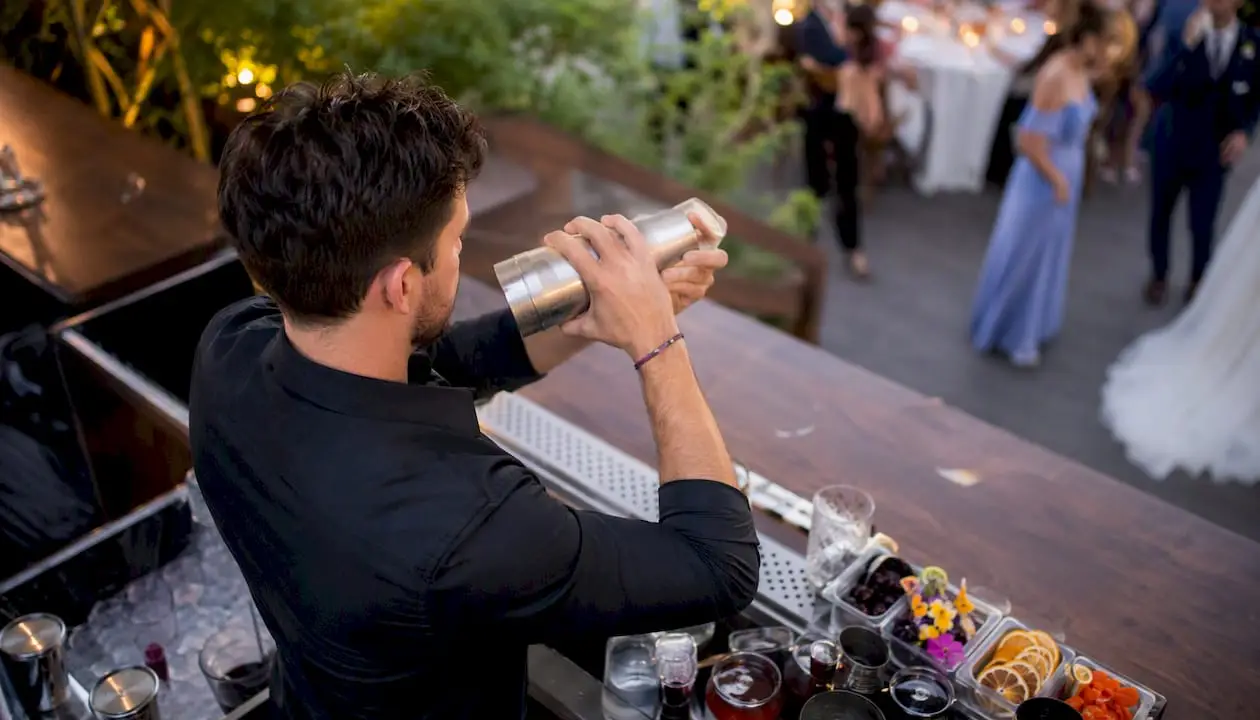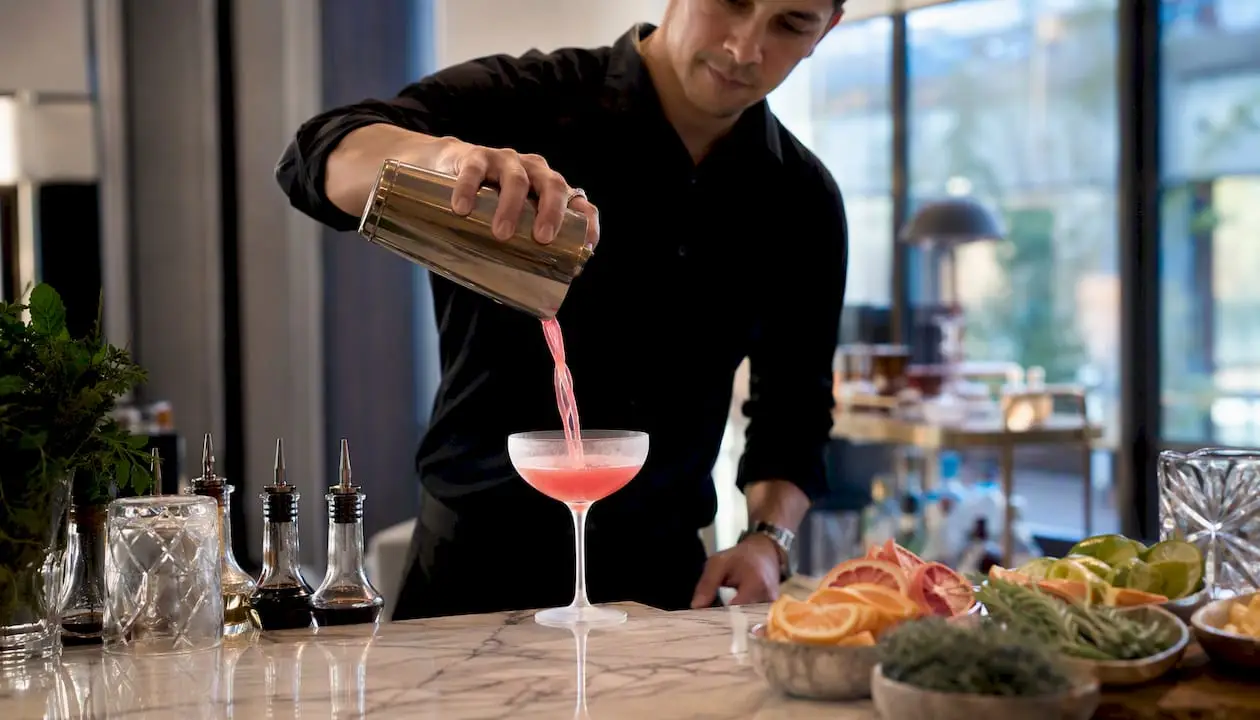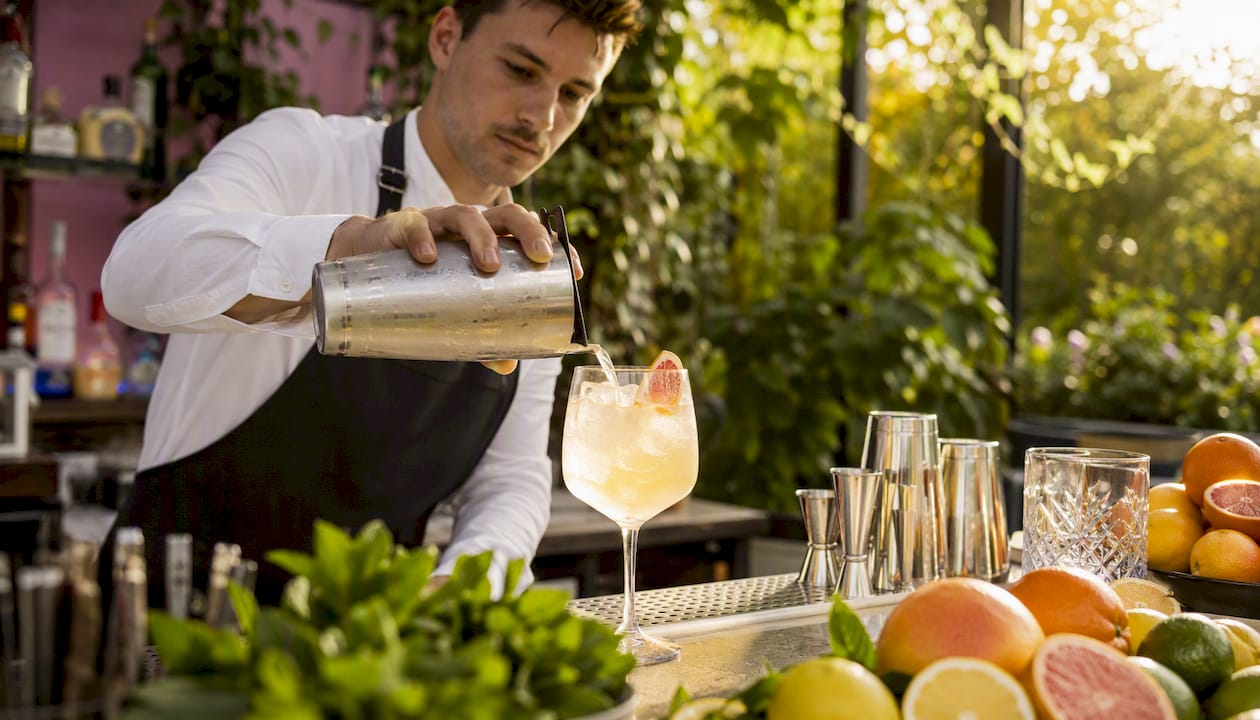
A well-built private-event cocktail menu comes down to three decisions: what to serve, how much to buy, and who pours it. The fastest path to a ready-to-serve bar is a compact list — two signature cocktails, one headliner spirits station, a wine and beer option, and at least one elevated mocktail — sized with the formula G × T × DPH (guests × hours × drinks per hour). For a crowd where DPH averages around 2, Food & Wine recommends splitting that total into spirits, wine, beer, and soft drinks to reflect current drinking preferences. If you’d rather hand off the math and the setup entirely, Cocktail-crew handles the full execution.
At a glance:
- Two signature cocktails (one batched, one made-to-order) cover both service speed and guest variety
- One headliner spirit station keeps shopping simple and bartender throughput high
- One red, one white wine, plus a canned beer option rounds out the bar without overcomplicating it
- At least one elevated mocktail is no longer optional — sober-curious guests are a real and growing share of any guest list
- Use G × T × DPH to find total drinks, then apply the category split to size each section of the shopping list
Key takeaways
A compact menu sized with the G × T × DPH formula, paired with professional execution, consistently outperforms an overbuilt bar on both guest experience and host stress.
| Point | Details |
|---|---|
| Finalize a tight menu | Choose 2 signature cocktails, 1 headliner spirit station, wine, beer, and at least 1 elevated mocktail. |
| Run the drink math | Use G × T × DPH (avg. DPH ≈ 2) and split totals: 30% spirits, 30% wine, 15% beer, 15% soft drinks. |
| Size bottles accurately | A 750 mL spirit yields ~12 mixed drinks; a 750 mL wine bottle yields ~5 pours. |
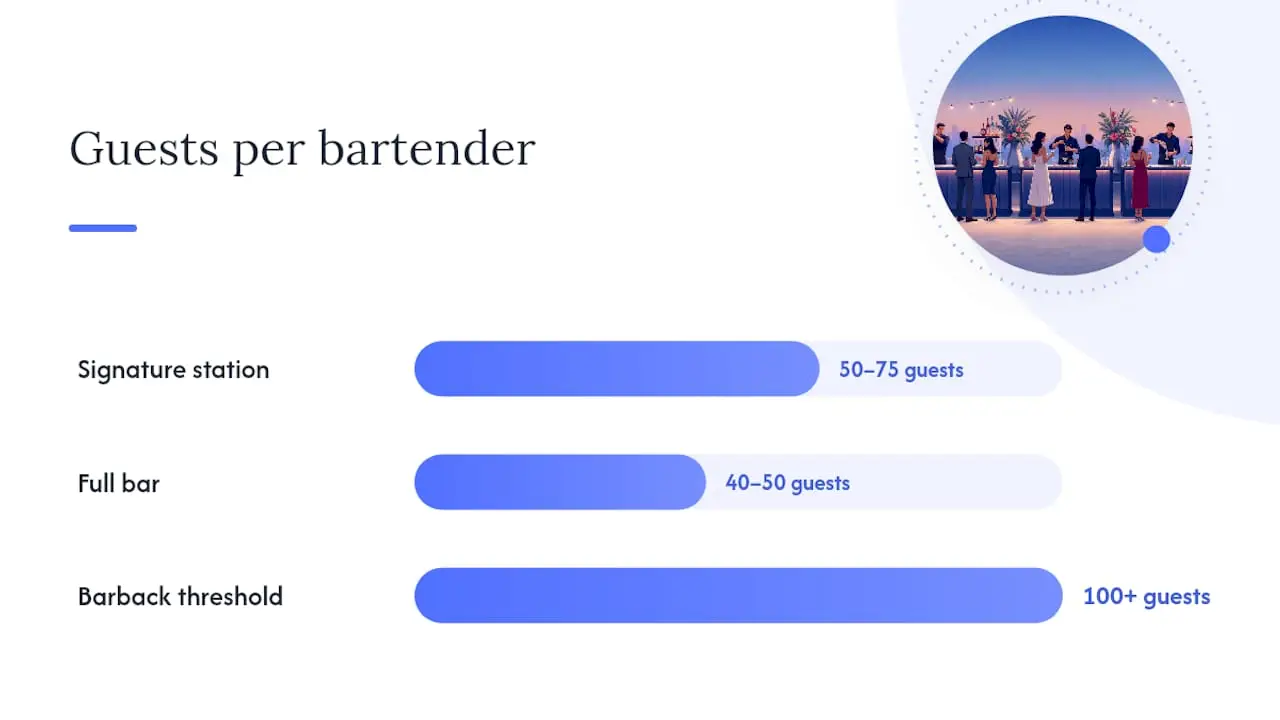
| Plan ice and staffing | Budget ~1.5 lbs of ice per guest; book 1 bartender per 50–75 guests for a signature-menu setup. |
| Book Cocktail-crew | Their team handles menu curation, batching, setup, and service from a 3-hour minimum — no guesswork on execution. |
Table of Contents
- What does a great private-event cocktail menu include?
- How do you pick signature cocktails and inclusive mocktails?
- How do you calculate total drinks, bottles, and batch sizes?
- Which menu format fits your service style?
- What goes on the shopping and equipment checklist?
- How many bartenders do you need, and what does event day look like?
- Safety, permits, and accessibility basics
- Cocktail-crew takes the execution off your plate
- A note from Nelson
- Sources
What does a great private-event cocktail menu include?
The strongest private-event menus share one trait: restraint. Fewer choices mean faster service, a tighter shopping list, and a bar that actually looks curated rather than stocked for a liquor store.
Core components:
- 2 signature cocktails. One seasonal pick (a strawberry basil smash in summer, a spiced pear sour in fall) and one crowd-pleaser (a classic margarita, a whiskey sour). The seasonal option gives the menu personality; the crowd-pleaser keeps the line moving.
- 1 headliner spirits station. Pick one or two spirits — say, tequila and bourbon — and build the entire cocktail list around them. Food & Wine notes that narrowing spirit choices is one of the most effective budget and simplification strategies available to hosts.
- Wine. One red, one white. A crowd-friendly Pinot Noir and a crisp Sauvignon Blanc cover most preferences without requiring a sommelier.
- Beer. Two canned options — one lager, one IPA or seasonal craft — keep things cold and self-serve-friendly.
- Elevated mocktail(s). Not a glass of sparkling water with a lime wedge. A rosemary-honey shrub with grapefruit and soda, or a cucumber-mint cooler with a salted rim, signals that sober-curious guests were considered from the start. See mocktail bar ideas for station design inspiration.
Pro Tip: Pair one batched punch (pre-mixed, ready to ladle) with one made-to-order signature. The punch handles the rush at the start of the event; the made-to-order drink gives guests something to watch and talk about.
A three-item example that works well together: a citrus gin spritz (batched), a bourbon honey sour (made-to-order), and a rosemary grapefruit mocktail. Shared ingredients — fresh citrus, a house honey syrup — cut prep time and reduce waste across all three.
How do you pick signature cocktails and inclusive mocktails?
Balance is the operative word. A menu with two spirit-forward, bitter drinks and no refreshing option will slow down service as guests hunt for something lighter. Aim for contrast: one spirit-forward, one citrus-bright, and one nonalcoholic that stands on its own.
Selection criteria:
- Flavor balance: pair one rich or spirit-forward drink with one light and acidic one
- Seasonality: cold-weather events favor warm spices and dark spirits; warm-weather events call for citrus, cucumber, and herbs
- Scalability: if a recipe requires a fresh-squeezed ingredient that oxidizes in two hours, it’s a poor batch candidate
- Allergen awareness: flag nut-based orgeat, gluten-containing liqueurs (some cream liqueurs), and dairy in any cream cocktails
Six short recipe snapshots:
Made-to-order:
- Bourbon honey sour — 2 oz bourbon, ¾ oz honey syrup, ¾ oz lemon juice, egg white optional; shaken, served up
- Spicy paloma — 2 oz tequila blanco, ½ oz jalapeño syrup, 1 oz grapefruit juice, topped with grapefruit soda; built over ice
- Classic gin & tonic — 2 oz gin, 4 oz premium tonic, cucumber ribbon; built, no shaker needed
Batch-friendly:
- Citrus gin spritz punch — gin, elderflower liqueur, lemon juice, cucumber water; dilute 20% with water before chilling, add prosecco on-site
- Spiced pear bourbon punch — bourbon, pear nectar, lemon juice, cinnamon syrup; batch without ice, chill overnight
- Rosemary grapefruit mocktail — rosemary syrup, fresh grapefruit juice, soda; batch the syrup-juice base, top with soda per pour
Many guests now alternate between alcoholic and nonalcoholic pours across an evening, per Food & Wine’s guidance on the “flexitarian” drinking audience. A mocktail that looks and tastes as considered as the cocktails beside it keeps those guests engaged rather than defaulting to water. For more inspiration, explore cocktail trends for weddings and special events.
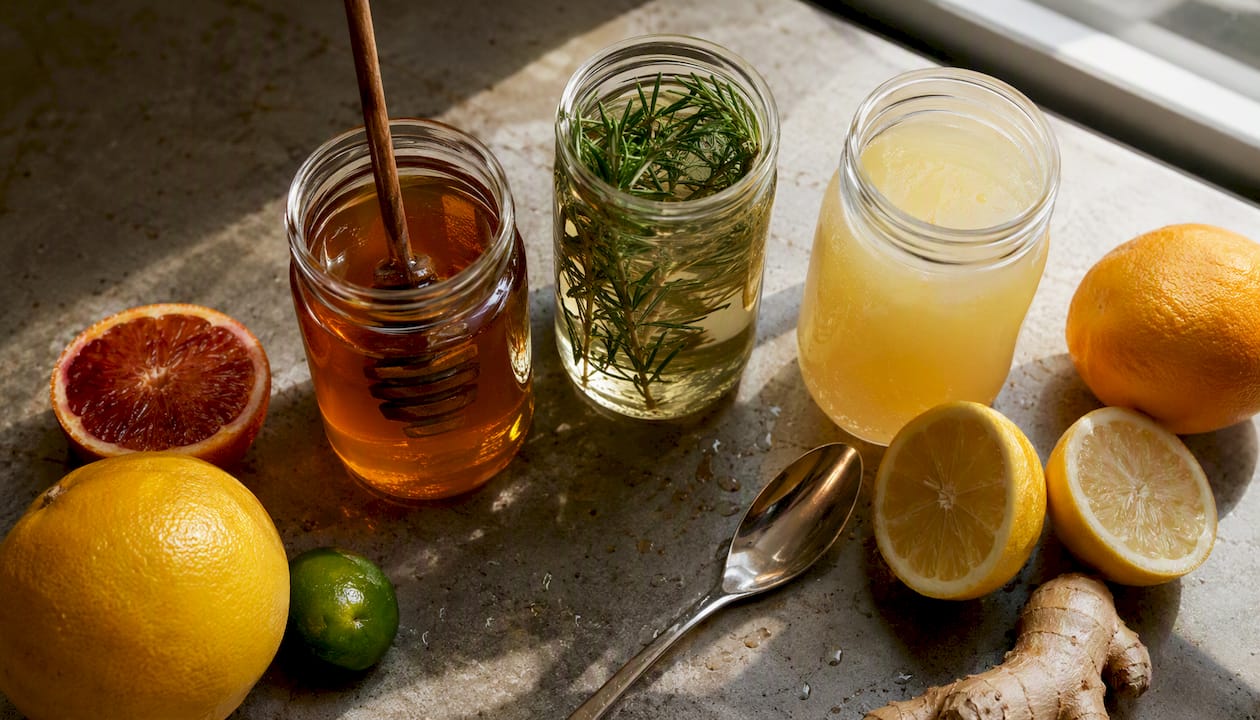
Pro Tip: Build one house syrup — honey, rosemary, or ginger — and use it across two or three drinks. One syrup batch replaces three separate sweetener purchases and unifies the menu’s flavor profile.
How do you calculate total drinks, bottles, and batch sizes?
Two formulas cover most events. Use whichever matches how you think about your crowd.
Formula 1 (Food & Wine): Total drinks = G × T × DPH
Formula 2 (America’s Test Kitchen): Total drinks = G × (H + 1)
America’s Test Kitchen recommends the second formula as a built-in buffer — the “+1” accounts for the faster consumption pace at the start of an event.
Worked example: 75 guests, 4-hour reception, mixed crowd (DPH ≈ 2)
- Formula 1: 75 × 4 × 2 = 600 total drinks
- Formula 2: 75 × (4 + 1), providing a conservative estimate of drinks
- A practical target somewhere between the two formula results, allowing for a buffer
Apply the category split to 500 drinks:
Bottle conversion figures come from America’s Test Kitchen: a 750 mL spirit bottle yields roughly 12 mixed drinks at 1½ oz pours; a 750 mL wine bottle yields about 5 five-ounce pours.
Batching guidelines:
- Batch cocktails without ice; add 20% water by volume to account for dilution that would normally come from shaking
- Chill batches overnight — never rely on ice to chill a warm batch at service
- Prep 10–15% more than your calculated total; guests drink unevenly and refills happen in clusters
- For a punch serving 75 guests at 2 pours each, target roughly 9–10 liters of finished punch
Pro Tip: For batch cocktails, taste the batch cold, not at room temperature. Sweetness and acid read differently once chilled, and most batches need a touch more citrus than the single-serve recipe suggests.
For a full batching how-to, the batch cocktails guide walks through dilution control and yield calculations in detail.
Which menu format fits your service style?
| Service style | Best menu format | Staffing note |
|---|---|---|
| Passed tray | 1–2 pre-poured signature drinks | 1 bartender per 50–75 guests |
| Single station | 1 batched punch + 1 made-to-order | 1 bartender per 50–75 guests |
| Full bar | Headliner spirits + wine + beer | 1 bartender per 40–50 guests |
| Self-serve | Canned cocktails + canned mocktails | Minimal staff; 1 attendant per 75 guests |
OnePageParty’s drink calculator flags a common layout failure: guests stall at the bar when there’s no clear space for bottles, wet glasses, napkins, and a toast setup. Separate the pour zone from the pickup zone and the line moves faster.
- Passed tray works best for cocktail hours and corporate receptions where guests are standing and mingling
- Single station suits weddings and milestone parties — one batched punch handles volume, one made-to-order drink gives guests a moment with the bartender
- Self-serve canned cocktail station is the lowest-overhead option for casual backyard events; stock canned mocktails alongside alcoholic options for full inclusivity
Total Wine’s drink planner recommends anchoring the hydration station — water, soda, ice — nearest the guest flow entry point, with spirits and mixers set back intentionally so guests make a deliberate choice to reach for them.
What goes on the shopping and equipment checklist?
Bottles and mixers:
- Spirit bottles per the category split above
- Tonic water, grapefruit soda, club soda (1 liter per 8–10 guests)
- Fresh citrus (lemons, limes, grapefruit) — plan 1 lemon and 1 lime per 4 guests
- House syrups (batch in advance; 1 liter covers roughly 40–50 drinks)
- Garnishes: citrus wheels, fresh herbs, cocktail picks, dehydrated fruit for visual impact
Equipment:
- Jiggers, shakers, strainers, bar spoons, pour spouts
- Ice tubs (one for chilling bottles, one for service ice)
- Glassware: 1.5 glasses per guest minimum; rent rather than buy for events over 50
- Trash and recycling bins at both ends of the bar
- Napkins, cocktail picks, and a dedicated toast-glass setup if needed
Ice: Total Wine’s planner puts the rule of thumb at about 1.5 lbs of ice per person, covering both bottle chilling and service ice. For 75 guests, that’s roughly 113 lbs — buy in two separate bags so you always have a sealed backup when the first bag runs low.
Pro Tip: Buy one large-format mixer — a gallon of fresh-pressed grapefruit juice, a 32 oz bottle of premium tonic — and use it across multiple drinks. It cuts per-unit cost and means fewer open containers to manage at the end of the night.
For tablescape and bar styling ideas that complement a curated cocktail menu, The Hen Planner’s tablescape guide offers practical visual inspiration on a realistic budget.
How many bartenders do you need, and what does event day look like?
Staffing rule of thumb:
- 1 bartender per 50–75 guests for a signature-menu or single-station setup
- 1 bartender per 40–50 guests for a full bar with multiple spirit options
- Add a barback or runner for events over 100 guests or venues with a long walk between bar and supply storage
Event day timeline:
- 90 minutes before guests arrive: bartender arrives, sets up station, chills bottles, preps garnishes, and confirms batch quantities
- 30 minutes before: final taste of batched cocktails, ice loaded, glassware staged
- Service window: bartender manages pours, monitors ice levels, and refills mixers every 45–60 minutes
- Last 30 minutes: slow service, shift to wine and beer, begin consolidating open bottles
- Post-event: bartender breaks down station, consolidates unopened bottles for host, removes bar waste
Contract checklist before you book:
- Hours included and overtime rate
- Who supplies glassware, mixers, and ice
- Liability insurance and any venue-required permits
- Corkage or service fees charged by the venue
- Cleanup responsibilities (bar breakdown, trash removal)
Blogosm’s hiring guide advises hosts to collect event details — type, date, guest count, duration, atmosphere — before contacting any bartender, and to prioritize candidates with clear communication and relevant private-event experience. For a full breakdown of what to look for, see how to choose the perfect bartending service.
Pro Tip: Ask any bartender candidate how they handle a line of 20 guests at once. Their answer tells you more about their event experience than their resume does.
For cost benchmarks on hiring professional bartenders, the bartender cost guide breaks down typical pricing by event type and service style.
Safety, permits, and accessibility basics
- Verify venue alcohol rules before finalizing any menu — some venues prohibit outside spirits or require a licensed caterer to pour
- Check local permit requirements with your venue coordinator or local authority; rules vary by state and county, and a private-event host can face liability if service runs afoul of local law
- ID every guest who appears under 30; require any hired bartender to do the same as a condition of service
- Label allergens on the menu card: nut syrups, gluten-containing liqueurs, dairy in cream cocktails
- Elevated mocktails must be visible on the menu, not an afterthought — place them at the same visual level as the cocktails so sober-curious guests don’t have to ask
- Seating near the bar: guests with mobility considerations need a clear path and a place to set a drink; factor this into your station layout
Pro Tip: Ask your bartender or venue coordinator to confirm insurance coverage in writing before the event. One email confirmation takes two minutes and removes a significant liability question from your plate.
For mocktail bartender tips that make the nonalcoholic side of the menu genuinely memorable, Cocktail-crew’s team has built out a full resource.
Cocktail-crew takes the execution off your plate
Cocktail-crew is the direct alternative to building and running this bar yourself. Their bartenders arrive ready to execute the full menu plan described in this article — batched cocktails pre-chilled, signature drinks made-to-order, and an elevated mocktail program that treats sober-curious guests as first-class guests, not an afterthought.
The service starts at a three-hour minimum, which means you’re not locked into a full-day contract for a four-hour wedding reception or a corporate happy hour. Cocktail-crew’s team handles setup, service, and breakdown — and their cocktail calculator gives you a custom shopping list before you book a single bottle. Featured on Shark Tank and backed by strong client reviews, they’ve run the math and the bar for events across multiple metro areas. To see what professional bartending actually changes about an event, or to request a custom menu for your date, reach out directly through their private event bartending page.
A note from Nelson
The tightest menu I’ve seen work at a large event was two cocktails and a mocktail. The host had agonized over adding a third signature drink, and I talked her out of it. One batched citrus punch, one made-to-order bourbon sour, one sparkling hibiscus mocktail. The line never backed up past four people. Guests talked about the drinks all night — not because there were many options, but because every option was clearly considered.
Hosts consistently underestimate how much a focused menu does for the guest experience. Fewer choices mean faster pours, less waste, and a bar that looks intentional. If you’re unsure where to cut, cut the third cocktail and spend that budget on better ice and a real garnish setup. The visual impression of a well-stocked, organized bar does more for the mood than an extra spirit ever will.
If you want a planning checklist or want to talk through your specific event, Cocktail-crew’s team is the right starting point.
Sources
- How to Calculate the Amount of Alcohol Needed for a Party
- How Much Alcohol Should I Buy for a Party?
- Drink Planner
- Party Drink Calculator for 20-100 Guests | Beer, Wine, Soda & Ice | OnePageParty
- What to Know Before Hiring a Bartender for Your Private Event? – Blogosm