Default to dark, durable, slip-resistant clothing that matches the venue’s formality, and confirm anything unusual with your manager or booker before the shift. That’s the whole rule. Everything else is detail.
Run this checklist before you walk out the door:
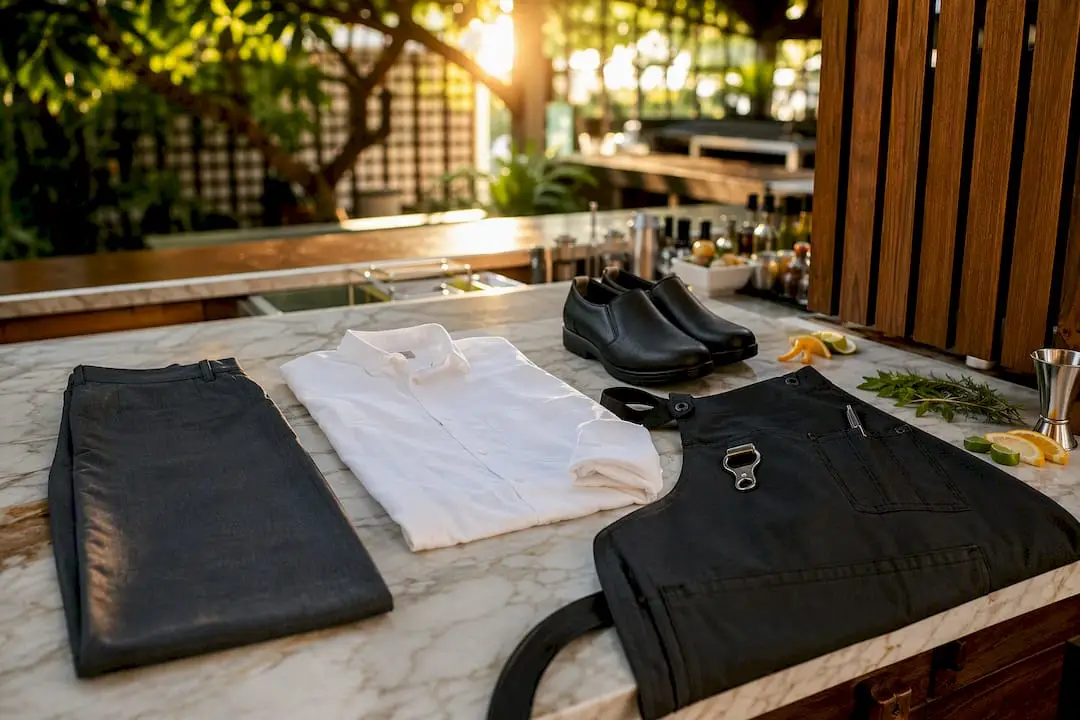
- Non-slip, closed-toe shoes (no exceptions, even in summer)
- Dark, fitted pants without rips or fading
- A clean, wrinkle-free collared or plain shirt
- An apron if the venue expects one, packed even if you’re not sure
- Hair controlled, nails trimmed, minimal cologne or perfume
Closed-toe, non-slip shoes are the one item where there’s no gray area. Spilled liquid on tile or rubber matting is a slip-and-fall waiting to happen, and most venues will send you home if you show up in sneakers or sandals.
Key Takeaways
Getting bartender dress code right comes down to matching venue formality with dark, durable, slip-resistant clothing and confirming any special requirements before the shift starts.
| Point | Details |
|---|---|
| Non-slip shoes are non-negotiable | Closed-toe, slip-resistant footwear prevents the most common bar injuries during long shifts. |
| Match the venue’s formality tier | Casual bars call for branded polos; formal events often require vests, ties, or tuxedo pieces. |
| Pack a spare, pressed shirt | Freelancers and agency staff should always carry backup pieces for last-minute changes. |
| Ask before assuming | Confirm required colors, supplied items, and reimbursement policy directly with the booker. |
| Cocktail-crew manages presentation for hosts | Bartenders arrive pre-briefed on formality and grooming, removing uniform coordination from the host’s plate. |
Table of Contents
- Core Pieces Every Professional Bartender Attire Kit Needs
- How Should You Dress for Different Bar Venues?
- What Grooming and Tattoo Rules Should You Expect?
- What Safety and Functional Features Matter Most?
- How Do Dress Codes Change for Private Events?
- What Should You Pack for Common Bartending Gigs?
- Why Consistent, Professional Presentation Matters
- How Cocktail-crew Handles Staff Presentation for You
- Sources
Core Pieces Every Professional Bartender Attire Kit Needs
Every solid bartender uniform starts with the same foundation, regardless of venue: dark trousers, a neutral collared or plain shirt, non-slip closed-toe shoes, an apron, a belt, and one spare shirt you never actually plan to wear. Retail lines built specifically for this job, like all-black bartender uniform kits pairing a utility shirt with stretch service jeans, exist because long shifts punish flimsy clothing fast.
Each piece earns its spot. Dark trousers hide the citrus juice and bitters that end up on your leg by hour two. A collared or plain shirt reads as professional without looking stiff. The apron, whether waist-tied or a full bib, gives you pockets for your bottle opener, pen, and cash without bulking up your pockets. A spare shirt matters more than people think: one dropped tray of drinks and you’re serving guests in a stained uniform for the rest of the night unless you packed a backup.
Fit and fabric decide whether the uniform survives a Friday rush. Breathable poly-cotton blends move with you behind a cramped bar and resist visible sweat better than pure cotton. Shirt stays keep your look sharp through hours of reaching and pouring instead of untucking by 9 p.m.
Pro Tip: Buy your work pants one size looser than your everyday fit. You’ll be crouching for ice, reaching for bottles, and standing for six-plus hours straight, and a snug waistband turns into a real problem by midnight.
How Should You Dress for Different Bar Venues?
Dress codes vary dramatically by venue, and the biggest mistake newer bartenders make is applying one outfit to every gig. A venue-by-venue breakdown usually splits into three tiers.
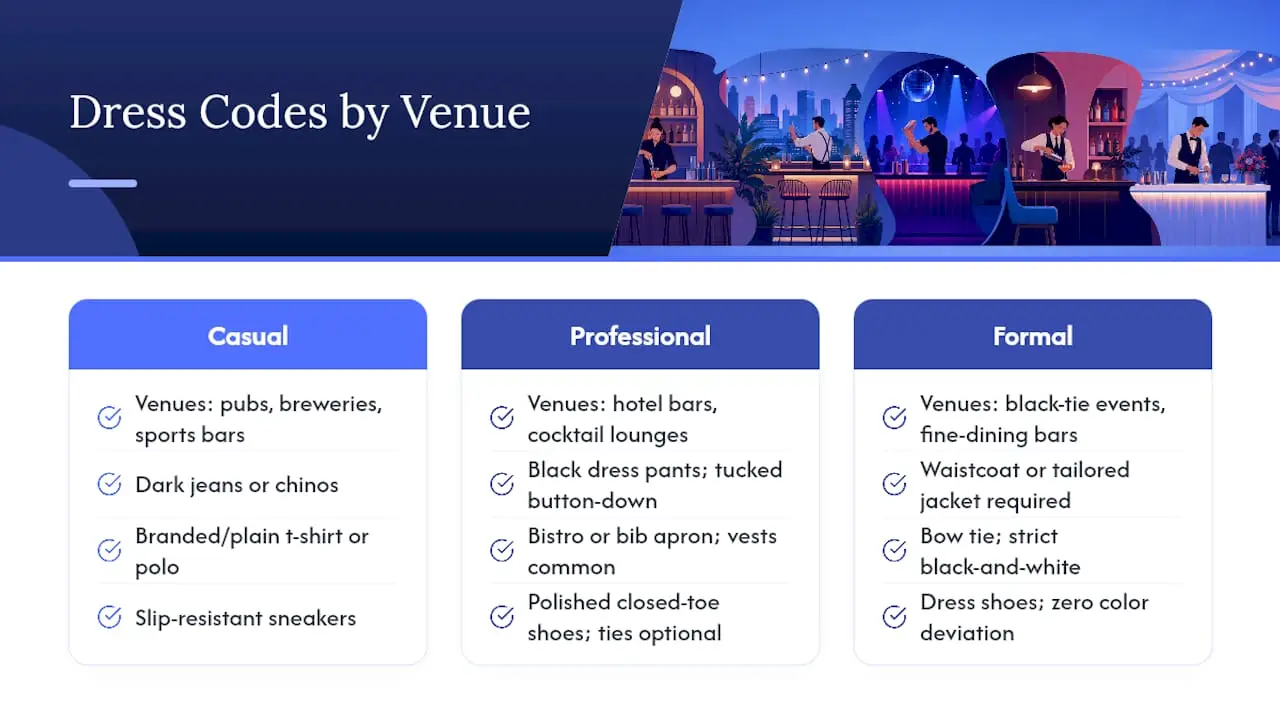
Casual (pubs, breweries, sports bars): Dark jeans or chinos, a branded or plain t-shirt or polo, sneakers with a slip-resistant sole. Themed venues, tiki bars, or sports bars often allow, and sometimes require, branded or novelty pieces here.
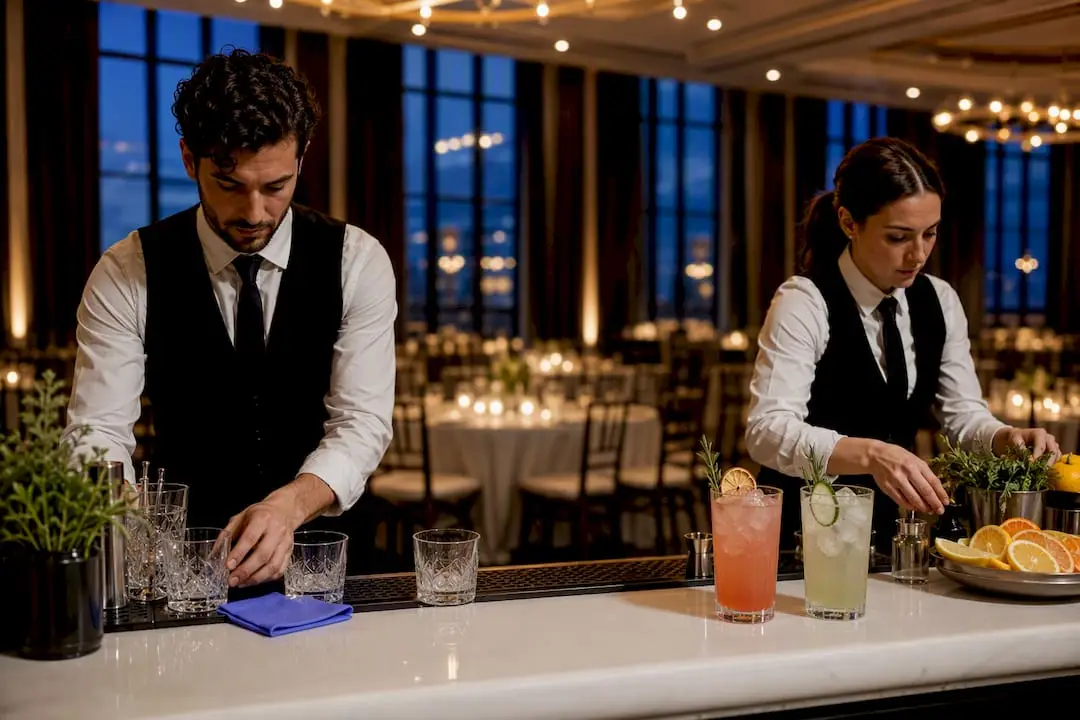
Standard professional (hotel bars, craft cocktail lounges): Black dress pants, a tucked button-down, a bistro or bib apron, polished closed-toe shoes. Vests are common; ties are optional unless the venue specifies otherwise.
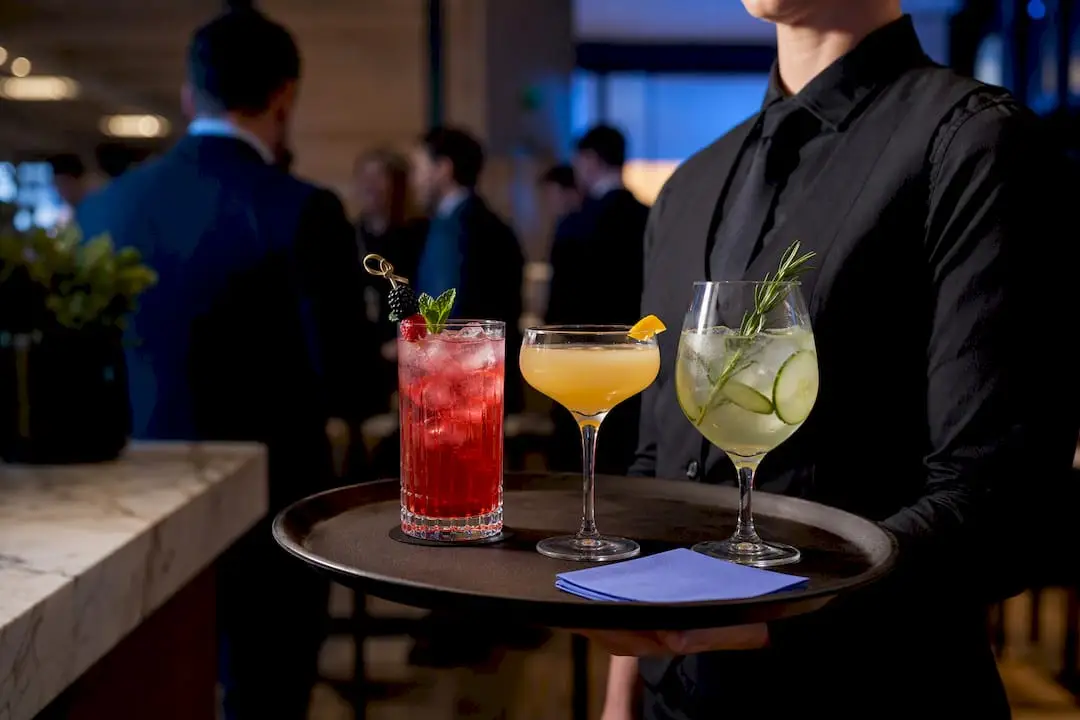
Formal or upscale (black-tie events, fine-dining hotel bars): A full waistcoat or tailored jacket is often required, along with a bow tie, dress shoes, and strict color discipline, usually black and white with zero deviation. A dark, limited color palette shows up across every tier because it hides stains and keeps a staff lineup looking cohesive.
What Grooming and Tattoo Rules Should You Expect?
Grooming standards tend to tighten as the venue gets more upscale, but a few basics apply almost everywhere: hair pulled back or controlled, facial hair trimmed and neat, short clean nails, and cologne or perfume kept minimal since you’re working close to food and drinks. Higher-tier venues are particularly strict on hygiene details like tied-back hair and unscented products.
Tattoo and piercing policies vary far more than most bartenders expect:
- Craft cocktail bars and dive bars often don’t care about visible tattoos at all
- Upscale hotels and formal events frequently ask staff to cover tattoos with long sleeves
- Some staffing agencies request removing gauges or excessive facial jewelry for client-facing gigs
- When in doubt, ask. A five-second text to your manager beats showing up and getting turned away
What Safety and Functional Features Matter Most?
Your shoes do more work than any other piece of your uniform. Closed-toe, slip-resistant soles with real arch support prevent the two most common bar injuries: dropped glass cuts and slip falls on wet floors during a six-hour shift.
Fabric choice is a tradeoff, not a solved problem. Moisture-wicking, stretch-blend pants move better during a rush, while heavier cotton twill resists stains longer but breathes worse. Breathable fabrics with room to move matter more than they sound, since stiff, non-stretch pants make bending for ice bins miserable by hour three.
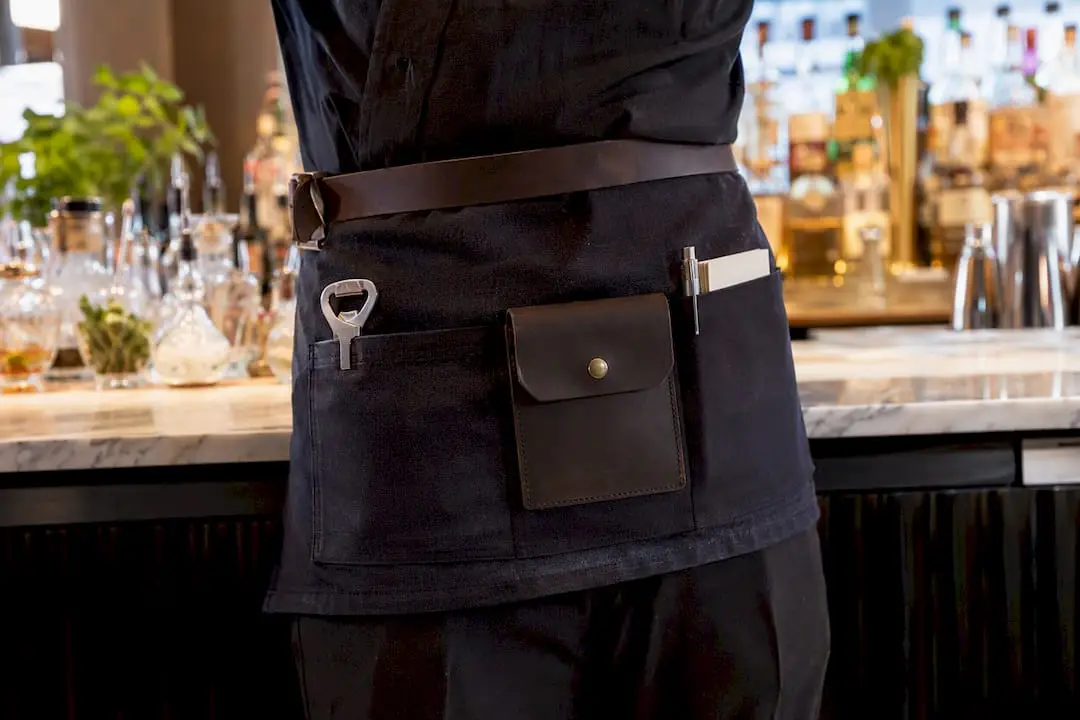
Treat your apron as equipment, not decoration. Assign every pocket a job: bottle opener on the left, pen and pad on the right, cash pocket buttoned shut. Confirm ahead of time whether the venue supplies tools or you’re bringing your own.
Pro Tip: Keep a backup shoelace and a small stain pen in your bag. Neither costs more than a few dollars, and both have saved a shift more than once.
How Do Dress Codes Change for Private Events?
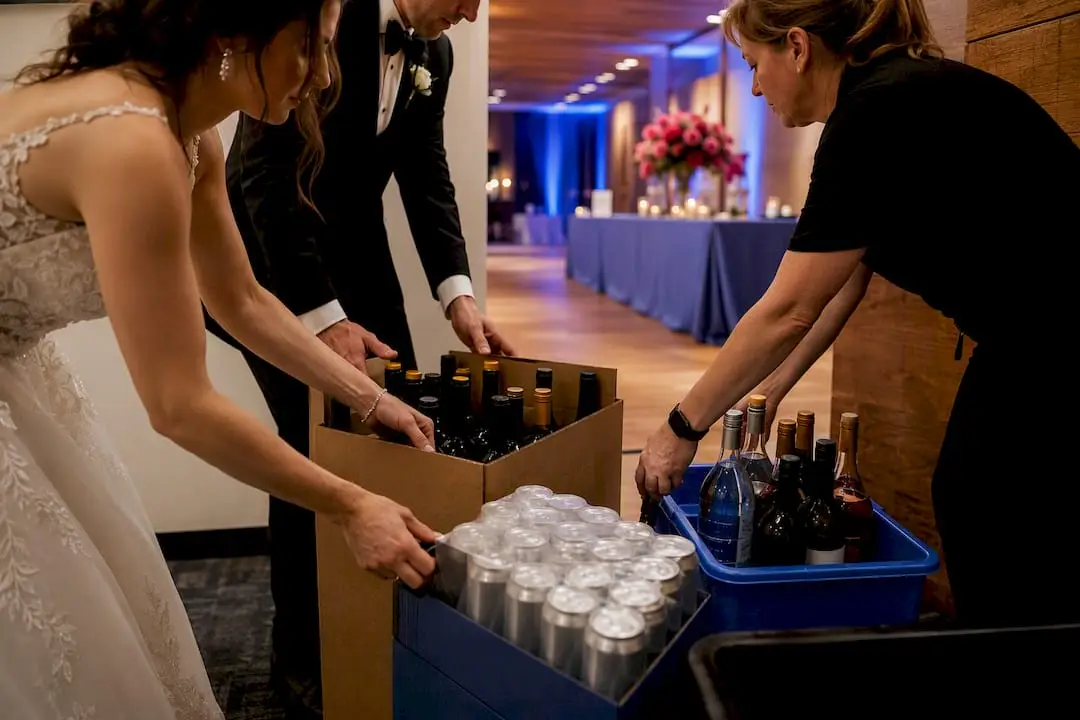
Private parties, weddings, and staffing-agency gigs run on different rules than a regular bar shift, and assuming “smart casual” or “all black” causes more wardrobe conflicts than anything else in this business. The safe default for private events is black pants and black non-slip shoes, with formal jobs sometimes requiring a full tuxedo or a specific color scheme set by the host.
Before you accept the booking, ask these questions:
- Is there a specific color, formal wear, or uniform piece required (vest, bow tie, tux jacket)?
- Does the client or agency supply special items, or do I need to buy or rent them?
- Will I be reimbursed for anything I have to purchase specifically for this event?
- Is there a theme (holiday party, black-tie wedding) that changes standard expectations?
Freelancers should always pack a spare, pressed uniform since bookings can shift last minute and client expectations rarely match perfectly from gig to gig.
What Should You Pack for Common Bartending Gigs?
Your go-bag should always include a spare shirt, a lint roller or polishing cloth, extra shoelaces, a folded apron, and a basic tool kit (opener, jigger, pen). Common outfits cover most bartending gigs, including branded polos and dark jeans for breweries or taprooms; black slacks and white button-down shirts with aprons for hotel bars; breathable shirts with dark chinos for rooftop bars; formal attire like tux pants and vests for wedding receptions; all-black tailored fits with minimal accessories for private cocktail parties; moisture-wicking black shirts with stretch pants for high-volume nightclubs; and lightweight collared shirts with appropriate shorts and closed-toe grip footwear for outdoor barbecues or backyard events.
Pro Tip: When your bag space is limited, prioritize the piece that’s hardest to improvise, usually shoes, over the piece that’s easiest to fix on-site, like a wrinkled shirt.
Why Consistent, Professional Presentation Matters
A bartender’s uniform is a brand extension, not an afterthought. Guests read your presentation as a signal of the drink quality before you’ve poured anything, and that first impression follows you into repeat bookings and referrals. Confirm the venue’s actual policy every time, keep spares in your bag, and treat the details of what makes a great event bartender as seriously as your pour technique.
How Cocktail-crew Handles Staff Presentation for You
Hosts who’d rather not manage uniform coordination, spare shirts, and last-minute dress code questions get all of that solved automatically when they book through Cocktail-crew instead of assembling a freelance team themselves. Every bartender arrives briefed on the event’s formality level, whether that means matching black attire for a wedding or branded polos for a backyard barbecue, so you’re never fielding a text asking what to wear.
Cocktail-crew’s team handles grooming standards and uniform pieces internally, including aprons and supplied branded items where the event calls for it, so hosts aren’t chasing down reimbursements or texting bartenders about missing bow ties. Whether you’re planning a wedding that calls for formal staffing or a private party where consistent presentation matters, the flexible three-hour minimum makes it easy to book professional staff who already look the part. Check availability and get a quote through Cocktail-crew’s bartending service page to see what a stress-free staffing setup actually looks like.
Sources
- Bartender Dress Code Guide: What to Wear 🎯 2026 July
- Bartending Dress Code for Private Parties – A Bar Above
- A Simple Guide to Dress Code for Bartenders | Available Online
- Bartending Attire Tips for First-Time and Aspiring Bartenders