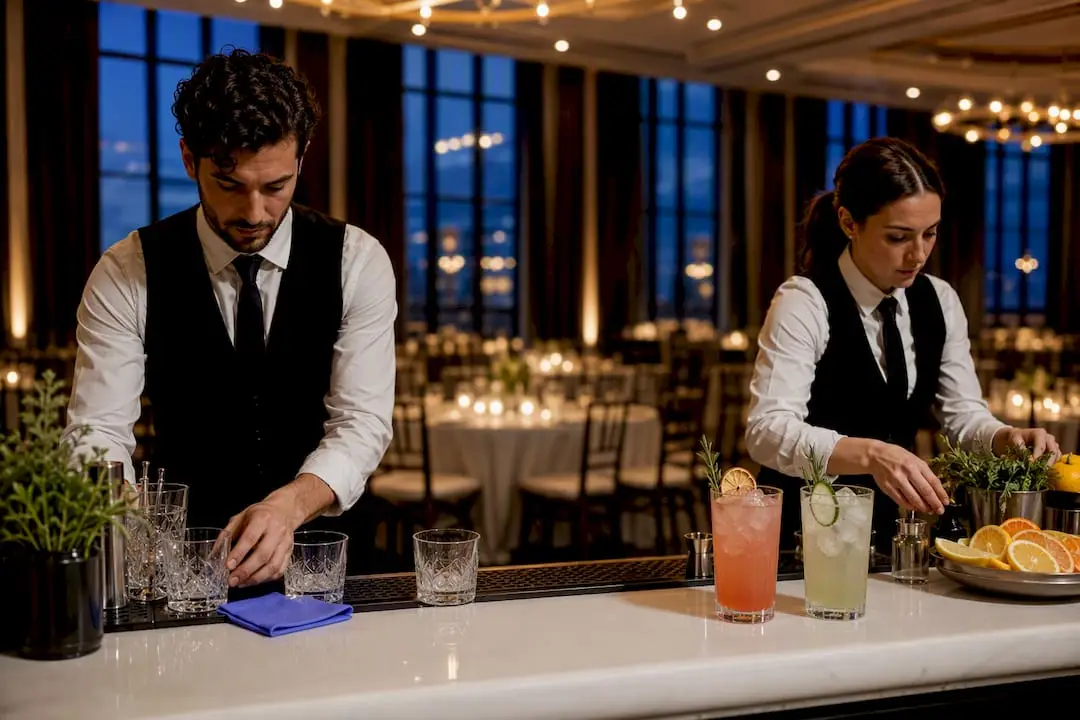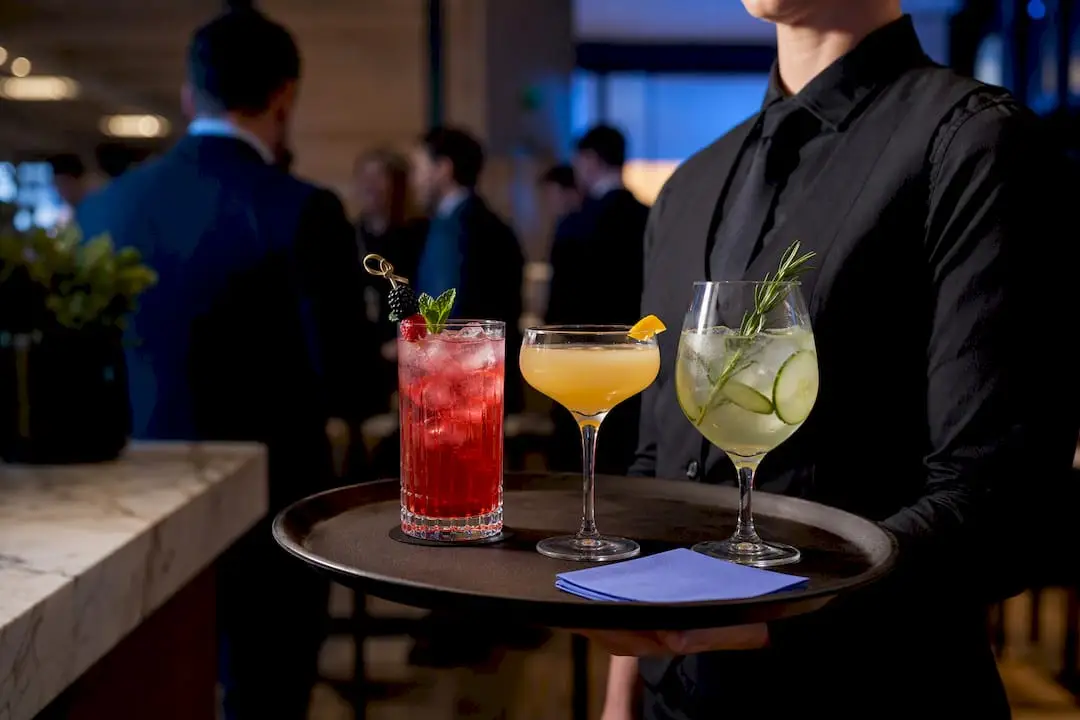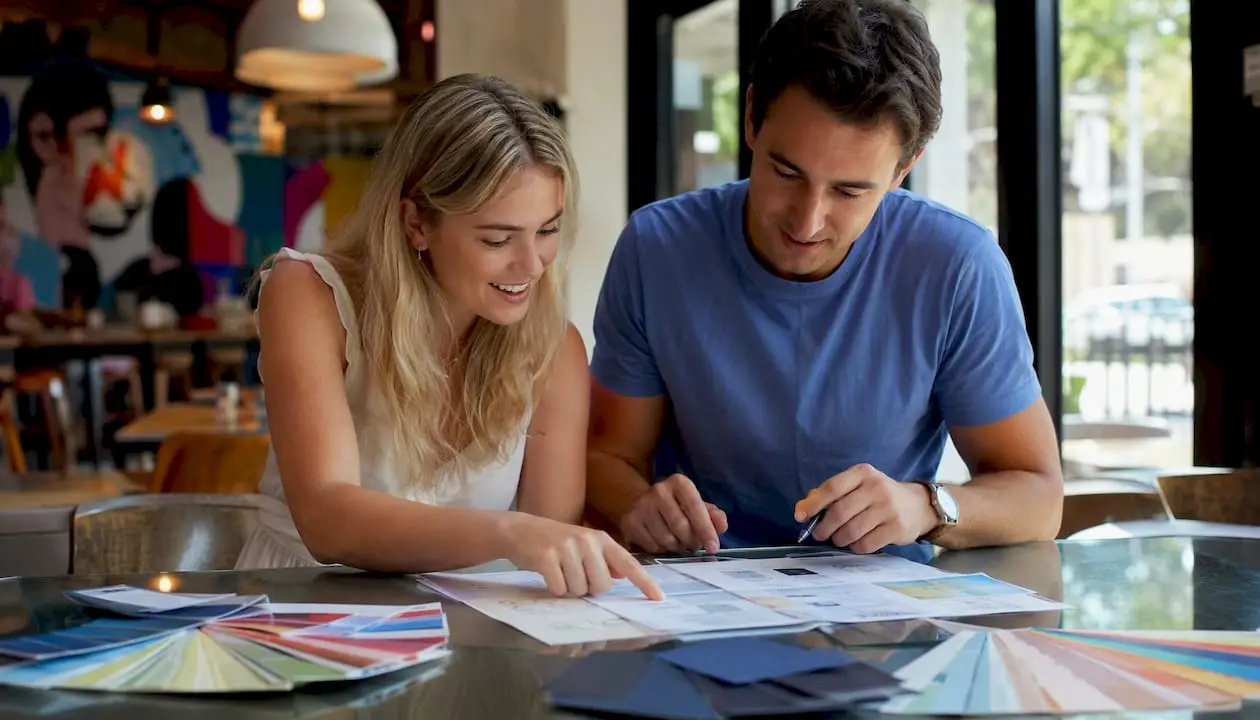
The most guest-friendly wedding bar setup features a small number of signature drinks with one-line descriptions, a clear service note, and at least one mocktail given equal visual weight. That single structure cuts order time, reduces bartender back-and-forth, and keeps high-margin drinks moving.
- Lead with signatures. Put your 3–5 custom cocktails at the top, each described in one line: spirit plus one flavor cue.
- Add one classic and a beer/wine category line. Guests who want something familiar find it fast without scanning a wall of text.
- Label your mocktail section clearly. “Zero-proof” or “Mocktails” in the same type size as everything else, not a footnote.
- Include a service note. “Open bar 5–8 PM | Top-shelf upgrade available” tells guests exactly what to expect before they reach the bartender.
The Cocktail Crew’s cocktail calculator and licensed professional bartenders are built around this exact format, making implementation straightforward for any couple or event host.
Table of Contents
- What belongs on your wedding bar menu sign
- How to choose materials that work as décor and survive the night
- Placement and readability rules that keep lines moving
- Menu strategy that speeds service and lifts revenue
- Writing mocktails and inclusive options guests actually want to order
- Copy-ready wording templates you can hand to a designer
- Production timeline and what to budget
- How to coordinate with your bartender and venue
- Key Takeaways
- The detail most couples overlook
- The Cocktail Crew handles the bar so you don’t have to
What belongs on your wedding bar menu sign
Every item on the sign should serve either the guest or the bartender. If it does neither, cut it.
- Signature cocktails. Name, spirit, one flavor cue. “The Rosewood — Gin, elderflower & grapefruit.” That’s enough.
- One or two classics. An Old Fashioned or a Margarita reassures guests who don’t want something experimental. Note if it’s pre-batched: “Margarita (pre-batched, ask for rocks or frozen).”
- Beer and wine as categories. List “Red, White, Sparkling” rather than individual bottle names unless you’re pouring something unusual worth calling out.
- Mocktail section. Labeled, same font size, same visual weight. More on this in the inclusivity section below.
- Service-style note. Open bar, consumption limit, cash bar, or per-head pricing. Guests need this information before they order, not after.
- Allergen callouts when relevant. If a cocktail contains a nut syrup or a dairy-based cream, one small note prevents a real problem.
How to choose materials that work as décor and survive the night
Wedding bar signs do double duty: they communicate the menu and photograph as part of your reception décor. The material you choose determines how well it handles both jobs.
- Acrylic. Modern, durable, and gallery-quality in photos. Heavier than cardstock, so it needs a dedicated stand. Acrylic signs are often kept as keepsakes after the wedding, which makes the higher price easier to justify.
- Printed cardstock or foam board. Affordable and frame-ready. Printed plastic boards in common sizes run $19.99–$29.99; acrylic signs typically start around $54. Great for indoor venues where durability isn’t a concern.
- Chalkboard. Rustic, reusable, and easy to update if the menu changes. Harder to read from a distance and prone to smudging at busy bars.
Size matters for placement. An 8×10 or 11×14 sign sits cleanly on the bar top without crowding the workspace. A 16×20 or larger sign belongs on an easel nearby, where guests can read it while waiting rather than leaning over the bar.
Tie the sign to your wedding palette through font choice and border color rather than heavy graphic elements. A monogram or a simple floral frame reads well in photos without competing with the text. If you want to coordinate the full bar aesthetic, custom glassware with matching colors or imprints can pull the look together.
Pro Tip: Choose a matte or anti-glare finish on acrylic and laminated prints. Glossy surfaces catch venue lighting and create hotspots in photos, and they show fingerprints within the first hour of service.
Placement and readability rules that keep lines moving
Poor placement is the single most common bar signage mistake at weddings. A beautiful sign that guests can’t read from three feet away is just decoration.
- Minimum 24pt type for cocktail names; 18pt for descriptions. Anything smaller requires guests to lean in, which slows the line.
- High contrast is non-negotiable: dark text on a light background, or white text on a dark one. Avoid light gray on white or gold foil on cream.
- Place the bar-top sign at the front edge of the bar, not behind the bottles. Bottles and garnish trays block sightlines constantly.
- For multiple bar stations, order duplicate signs. Guests at the far end of a long bar shouldn’t have to walk to the other end to read the menu.
For outdoor events, lamination or acrylic is the only practical choice. A paper sign in a weighted easel will curl, smear, or blow over. Use a covered easel or a weighted base if wind is a factor at your venue.
Menu strategy that speeds service and lifts revenue
Featuring high-margin signature drinks at the top of the menu moves volume faster than a long, disorganized list. Guests read top to bottom; the first drink they see is the one they’re most likely to order.
Keep each cocktail to one line: spirit plus one flavor cue. Concise descriptions reduce reading time and let guests decide before they reach the bartender, which cuts ticket time meaningfully at a crowded reception.
A practical wedding package structure: 3 signature cocktails + 1 classic + beer/wine category + 1 mocktail. That’s six items total, which fits on any sign size and covers every guest preference. Avoid cocktails with more than four ingredients unless you have dedicated prep staff; a complex build at a busy bar creates a bottleneck that backs up the entire line.
Pro Tip: A “welcome cocktail” pre-poured at the entrance is an easy upsell and a smart operational move. It reduces the initial rush at the bar and gives guests something in hand during cocktail hour without requiring a bartender interaction.
Writing mocktails and inclusive options guests actually want to order
A mocktail section that reads like an afterthought gets treated like one. Give it the same real estate and the same naming style as your cocktails.
- Feature 1–2 elevated mocktails with cocktail-style names: “The Garden Hour — Cucumber, mint & tonic” reads far better than “Virgin Mojito.”
- Use the same type size and placement as the alcoholic options. Tucking mocktails at the bottom in smaller text signals they’re optional; they’re not.
- Label the section “Mocktails,” “Zero-Proof,” or use a small leaf or star icon for clarity. Avoid “Non-Alcoholic” as a header — it’s clinical and slightly apologetic.
- Add sparkling water and craft sodas as a simple complement. Guests who aren’t drinking still want something interesting in their glass.
The Cocktail Crew’s mocktail bar service is built around this parity approach, with bartenders trained to present zero-proof options with the same confidence as any cocktail on the menu.
Copy-ready wording templates you can hand to a designer
Three formats cover most wedding bar setups. Copy the one that fits and fill in your drink names.
Template 1: Signature-first (minimal)
Template 2: Classic package
Template 3: Mocktail-forward
For personalized drink names, use the couple’s names, the wedding location, or an inside reference. Descriptive names work better for guests who don’t know the story; personal names work better as a keepsake detail.
Production timeline and what to budget
Order printed signs at least three weeks before the wedding for standard production. Rush printing is available from most vendors but adds cost. If your final drink list isn’t confirmed yet, place a placeholder order with your design and submit the drink details closer to the date.
| Material | Typical Price Range | Lead Time | Best For |
|---|---|---|---|
| Printed cardstock / foam board | $19.99–$29.99 | 1–2 weeks | Indoor venues, budget-conscious hosts |
| Acrylic panel | ~$54+ | 2–3 weeks | Modern aesthetic, keepsake value |
| Chalkboard (DIY or rental) | Varies | Immediate | Rustic venues, last-minute changes |
| Framed print | — | 1–2 weeks | Classic or vintage aesthetic |
Duplicate signs for a second bar station add roughly the same cost per unit. Budget for an easel or stand if your venue doesn’t provide one; rental fees typically run $15–$30 per stand. For outdoor events, factor in lamination or an acrylic upgrade to handle weather. See typical wedding bar budgets for broader cost context.
How to coordinate with your bartender and venue
Your bartender and venue coordinator both need to know the menu plan before setup day. A quick confirmation call two weeks out prevents most last-minute problems.
Questions to confirm with your bartender:
- Will any cocktails be pre-batched? If so, which ones, and what’s the batch size?
- How many bartenders will be staffed, and what’s the expected guest-to-bartender ratio?
- Does the bartender need a printed ticket list or POS-friendly menu for their own reference?
- Are garnish needs accounted for in the shopping list, or does the host need to provide them?
Questions to confirm with your venue:
- Where are permitted sign locations, and are easels provided or rented separately?
- Are there restrictions on signage size, materials, or placement near the bar?
- Is there power access for backlit or illuminated signs?
- For outdoor bars, what wind and weather protection is available?
Vendor coordination checklist:
- Share the final menu with your bartender at least one week before the event.
- Confirm duplicate sign quantities match the number of bar stations.
- Ask where spare or backup menus will be stored during the event.
- Confirm the venue’s setup window so signs are in place before guests arrive.
A mobile bartender typically handles much of this coordination directly, which removes the back-and-forth from the couple’s plate entirely.
Key Takeaways
A signature-first menu with one-line descriptions, clear service notes, and equal-weight mocktail options is the single most effective structure for wedding bar signage.
| Point | Details |
|---|---|
| Signature drinks go first | List 3–5 cocktails at the top; each gets a name, spirit, and one flavor cue. |
| One-line descriptions speed orders | Guests decide before reaching the bar, cutting ticket time at busy receptions. |
| Material matches placement | 8×10–11×14 for bar top; 16×20+ on an easel; acrylic or lamination for outdoor events. |
| Order three weeks out | Standard production requires at least three weeks; placeholder orders let you finalize details later. |
| The Cocktail Crew simplifies execution | Licensed bartenders, a cocktail calculator, and elevated mocktail service handle the menu and signage coordination. |
The detail most couples overlook
Most wedding bar signage advice focuses on aesthetics: the font, the frame, the color palette. That’s not wrong, but it misses the operational half of the equation. A sign that looks stunning but lists eight cocktails with three-line descriptions will back up your bar within the first twenty minutes of cocktail hour.
The couples who get this right treat the sign as a service tool first and a décor piece second. That means ruthless editing: if a drink doesn’t earn its spot in the top five, it doesn’t go on the sign. It means one-line descriptions even for complex cocktails. And it means a mocktail section that looks like it belongs there, not like a legal disclaimer at the bottom.
The other thing worth saying plainly: your bartender’s input matters more than most design guides suggest. A good bartender will tell you which cocktails pre-batch well, which ones create bottlenecks, and whether your venue’s setup allows for the garnish work a particular drink requires. That conversation, had early, shapes a better menu than any template can.
The Cocktail Crew handles the bar so you don’t have to
Getting the signage right is one piece of a larger puzzle. The drinks still need to be made, the bar needs to be staffed, and someone needs to make sure the mocktail section is as good as the cocktail section.
The Cocktail Crew’s licensed bartenders work weddings and private events with a flexible three-hour minimum, so you’re not locked into a full-day contract for a four-hour reception. The team brings elevated mocktail service as a standard offering, not an add-on, and the cocktail calculator helps you plan quantities and build a shopping list before you finalize the menu. As seen on Shark Tank, The Cocktail Crew has built a reputation for events that run smoothly and guests who actually remember the drinks.
Ready to hand the bar plan to professionals? Book a professional bartending service and get your menu, signage coordination, and staffing handled in one conversation.
Scottsdale, Nashville, Austin, Miami, Charleston, Savannah, Los Angeles & Orange County, San Diego, Palm Springs, Destin & 30A — wherever you’re celebrating, The Cocktail Crew will be there. Check your date, book The Cocktail Crew, and get ready for a night worth remembering. Cheers.