Wedding bar cost is the total amount couples spend to provide alcoholic beverage service at their reception, typically calculated per guest and shaped by bar type, service level, and event duration. A full open bar runs $35–$90 per person for a five-hour reception, while a limited bar drops to $18–$35 per person. Bar service accounts for roughly 11% of the total wedding budget on average. Understanding these ranges before you sign any vendor contract puts you in control of one of the largest line items in your reception budget.
What does a wedding bar cost by service type?
The bar service model you choose sets the floor and ceiling on your entire beverage budget. Three main structures exist: the open bar, the limited bar, and the cash bar. Each carries a different price tag and a different effect on how guests experience your reception.
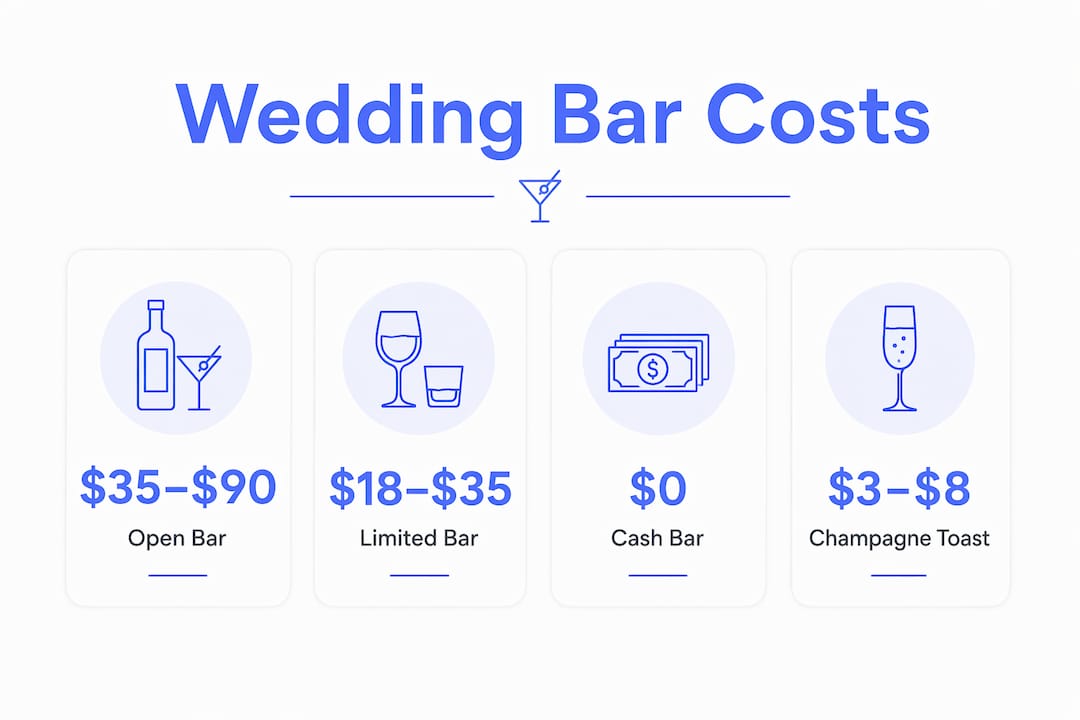
Open bar
A full open bar costs $35–$90 per person, with national averages landing between $4,400 and $6,600 for a typical reception. The wide range reflects spirit quality. Well liquor packages sit near the low end; premium and top-shelf selections push toward $90 or beyond. For 100 guests at a mid-range $55 per person, you are looking at $5,500 before service charges.
Limited bar
A limited bar serves beer, wine, and one or two signature cocktails. Limited bars cost $18–$35 per person and are chosen by a large share of couples working with tighter budgets. The appeal is real: a well-curated limited bar delivers close to the full open bar experience at roughly half the price. Choosing two or three crowd-pleasing options rather than a full spirits menu is the single fastest way to cut your open bar wedding cost without guests noticing.
Cash bar
A cash bar costs the couple nothing in alcohol expenses. The trade-off is guest perception. Roughly 40% of guests view a cash bar as lacking hospitality when it is not communicated in advance. If a cash bar fits your budget, include a note on your invitation or wedding website so guests arrive prepared.
Champagne toast and alternatives
A champagne toast adds roughly $3–$8 per person on top of your base bar package, depending on the sparkling wine selected. Some couples pair a champagne toast with a limited bar to create a festive feel at a controlled cost. Sparkling cider or non-alcoholic alternatives serve sober-curious guests without adding significant expense.
| Bar type | Approximate cost per person | Guest experience | Best for |
|---|---|---|---|
| Full open bar | $35–$90+ | Highest | Larger budgets, long receptions |
| Limited bar | $18–$35 | Very good | Budget-conscious couples |
| Cash bar | $0 for couple | Variable | Communicated in advance only |
| Champagne toast only | $3–$8 add-on | Festive, minimal | Ceremony or cocktail hour |
Pro Tip: Build your limited bar around one or two signature wedding cocktails that reflect your personality. Guests remember a well-named cocktail far longer than a generic well-liquor selection.
What factors drive the total wedding bar cost?
Base alcohol pricing is only part of the bill. Several additional cost layers stack on top of the per-person rate and catch many couples off guard.
Bartender fees and staffing
Bartender wages run $35–$75 per hour, and the recommended staffing ratio is one bartender per 75–100 guests. A 150-guest reception needs at least two bartenders. At $50 per hour for a five-hour event, two bartenders add $500 to your bill before any other fees. Understaffing is the most common cause of long drink lines and frustrated guests.
Service charges and gratuity
Service charges and gratuity add 18–25% to the final bar invoice. On a $5,000 bar tab, that is an extra $900–$1,250. Many vendors bundle these into the quoted price; others list them separately. Always ask whether gratuity is included before comparing quotes from different vendors.
Regional pricing variation
Location moves the needle significantly. Urban markets like New York City, Los Angeles, and San Francisco push bar costs 20–40% above national averages due to labor rates and venue markups. Midwest and rural markets show per-person costs in the $22–$50 range. A couple in rural Ohio and a couple in Manhattan can face a $30-per-person gap for an identical service package.
Hidden fees to watch for
Several line items rarely appear in initial quotes:
-
Corkage fees: Venues charge $15–$25 per bottle when couples supply their own alcohol. Bulk purchase savings often disappear after corkage is applied.
-
Setup and breakdown fees: Some vendors charge $100–$300 for bar assembly and teardown.
-
Ice and glassware rentals: These can add $2–$5 per person, especially at outdoor venues.
-
Overtime charges: Bartenders working past the contracted end time typically bill at 1.5x their hourly rate.
Pro Tip: Ask every vendor for a fully itemized quote that includes gratuity, setup, breakdown, and any overtime policy. Compare totals, not base rates.
How to budget your wedding alcohol budget accurately
Accurate budgeting starts with a simple formula: multiply your per-person bar rate by your guest count, then add 20–25% for service charges and fees. For 100 guests at $45 per person, the base cost is $4,500. Add 22% for service charges and you reach $5,490. That number is your realistic starting point, not the $4,500 figure on the initial quote.
A useful framework is to treat bar service as approximately 11% of your total wedding budget. If your overall budget is $40,000, plan for roughly $4,400 in bar expenses. Adjust up or down based on your guest count and the service style you choose.
Several strategies reduce costs without cutting the guest experience:
-
Choose a limited bar. Beer, wine, and two signature cocktails satisfy most guests and cost roughly half of a full premium open bar.
-
Shorten the bar window. A four-hour bar instead of five reduces consumption and staffing costs proportionally.
-
Use per-person pricing. Consumption-based billing is a budget gamble that only works with light-drinking guests. Per-person packages offer predictable totals.
-
Add signature cocktails. Signature cocktails cost $4–$7 per drink to create and reduce the need for a full spirits inventory while adding a personal touch.
-
Book off-peak dates. Vendors often discount packages for Friday evenings, Sunday afternoons, and winter months.
-
Negotiate package minimums. Many vendors set minimum spend thresholds. Ask whether a smaller guest count qualifies for a lower minimum.
Pro Tip: Use a cocktail calculator before finalizing your guest list. Cocktail-crew offers a planning tool that estimates drink quantities and costs based on your event length and headcount, removing the guesswork from your wedding alcohol budget.
Professional bartenders versus DIY bar setups
Professional bartenders reduce liability, improve service speed, and create a better guest experience. DIY wedding bars rarely save money once you account for licensing requirements, staffing logistics, and liability exposure. Most venues require a licensed bartender regardless of who supplies the alcohol.
The benefits of hiring a mobile bartender include flexible setup, no venue exclusivity conflicts, and the ability to bring a curated menu to any location. Mobile bartenders also handle their own equipment, which eliminates rental coordination.
Key considerations when comparing professional services to self-managed setups:
-
Licensing: Most states require a licensed server for any event where alcohol is served. Unlicensed service creates personal liability for the host.
-
Speed: A professional bartender at the correct 1:75–100 guest ratio keeps lines short. An untrained volunteer cannot match that pace.
-
Liability: A licensed professional carries insurance. A DIY setup places all liability on the couple or event planner.
-
Venue rules: Many venues have exclusivity agreements with preferred bar vendors. Bringing outside alcohol triggers corkage fees or outright prohibition.
Pro Tip: Read your venue contract before booking any bar service. Exclusivity clauses and corkage policies can add hundreds of dollars to your bill if you discover them after signing.
Couples planning outdoor or non-traditional venues benefit most from mobile professional services. A bar table and barstool rental paired with a licensed mobile bartender creates a complete, self-contained bar setup without relying on venue-supplied infrastructure.
Common pitfalls that blow wedding bar budgets
Most wedding bar budget overruns trace back to a short list of avoidable mistakes.
-
Ignoring gratuity in initial quotes. A quote of $4,000 becomes $4,800–$5,000 after service charges. Always ask for the all-in total.
-
Underestimating consumption. The standard estimate is two drinks in the first hour and one per hour after that per guest. Receptions with dancing or open seating tend to run higher.
-
Skipping the corkage math. Buying your own alcohol feels like savings until you add $15–$25 per bottle in corkage fees plus the cost of ice, glassware, and a licensed server.
-
Booking too few bartenders. One bartender for 200 guests creates a 20-minute wait at peak hours. That kills the reception atmosphere faster than any other single factor.
-
Failing to communicate bar type to guests. A cash bar announced only at the event creates resentment. Set expectations early through your wedding website or invitation.
Pro Tip: Ask your bartending vendor what their overtime policy is before signing. A reception that runs 30 minutes long can add $150–$300 in unplanned charges if overtime rates are not capped in the contract.
Key Takeaways
Wedding bar cost is most accurately controlled by choosing the right service model early and accounting for all fees before signing any vendor contract.
| Point | Details |
|---|---|
| Open bar cost range | Full open bars run $35–$90 per person; budget $4,400–$6,600 for a typical reception. |
| Limited bar value | Beer, wine, and signature cocktails cost $18–$35 per person and deliver most of the open bar experience. |
| Hidden fees add up | Service charges, gratuity, and corkage fees add 18–25% or more to base bar quotes. |
| Staffing ratio matters | One bartender per 75–100 guests prevents long lines and keeps the reception moving. |
| Regional costs vary | Urban markets cost 20–40% more than rural areas for identical bar service packages. |
What I’ve learned from watching couples budget the bar
Most couples I talk to make the same mistake: they lock in a venue and a caterer before they have a realistic bar number. By the time they get to bar planning, the budget is already stretched. The bar then becomes the place where corners get cut in ways guests actually notice.
The limited bar is consistently the best call for couples spending under $50,000 on their wedding. It is not a compromise. A thoughtfully chosen selection of beer, wine, and one or two signature cocktails gives guests everything they need to celebrate. The full premium open bar is often chosen out of social pressure rather than genuine preference.
The fee conversation is the one most couples avoid. Asking a vendor “what is the total, all-in cost including gratuity, setup, and overtime?” feels awkward. Do it anyway. I have seen $4,000 bar quotes become $6,200 invoices because nobody asked that question upfront.
Hiring a professional bartender is almost always worth the cost. The liability protection alone justifies it. Add the speed, the guest engagement, and the polished presentation, and the value becomes obvious. A great bartender does not just pour drinks. They read the room, pace service, and keep energy high during the reception’s slow moments.
Budget for the bar early, build in a 15% buffer for overruns, and choose a service model that matches your actual guest list rather than your ideal one.
— Nelson
Professional bartending that fits your wedding budget
Planning a wedding bar that works for your guest count and your budget takes more than a spreadsheet.
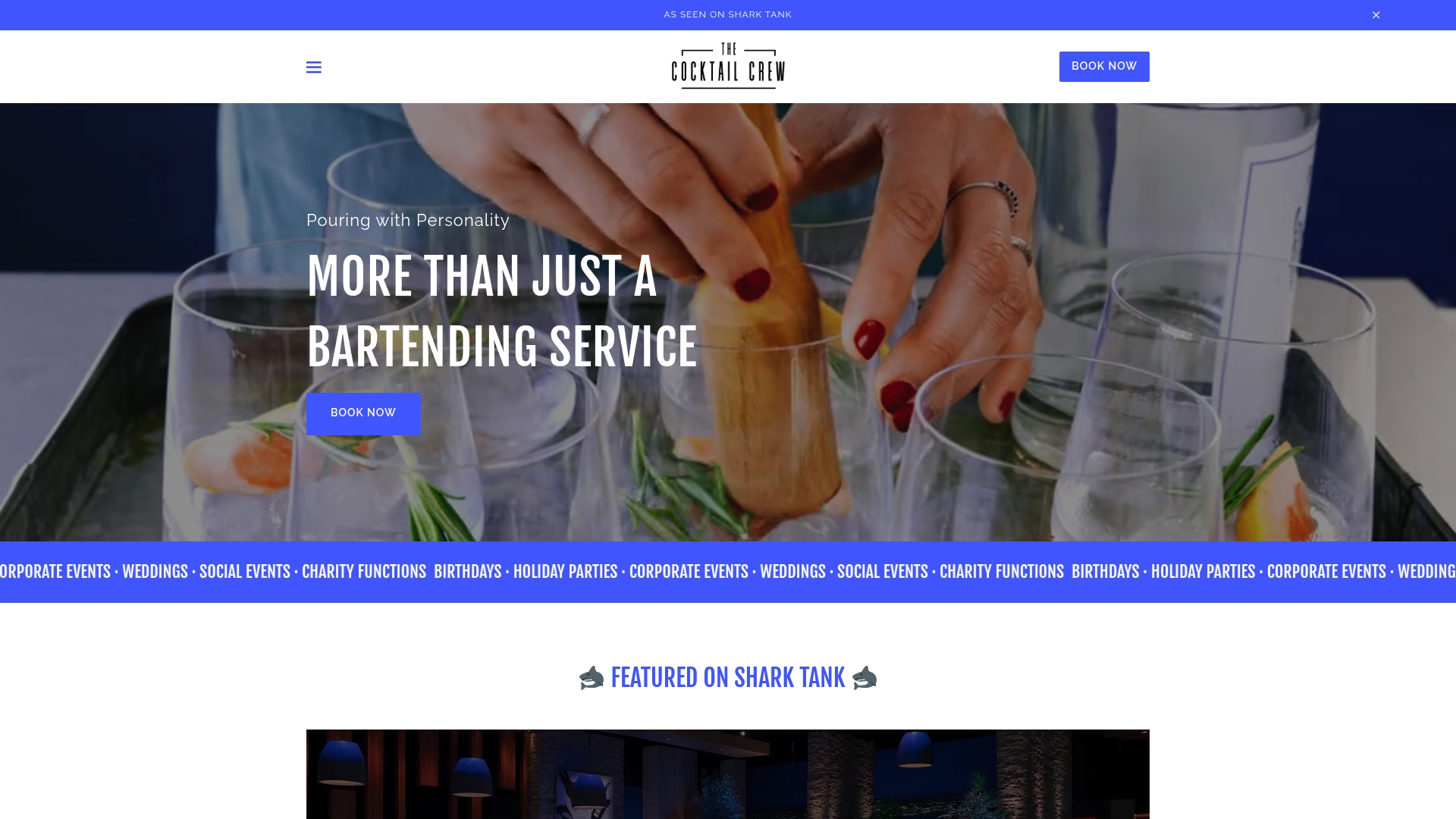
Cocktail-crew brings professional, licensed bartenders to weddings of all sizes, with packages built around limited bars, signature cocktails, and full open bar setups. Their bartenders are trained to elevate your wedding bar experience while keeping service efficient and guests happy. Cocktail-crew also offers a cocktail calculator to help you estimate quantities and costs before you commit to a package. With a minimum service time of just three hours and flexible bar configurations, they fit a wide range of budgets and venue types. Reach out to Cocktail-crew to get a clear, itemized quote before your next vendor meeting.
FAQ
How much does a wedding bar cost for 100 guests?
A full open bar for 100 guests costs $3,500–$9,000 depending on spirit quality and service charges. A limited bar for the same guest count typically runs $1,800–$3,500.
What is the average open bar price per person?
The average open bar price runs $35–$90 per person for a five-hour reception, with national averages between $4,400 and $6,600 total.
How much does a wedding bartender cost to hire?
Wedding bartender fees range from $35–$75 per hour. A five-hour reception with two bartenders typically adds $350–$750 in labor costs before gratuity.
Is a limited bar a good way to reduce wedding bar costs?
A limited bar is the most recommended option for budget-conscious couples. It costs $18–$35 per person and delivers close to the full open bar experience at roughly half the price.
What hidden fees should I watch for in a wedding bar quote?
Watch for gratuity (18–25% of the total), corkage fees ($15–$25 per bottle), setup and breakdown charges, glassware rentals, and overtime rates. Always request a fully itemized quote before signing.