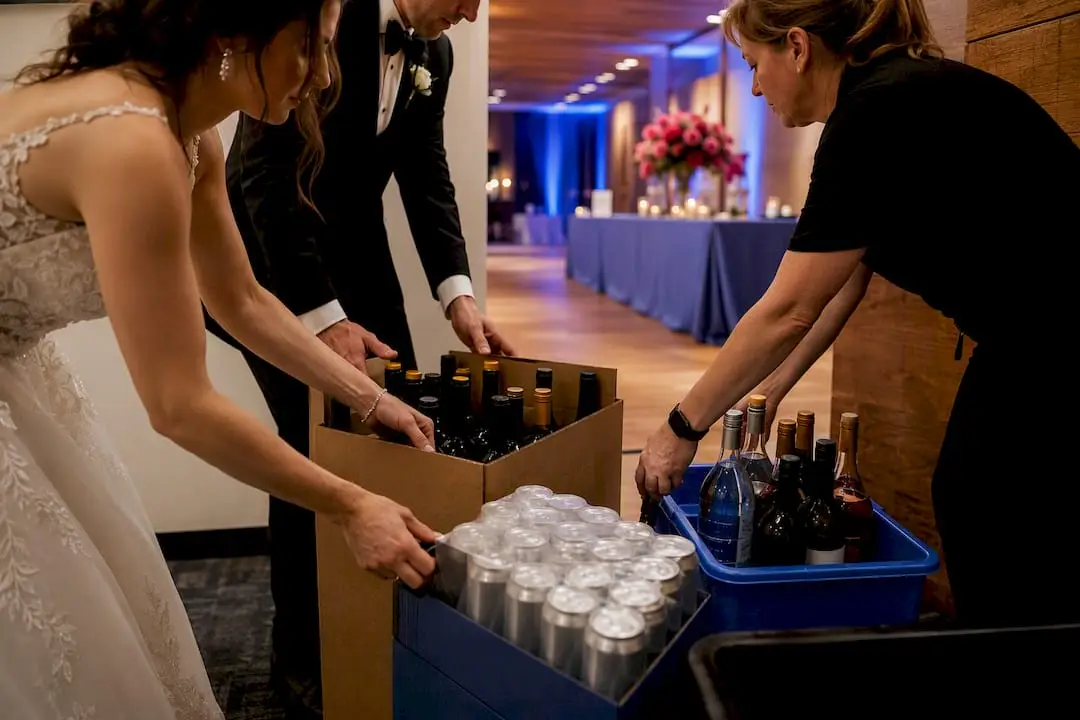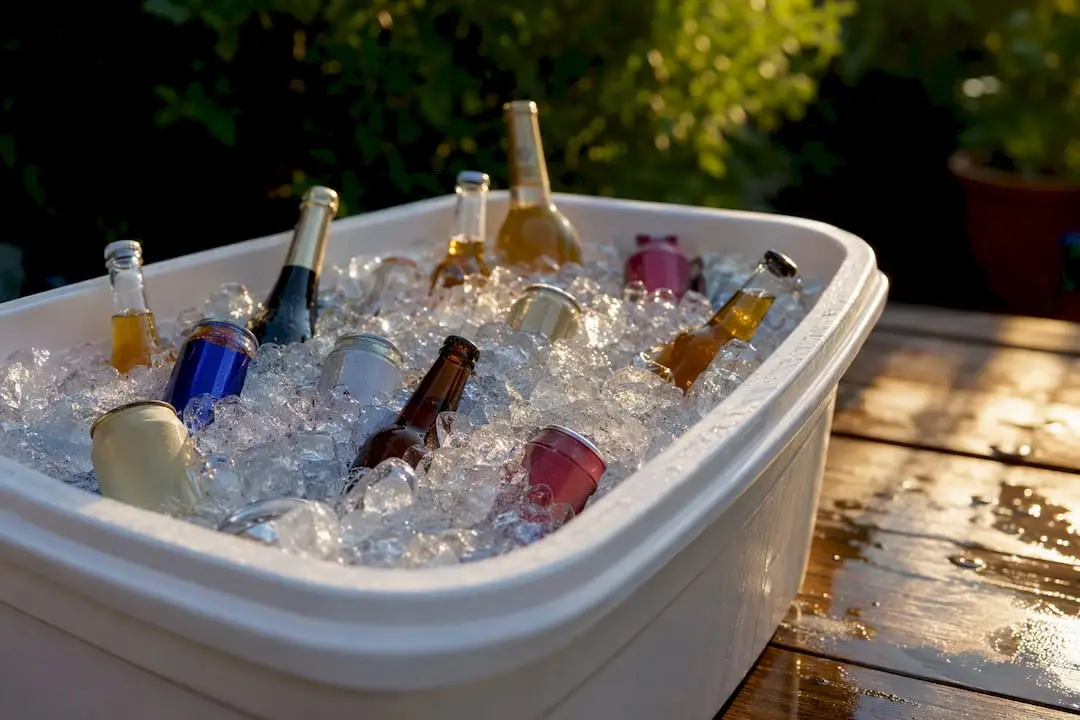
Plan for 1.5 pounds of ice per guest at a typical indoor party, then adjust up for heat, cocktails, and long hours. That’s the number most ice calculators converge on, and it’s the one to write on your shopping list before you do anything else.
Here’s the fast version:
- For about 20 guests, plan a few bags and one cooler.
- For about 50 guests, plan several bags and two coolers.
- Outdoor, summer, or cocktail-heavy parties require significantly more ice.
- Staging: one cooler for chilling cans and bottles, and a separate covered container for ice going into glasses.
Key Takeaways
The right amount and shape of ice, planned in advance and staged in separate coolers, keeps drinks cold and prevents the most common party failure: running out by hour three.
| Point | Details |
|---|---|
| Buy by the pound, not the bag | Plan 1.5 lb per guest as a baseline, then add 25 to 50 percent for outdoor, hot, or cocktail-heavy parties. |
| Match shape to drink | Use large cubes or spheres for spirit-forward drinks, crushed ice for tropical cocktails and juleps. |
| Split chilling and serving ice | Run separate coolers with dedicated scoops to avoid cross-contamination. |
| Store to prevent clumping | Keep ice sealed, away from the freezer door, to stop partial melt-and-refreeze fusing. |
| Let the pros handle it on event day | Cocktail-crew bartenders manage ice buying and staging as part of standard event service. |
Table of Contents
- How Much Ice for a Party: A Quick Calculator
- Which Ice Shape Works Best for Each Drink?
- Where to Buy Ice for a Party (and When to Make It Instead)
- Setting Up Coolers So the Ice Actually Lasts
- Serving Ice Without Contaminating the Whole Batch
- How to Make Clear Ice at Home Without Special Equipment
- What Bartenders Wish Every Host Knew About Ice
- Keeping Ice Clean and Safe Through the Whole Event
- Why Ice Cubes Clump Together and How to Stop It
- Should You Add Fruit or Flavor to Party Ice?
- Let a Professional Bartender Handle the Ice So You Don’t Have To
- Frequently Asked Questions
- Sources
How Much Ice for a Party: A Quick Calculator
Start with a baseline amount of ice per adult guest. That’s the baseline Party Genius AI and most event planners use for a standard drinks-focused party, and it splits roughly evenly between ice that chills your drinks and ice that goes into cups. Reddy Ice frames it as a 1 to 2 lb range, with the low end for casual gatherings and the high end for anything heavy on cocktails or ice-service platters.
Then layer on modifiers:
- Outdoors: add 25 percent. Direct sun and open air speed up melt fast.
- Hot weather (85°F or above): add up to 50 percent over your indoor baseline.
- Food served on ice (raw bar, chilled seafood, produce trays): add another 50 percent, since that ice isn’t available for drinks.
- Parties running past four hours: add roughly 10 percent per additional hour to cover slow, steady melt.
For 20 guests, that’s 30 lb baseline, or three 10 lb bags. For 50 guests, you’re looking at 75 lb, which rounds up to seven or eight bags. Kids typically drink less and need less ice than adults, so you can shave 20 to 30 percent off the per-head number for a mixed-age crowd.
Pro Tip: Round up, always. A half-melted cooler by hour three is the single most common party planning failure, and extra ice never really goes to waste, it just melts into a cooler full of cold water that keeps chilling your cans.
Which Ice Shape Works Best for Each Drink?
Ice isn’t interchangeable. Shape changes how fast a drink chills, how much it dilutes, and how it looks in the glass, and bartenders pick shape the same way they pick a glass.
- Standard cubes (1 to 1.25 inches): the workhorse. Good for shaking, stirring, and filling most highballs and mixed drinks.
- Large cubes, blocks, or spheres: slow to melt because they have less surface area relative to their volume, which makes them ideal for spirit-forward sippers like an Old Fashioned or a neat pour over rocks.
- Crushed or pebble ice: melts fast and dilutes fast, which is exactly the point for a Mint Julep, a Mai Tai, or anything tiki or tropical that wants a slushy, quickly-chilled texture.
- Clear ice vs. cloudy ice: clear cubes are denser and hold fewer trapped air pockets, so they melt slightly slower than cloudy ice and look sharper in a glass. It matters most for drinks served on the rocks where the ice is visible and sits in the glass a while; it matters far less in a shaken drink that gets strained.
Match the shape to the drink and you’ll notice the difference immediately: a Mai Tai over big cubes tastes weak and warm for too long, while an Old Fashioned over crushed ice turns into water in ten minutes.
Where to Buy Ice for a Party (and When to Make It Instead)
Bagged ice from a grocery store or wholesale club is the default for most home parties, and for good reason. It’s cheap, it’s everywhere, and a 10 lb bag typically runs a few dollars. Buying in bulk at a warehouse club stretches your per-pound cost further for parties over 30 or 40 guests.
If you want ice that actually looks good in a glass, that’s a different sourcing decision. Countertop machines like the Opal Nugget Ice Maker produce the soft, chewable pebble ice that’s become popular for cocktails and sodas alike, while the Luma Countertop Ice Maker turns out clear, dense cubes without a directional freeze. Specialty molds from Cocktail Kingdom and sphere molds from Dexas let you shape big-format ice for rocks drinks, and Clearly Frozen trays are built specifically for clear-ice results in a standard freezer.
| Source | Best for | Timing |
|---|---|---|
| Bagged grocery/wholesale ice | Large guest counts, tight budgets | Buy day of, or the night before at the earliest |
| Countertop makers (Opal, Luma) | Ongoing supply, specialty formats | Set up days in advance |
| Molds (Cocktail Kingdom, Dexas, Clearly Frozen) | Presentation-focused rocks drinks | Freeze 18 to 24 hours ahead |
| Commercial block ice delivery | Events over 100 guests | Order at least a week out |
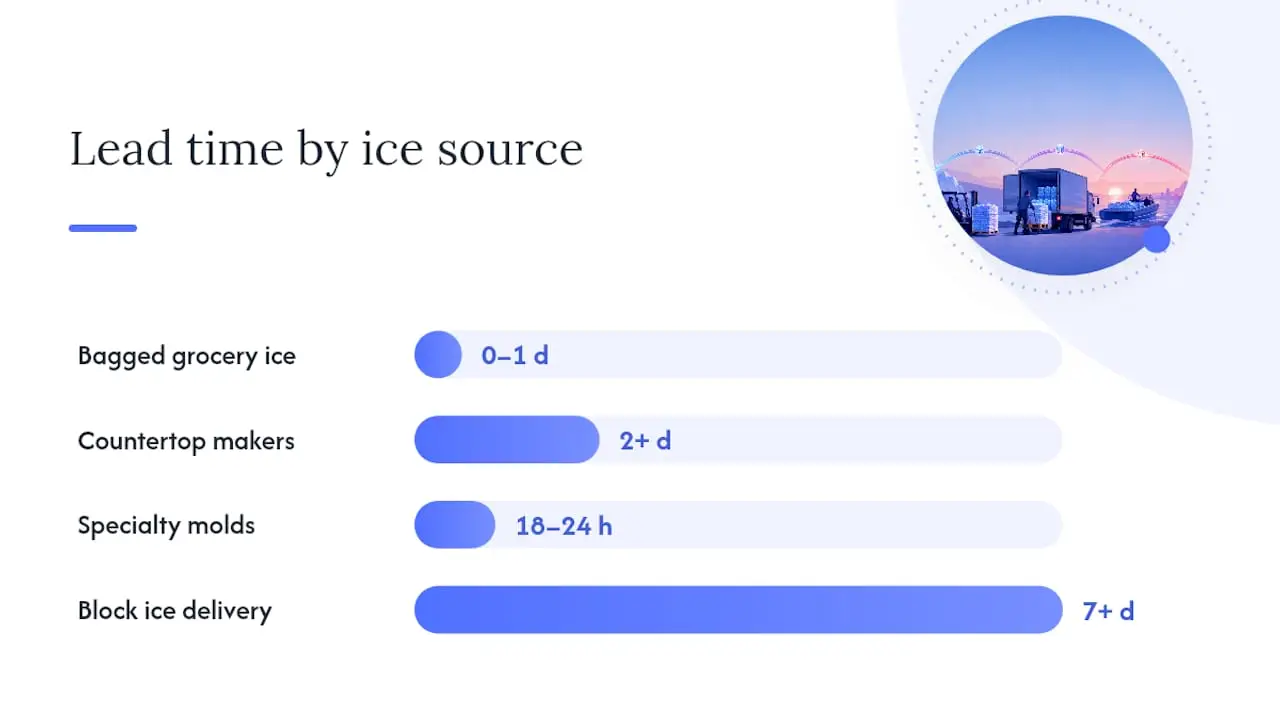
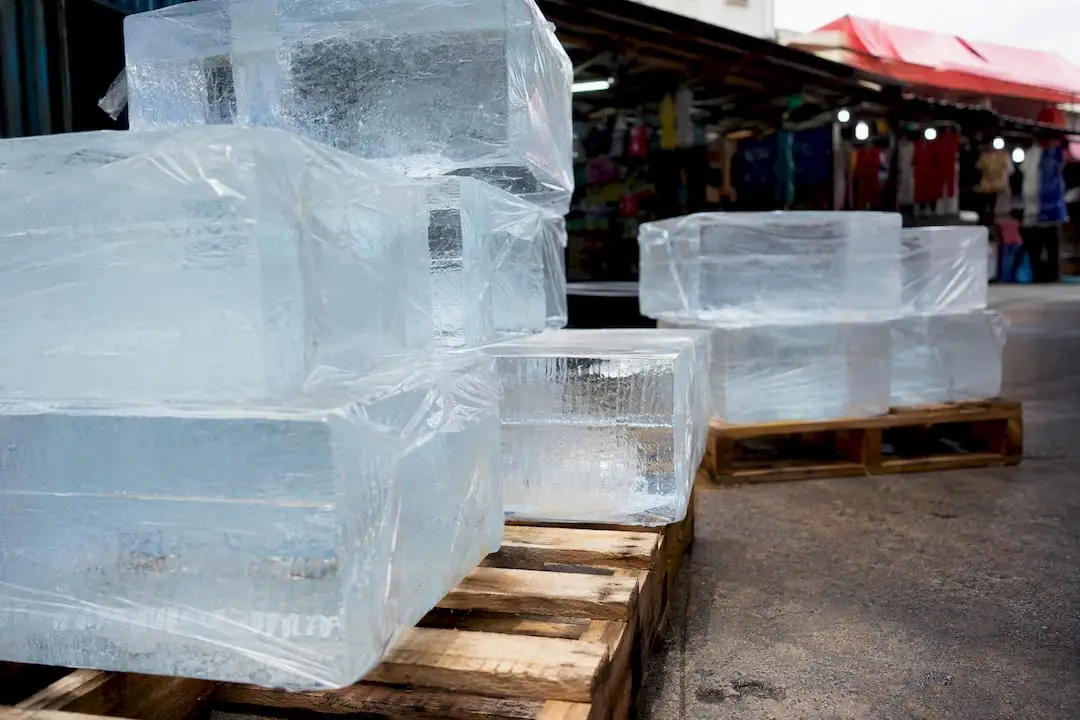
For anything over 100 guests, a commercial ice delivery service or block-ice supplier is worth the call. Most local delivery outfits need advance notice, so lock that in a week ahead rather than the morning of.
Setting Up Coolers So the Ice Actually Lasts
Split your ice into two jobs: chilling bottles and cans, and filling glasses. Keep those in separate coolers so nobody’s dunking a dirty scoop into the same ice that’s touching unwashed cans.
- For larger parties, use at least two coolers: one for the bar and one as a reserve.
- Typical coolers can hold a substantial amount of ice packed around drinks.
- Combining block ice at the bottom with cubed ice on top helps extend cooler life.
- Keep coolers in shade, off direct concrete or asphalt (both radiate heat), and open the lid as little as possible.
- Hold a reserve bag or two in a shaded spot, not in the sun by the drinks table, so you can top off without a mid-party ice run.
Pro Tip: Drill or prop a small drain gap at the bottom of one cooler so melted water runs off instead of pooling. Standing water speeds up melt on the remaining ice and turns your cooler into a lukewarm bath by hour two.
Serving Ice Without Contaminating the Whole Batch
Cross-contamination is the most overlooked hygiene issue at home parties, and it’s an easy fix.
- Use a dedicated scoop or tongs for serving ice, never a glass or bare hands, and never the same scoop used for chilling ice.
- Keep serving ice in a covered bucket or tub, and refill it from a sealed backup cooler rather than the open chilling bin.
- Bucket-style ice buckets or drink tubs on the bar look sharp and keep ice cold longer than an open bowl.
- Wash hands before scooping, and rinse the scoop if it touches a countertop or gets set down between uses.
Pro Tip: Label your coolers with tape and a marker, “chilling only” and “serving ice”, so guests and helpers know which is which without asking.
How to Make Clear Ice at Home Without Special Equipment
Cloudy ice happens because air and minerals get trapped as water freezes from all directions at once. Force the freeze in one direction instead, and the impurities get pushed down instead of trapped inside.
- Fill an insulated cooler (a small one, uncovered) about two thirds full of water and set it in your freezer.
- Let it freeze for 18 to 24 hours. The top layer freezes clear because it’s the only side exposed to cold air; the bottom stays slushy and cloudy.
- Pull the block out, dump the unfrozen slush from the bottom, and cut or split the clear top layer into cubes with a serrated knife.
- Store finished clear cubes in a sealed bag or container immediately so they don’t cloud over from moisture in the air.
The tradeoff is time and freezer space. A single cooler batch takes a full day and eats most of your freezer for that stretch, so if you need volume, a Luma countertop maker or a specialty tray like Clearly Frozen is the faster, less fussy route to the same result.
What Bartenders Wish Every Host Knew About Ice
Professional bartenders treat ice as an ingredient, not an afterthought, because it controls dilution, texture, and how the drink looks in the glass.
- Never use ice that’s been sitting in your home freezer for weeks. It absorbs odors from everything else in there and can ruin a delicate spirit.
- Buy fresh the day of the party when you can, especially for anything spirit-forward.
- Mix formats across your bar setup: large cubes for whiskey drinks, crushed for tiki and juleps, standard cubes for everything else.
Clear ice isn’t just about looks. It’s denser, holds fewer air pockets, and melts more slowly than cloudy ice, which means a rocks drink stays balanced longer instead of turning watery halfway through.
Keeping Ice Clean and Safe Through the Whole Event
Ice is food. Treat it that way and you’ll avoid the two most common mistakes: cross-contamination and slow spoilage of flavor.
Start with sourcing. Bagged commercial ice is produced under food-safety standards and packaged sealed, which makes it inherently cleaner than ice you’ve scooped loose from a home freezer that’s also storing raw meat or strong-smelling leftovers. If you’re making your own ahead of time, freeze it in a clean, odor-free section of the freezer, ideally in a sealed bag or airtight container rather than an open tray that picks up nearby smells.
Once ice arrives at the party, the biggest risk is hands and tools. Every scoop, tong, or cup that touches raw ice should be dedicated to that job and nothing else. Don’t let a guest grab ice with a glass they’ve already had a drink in, and don’t reuse a scoop that’s touched raw meat, produce, or anything else at the buffet table. If you’re running a self-serve ice station, post a scoop with a handle long enough that hands don’t dip into the ice itself.
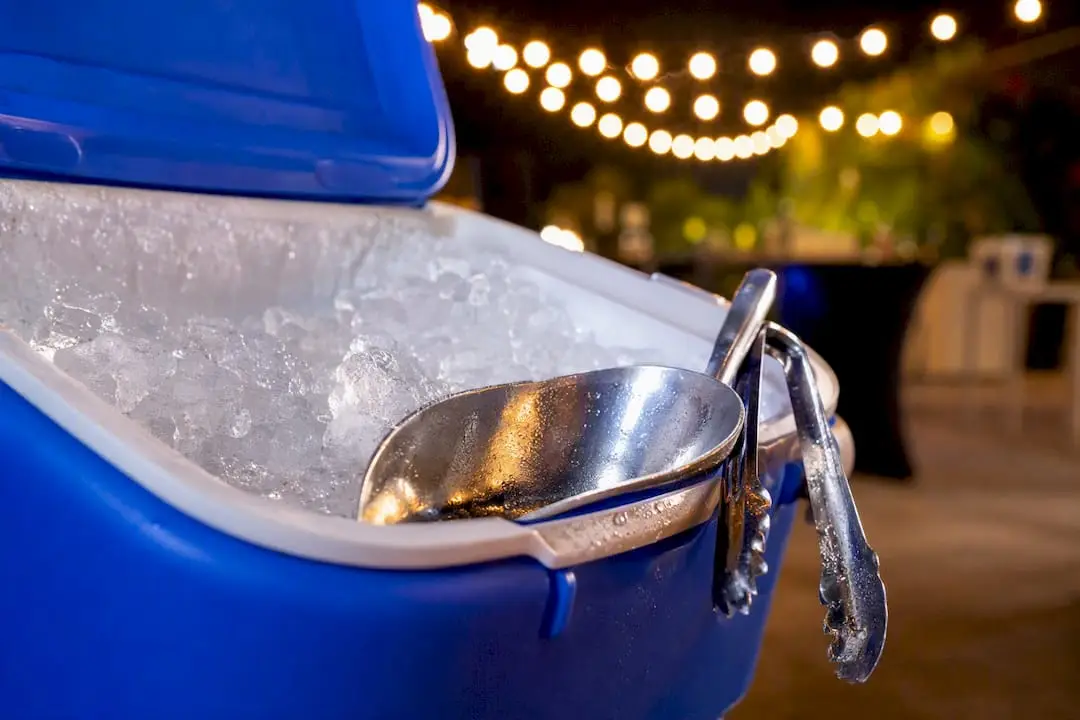
Temperature matters too. Keep serving ice covered between uses so it isn’t sitting exposed to bugs, dust, or warm air for hours. If you notice ice getting slushy and gray at the bottom of a cooler by evening, that’s a sign it’s absorbed dirt or debris from repeated scooping. Swap it for a fresh reserve bag rather than pushing through the last few servings.
Why Ice Cubes Clump Together and How to Stop It
Ice fuses into a solid block for one main reason: partial melting and refreezing. It happens constantly in home freezers because the door opens and closes, letting in warm air that softens the surface of the cubes just enough to bond them together the next time the freezer cycles back down.
The fix starts with storage, not the ice itself. Keep bagged or homemade ice in a section of the freezer you don’t open often, ideally a drawer or back corner away from the door. If you’re prepping days ahead, transfer cubes into a sealed, freezer-safe bag or rigid container and press out as much air as possible; trapped air pockets speed up the melt-refreeze cycle that causes clumping.
For loose ice you’ve made yourself, tossing the cubes gently in the bag every day or two keeps them from settling into one solid mass. Commercial bagged ice tends to clump less than homemade because it’s produced and flash-frozen under more consistent conditions, but even a store-bought bag left in a warm car trunk for an hour will start to fuse.
If you’re buying ice the morning of the party specifically to avoid this problem, keep the bags in a cooler with a little extra ice around them rather than directly in a warm car. That buys you an hour or two of insurance without needing your freezer at all.
Should You Add Fruit or Flavor to Party Ice?
Frozen fruit and flavored ice cubes look great in a punch bowl or a pitcher of sangria, but they come with tradeoffs worth knowing before you commit a whole batch of ice to the idea.
Fruit frozen into cubes melts at roughly the same rate as the surrounding ice, which means as it thaws, it releases juice and pulp into the drink. That’s the whole appeal for a fruity punch or a sparkling wine spritzer, but it’s the wrong move for a clear spirit or anything where you want the ice to chill without changing the flavor. Reserve fruit-and-herb ice for punch bowls, lemonade stations, and mocktail service rather than mixing it into your main cocktail bar’s regular supply.
Flavored ice, made by freezing juice, tea, or diluted syrup instead of plain water, works well for kid-friendly drink stations or a mocktail bar where you want built-in flavor without watering down a drink as it melts. Just keep it clearly separate and labeled from your regular serving ice, since guests grabbing ice for a spirit-forward cocktail don’t want a lemonade cube landing in their whiskey.
One practical note: fruit and flavored cubes cloud almost immediately, so don’t bother trying to make them clear. Save the clear-ice effort for plain water cubes going into rocks drinks, and let the fruit ice be exactly what it is, a decorative, flavorful add for punches and lower-proof drinks.
A Bartender’s Take on Why Ice Deserves More Thought
Ice is the one ingredient every drink shares, and it’s also the one most hosts buy last and think about least. A bartender treats it with the same intention as a spirit or a garnish, because it decides how a drink tastes ten minutes from now, not just at the first sip. If managing all of that sounds like more than you want to handle on party day, that’s exactly the kind of logistics a professional behind the bar takes off your plate.
Let a Professional Bartender Handle the Ice So You Don’t Have To
Buying, staging, and rotating ice for a party is one more job on a day that already has too many. Cocktail-crew bartenders handle it as part of standard service, so instead of tracking bag counts and cooler drainage, you’re just pointing guests to the bar.
Every booking includes a three-hour service minimum, and your bartender manages the ice buying, cooler staging, and scooping throughout the event, along with the drinks themselves. Want a nonalcoholic option on hand too? Add a mocktail bartender to the mix so every guest has something cold and well made. If you’re comparing the cost of doing it yourself against hiring it out, our guide on bartender cost for private events breaks down what’s typically included.
Check dates and get a quote through our private event bartending page, and let someone else worry about whether the cooler’s running low.
Frequently Asked Questions
How many bags of ice do I need for 50 people?
Plan for roughly 75 lb total, which works out to seven or eight standard 10 lb bags. Add an extra bag or two if the party is outdoors or running past four hours.
Is clear ice actually worth the extra effort?
For rocks drinks like an Old Fashioned, yes, since it melts more slowly and holds its shape longer in the glass. For shaken or blended drinks where the ice gets strained out, it makes little practical difference.
Can I use ice straight from my home freezer for cocktails?
It’s not ideal for anything spirit-forward, since freezer-stored ice can pick up odors from other food. Buy fresh bagged ice the day of the party when possible, or store homemade ice in a sealed container away from strong-smelling foods.
What’s the fastest way to get party-ready ice without a directional freeze?
A countertop machine like the Luma or a specialty tray like Clearly Frozen gets you clear or near-clear cubes without tying up your freezer for a full day.
Should I hire someone to manage ice for a big event?
For events over 50 or 75 guests, a hired bartender who manages ice buying, staging, and scooping saves real hassle and keeps the bar running smoothly without you checking coolers all night.
Sources
- Cocktail ice types and when to use them — Food & Wine
- How Much Ice Do You Need For a Party? | Ice Calculator — Reddy Ice
- How Much Ice for a Party or Cooler? Calculator — Party Genius AI
- Why clear ice is better than cloudy ice — Wintersmiths