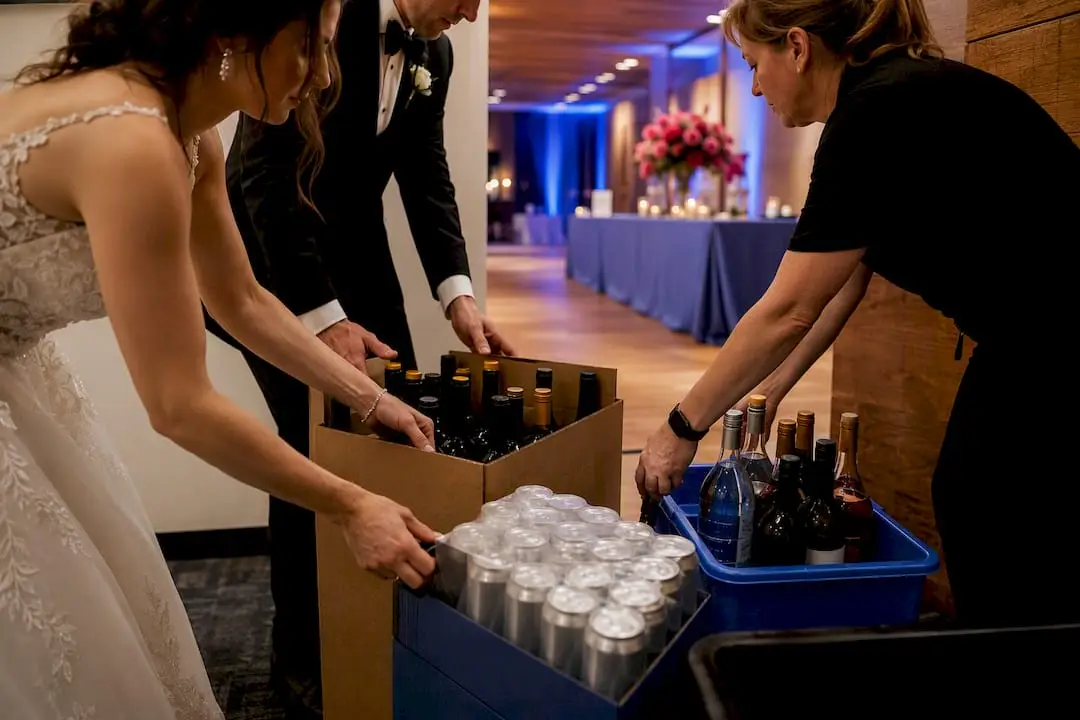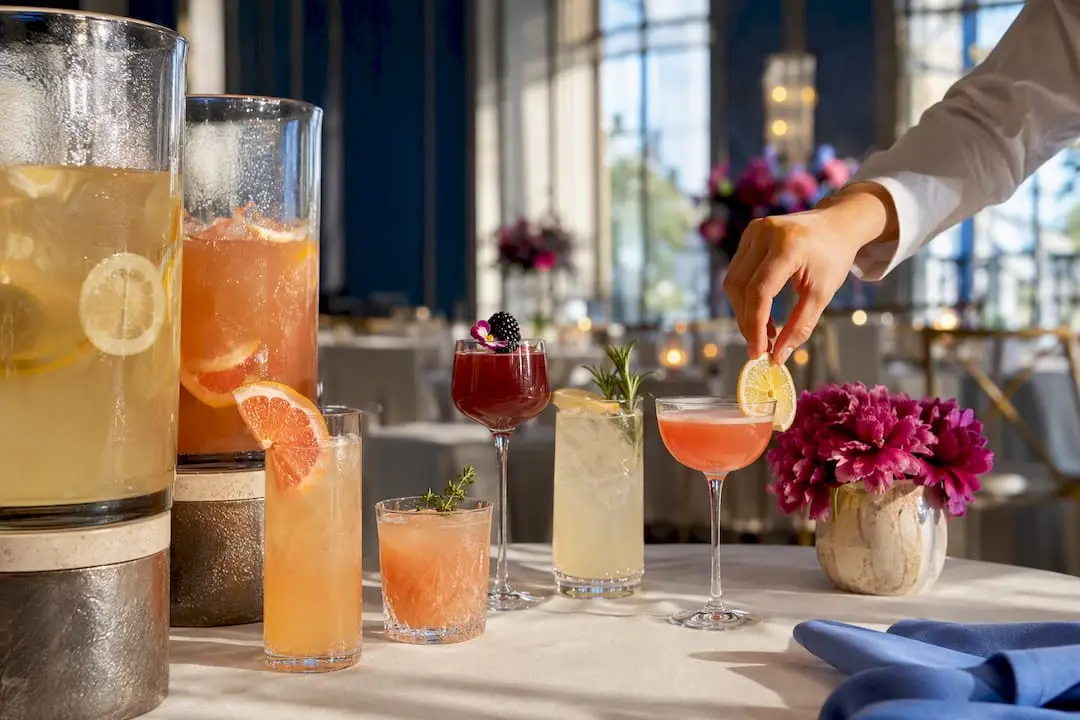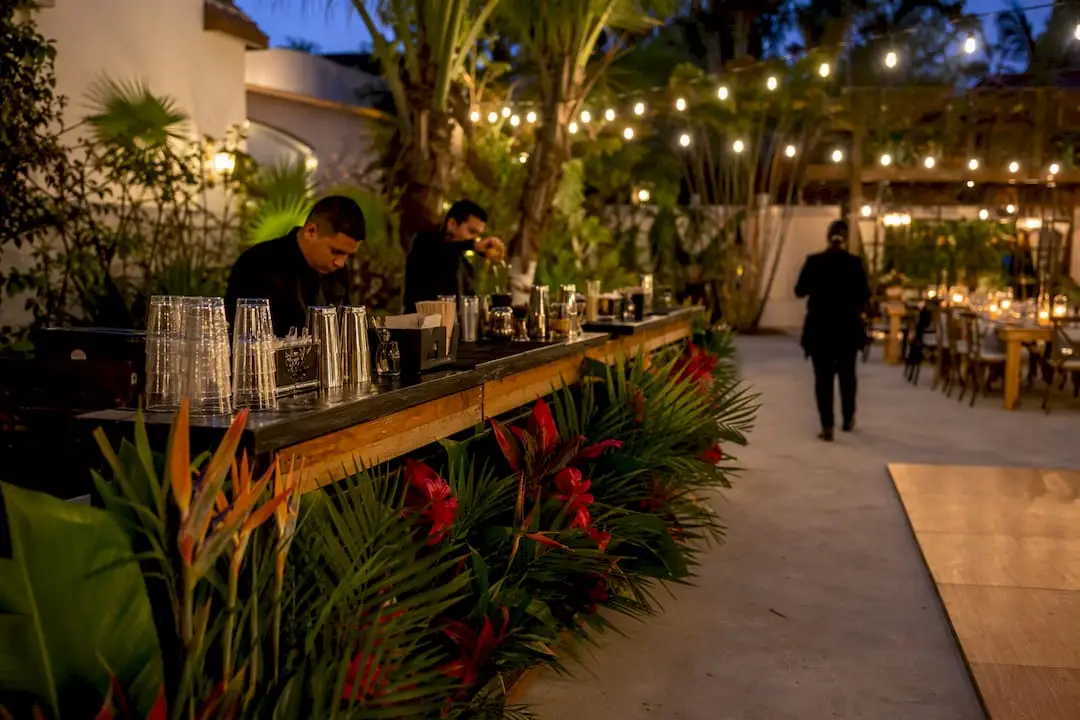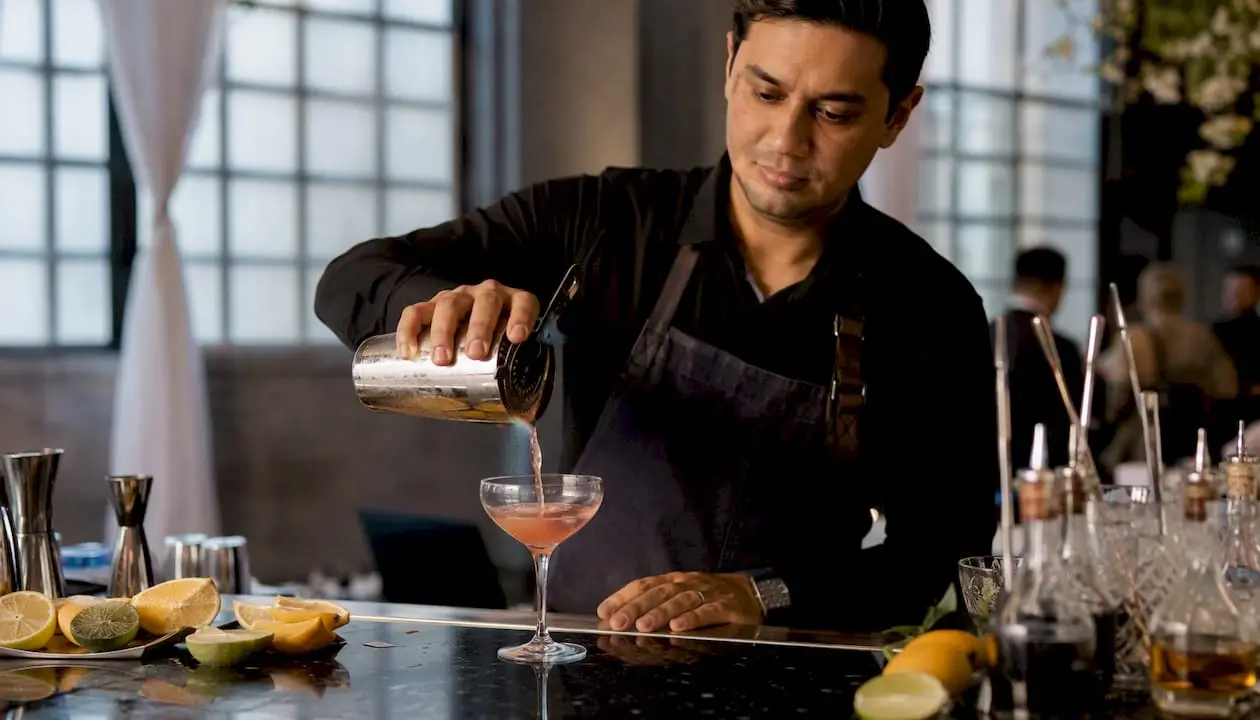
Pick a facilitated, interactive format for your next after-work gathering: a guided cocktail or mocktail class, a trivia mixer with food, or a themed tasting. These formats consistently outperform passive drink-and-mingle events because they give people something to do together, which lowers the professional awkwardness that kills attendance and kills the mood. Facilitated experiences like cocktail classes and guided mixers reduce professional barriers and build trust in ways that a free bar alone never will. See Asana: Team-building games and activities.
To run one this week: lock a venue or conference room, set a 90-minute window (Thursday or Friday, 4–6 PM tends to work best), identify one vendor or internal lead, and send an RSVP link with a 48-hour deadline.
Budget at a glance:
- Low ($15–$30/person): DIY charcuterie, board games, beer/wine, or a self-guided mocktail station
- Mid ($30–$75/person): Catered food, professional bartender, guided tasting or trivia host
- Premium ($75+/person): Full cocktail class, offsite venue, hybrid kit shipping, or specialty entertainment
Pro Tip: Send the RSVP with a one-question poll (“cocktails, mocktails, or both?”) — you get attendance data and a built-in inclusivity signal before the event starts.
Key Takeaways
Facilitated, interactive formats consistently outperform passive open-bar events for team engagement and inclusivity, and they are not significantly harder to plan.
| Point | Details |
|---|---|
| Start with a facilitated format | Guided cocktail classes, trivia mixers, and mocktail bars outperform passive drink events for engagement. |
| Budget by tier | Low: $15–$30/person; mid: $30–$75; premium: $75+ — pick the tier that matches your objective. |
| Plan hybrid from the start | Ship ingredient kits 2–3 weeks out and build a synchronized moment so remote staff get an equivalent experience. |
| Lock safety and inclusivity early | Use drink tickets, a professional bartender, a strong NA menu, and pre-event HR communication to reduce risk. |
| Cocktail-crew for hands-off delivery | Cocktail-crew provides licensed bartenders, cocktail classes, and elevated mocktail programs for corporate events. |
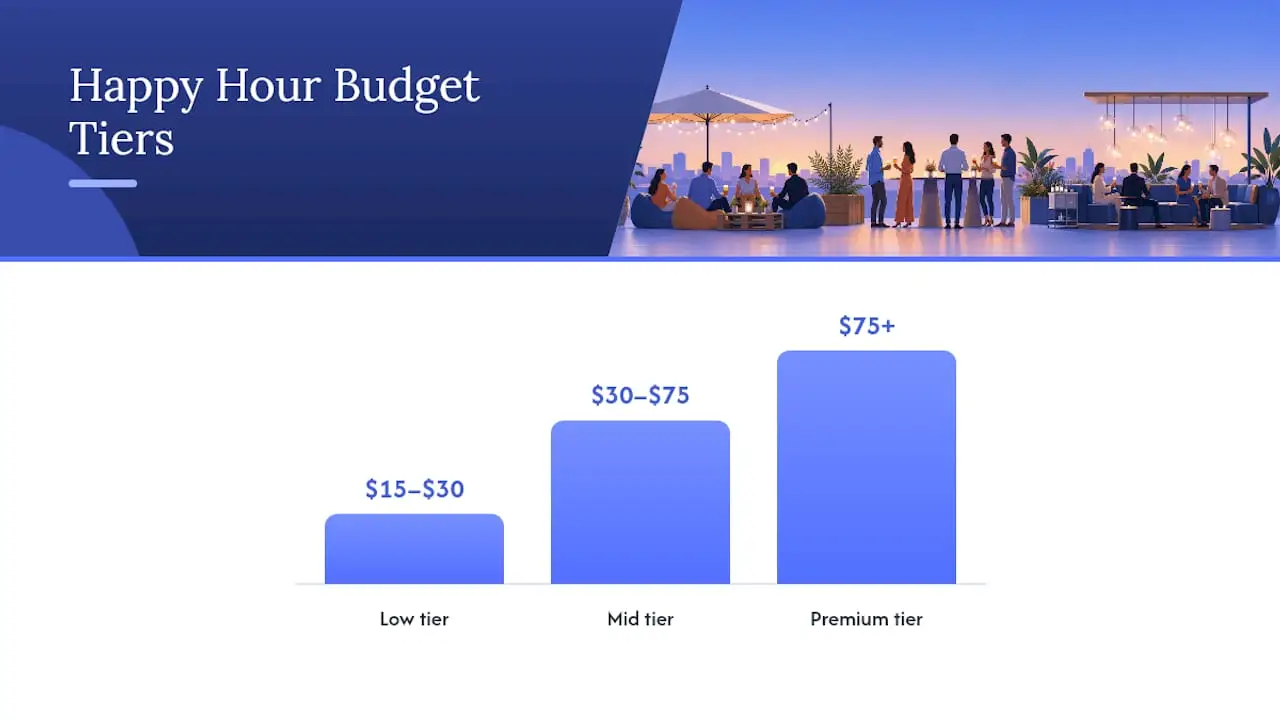
Table of Contents
- 25 corporate happy hour ideas, organized by format and scale
- How to pick the right format for your team
- Execution checklist: timeline, budget, and safety
- DIY cocktails, batch drinks, and elevated mocktails
- How to make remote and hybrid staff feel genuinely included
- Why interactive formats produce better engagement
- What most planners get wrong (and how to fix it)
- Cocktail-crew makes the beverage side hands-off
- Sources
25 corporate happy hour ideas, organized by format and scale
The ideas below are grouped so you can filter fast. Every entry includes a best group size, a budget tier, and a one-line modification for non-drinkers or remote staff. Mixing food, activities, and low-friction tech makes it easy to scale inclusive happy hours for any team size.
Beverage-focused formats
- Guided cocktail class. A professional bartender teaches 3–4 recipes while guests shake along. Best for 10–50 people. Mid to premium. NA mod: run a parallel mocktail track with the same techniques.
- Mocktail bar with a named menu. A styled station with 4–6 named mocktails, premium glassware, and garnishes. Best for any size. Low to mid. Pairs well with a printed “cocktail card” guests keep. See mocktail bar ideas for presentation tips.
- Blind tasting (beer, wine, or spirits). Guests rate 5–6 pours without seeing the labels, then reveal. Best for 10–30. Mid. NA mod: run a sparkling water or craft soda flight alongside.
- Signature drink build-off. Teams compete to create the best cocktail or mocktail from a shared ingredient kit. Best for 15–60. Mid. Remote mod: ship ingredient kits to home addresses.
- Batch cocktail station. Pre-batched drinks dispensed from branded dispensers; guests customize garnishes. Best for 50–200. Low to mid. Fastest setup for large groups.
Low-prep social mixers
- Charcuterie and games. A grazing station with themed boards plus 2–3 table games (Codenames, Wavelength, Bananagrams). Best for 10–40. Low. Scales easily; add a second table for larger groups.
- Food truck + lawn games. One or two food trucks parked outside with cornhole, bocce, or giant Jenga. Best for 30–150. Mid. Highly accessible; works for mobility-diverse teams.
- Trivia mixer. A hosted trivia game (company history, pop culture, or custom categories) with teams of 4–6. Best for 20–100. Low to mid. Remote mod: run on Kahoot or Mentimeter with remote players joining live.
- Board game corner. A rotating set of strategy and party games with a short “teach” session at the start. Best for 5–25. Low. Introverts often prefer this over open networking.
- Grazing table with dietary variety. A long-format food station with vegan, gluten-free, halal, and keto options clearly labeled. Best for any size. Mid. Theme-driven menus with clear dietary accommodations improve perceived event quality across the board.
Activity-first formats
- Mini mixology class (30 minutes). A condensed version of a full cocktail class: one recipe, one technique, one story. Best for 5–20. Mid. Great for onboarding cohorts or small team rewards. Explore private cocktail class options for this format.
- Escape room buyout. A private booking at a local escape room venue, followed by drinks. Best for 8–40. A team-building escape room adds a structured challenge that carries conversation into the happy hour afterward. Mid to premium.
- Cooking or baking challenge. Teams make one dish or dessert in 20 minutes, then share. Best for 10–30. Mid. Works in office kitchens or rented culinary spaces.
- Coffee and specialty drinks bar. A barista-style station with espresso drinks, cold brew, and specialty beverages as a fully non-alcoholic option. Best for any size. Low to mid. Excellent for morning or midday events.
- Improv or comedy workshop. A 45-minute facilitated improv session followed by drinks. Best for 10–40. Mid to premium. Breaks down hierarchy fast; works especially well for cross-functional teams.
Offsite options
- Brewery or winery buyout. Private use of a local taproom or tasting room for 2–3 hours. Best for 20–80. Mid to premium. Book 4–6 weeks out; confirm NA options in advance.
- Rooftop or outdoor venue rental. A rented outdoor space with a catered bar and food. Best for 30–150. Premium. Seasonal; plan a weather contingency.
- Bowling or arcade night. A private lane or arcade buyout with food and drinks included. Best for 15–60. Mid. Highly inclusive; no skill barrier.
- Volunteer + happy hour combo. Two hours of community service followed by a catered team dinner. Best for 10–50. Mid. Doubles as a staff appreciation and values-alignment event.
Virtual and hybrid formats
- Virtual cocktail or mocktail class. A live instructor leads remote participants through a recipe using shipped ingredient kits. Best for 5–200 (distributed). Mid to premium. Virtual cocktail class guide covers kit logistics and run-of-show templates.
- Company trivia on Kahoot or Mentimeter. Custom trivia with company history, team facts, and pop culture. Best for any size. Low. Virtual-friendly activities like company trivia and lightning rounds keep remote participants engaged when paired with synced moments.
- Two truths and one lie, lightning round. A fast icebreaker run in breakout rooms of 4–6 before the main event. Best for any size. Low. Takes 5–10 minutes; short micro-games work well as warm-ups for hybrid teams.
- Virtual wine or beer flight. Participants order a pre-selected flight shipped to their home; a host guides tasting notes live. Best for 10–75 (distributed). Mid to premium.
- Async recipe challenge. Employees submit a photo of a drink or dish they made at home; a panel votes on favorites. Best for any size. Low. Works across time zones with no scheduling pressure.
- Hybrid hub + virtual toast. In-office attendees gather at a central hub while remote staff join live for a synchronized toast and one shared activity. Best for 20–200. Mid. The most scalable format for distributed teams.
How to pick the right format for your team
Start with the objective, not the activity. A celebration calls for something festive and low-stakes (batch cocktails, a grazing table, a trivia game). Onboarding a new cohort? A guided class or structured mixer works better because it gives strangers a task to share. Rewarding a high-performing team? Offsite or premium formats signal that the investment matches the achievement. Pure social bonding lands best with activity-first formats where the activity carries the conversation.
The three questions that decide your format:
- What is the team mix? A fully in-office team of 15 has different needs than a 60-person hybrid group spread across three cities. Hybrid teams need a synchronized moment and either shipped kits or a parallel virtual program.
- What is the realistic budget? Low-tier events ($15–$30/person) can still be excellent with the right activity. The mistake is spending mid-tier money on a passive open bar and calling it done.
- Who might feel excluded? Check for dietary restrictions, mobility needs, and alcohol policies before you finalize anything. Inclusive practices like accessible locations, clear communication, and transportation options reduce HR risk and increase attendance.
A few red flags worth stopping for: if your venue has no elevator access and you have mobility-diverse staff, find a different space. If your company has had alcohol-related incidents, a drink-ticket system and a professional bartender are non-negotiable, not optional. If more than 20% of your team is remote, a purely in-office event without a virtual component will generate resentment, not goodwill.
Group size as a quick filter: Small teams (5–20) can run almost any format, including intimate classes and cooking challenges. Medium groups (20–75) need more structure: a host, clear stations, or a timed activity rotation. Large groups (75+) require logistics planning, multiple stations, and a vendor with staffing capacity to match.
Execution checklist: timeline, budget, and safety
Planning timeline
Budget ranges
Per-person ranges are estimates that vary by city, vendor, and group size. Low-tier budgets typically cover light food, beer and wine, and self-run activities. Mid-tier budgets include professional bartenders, catered food, or hosted activities. Premium budgets cover full cocktail classes, offsite venue rental, or hybrid kit shipping. Large or year-end events usually need higher per-person budgets and hybrid formats to give remote staff an equivalent experience.
Alcohol policy and HR guidance
HR should communicate conduct expectations in advance and use controls like drink tickets, professional bartenders, and strong nonalcoholic programs to reduce alcohol-related risk. A two-drink ticket system is a practical starting point for most corporate events. Pair it with a robust NA menu so non-drinkers never feel like an afterthought. Send a brief pre-event note from HR that sets the tone: this is a workplace event, the code of conduct applies, and everyone is expected to look out for each other.
When contracting a bartender or caterer, ask for: proof of liability insurance, a TIPS or ServSafe certification for all staff, a staffing ratio (one bartender per 50–75 guests is a reasonable benchmark), a written mocktail or NA menu, and confirmation of any allergen protocols. Walk away from any vendor who cannot answer these questions clearly.
Pro Tip: Arrange rideshare credits or a shuttle for the end of the event. Providing transportation or rideshare credits reduces employer liability and removes the most common reason employees skip after-work events.
DIY cocktails, batch drinks, and elevated mocktails
You do not need a professional bartender to run a good drink program, but you do need a plan. Batch cocktails are the most planner-friendly option: mix everything except the carbonation in advance, chill overnight, and dispense from a labeled pitcher or drink dispenser at the event. The ratio that works for most batch recipes is 1 part spirit, 0.5 parts citrus, 0.5 parts sweetener, and 2 parts dilution (water or juice). Scale up from there. For a full walkthrough, batch cocktails for parties covers ratios, equipment, and chilling logistics.
Three batch recipes to start with:
- Classic Batch Paloma. Tequila blanco, fresh grapefruit juice, lime juice, agave syrup, and sparkling water added at service. Serves 20 from a single 2-liter batch. Garnish with a grapefruit wheel.
- Seasonal Spiced Cider Punch. Apple cider, bourbon, lemon juice, cinnamon syrup, and a float of ginger beer. Works for fall and winter events. Serve over ice in rocks glasses.
- Sparkling Hibiscus Mocktail. Hibiscus tea (chilled), fresh lime juice, honey syrup, and sparkling water. Serve in a coupe with a dehydrated lime wheel. Photographs beautifully and tastes premium.
For a DIY or semi-DIY bar, the minimal equipment list is: one or two drink dispensers, a cooler or ice bin, rocks glasses and coupes (rent if you do not own), a garnish tray, small tongs, and printed ingredient cards for each drink. Label every container clearly with the drink name and key allergens (citrus, sulfites, tree nuts if applicable). For mixology basics that help you brief internal volunteers, the fundamentals take about 20 minutes to cover.
Mocktail presentation matters more than most planners expect. Serve NA drinks in the same glassware as cocktails, give them names on the menu (not “mocktail version of X”), and garnish them with the same care. A hibiscus mocktail in a coupe with a lime wheel feels like a real drink. A plastic cup of juice does not. For remote staff, ship a small ingredient kit with the recipe card so they can make the same drink at home during the virtual portion of the event. Mocktail styling and presentation tips can help you build a menu that feels cohesive.
How to make remote and hybrid staff feel genuinely included
The biggest mistake in hybrid event planning is treating the virtual component as an afterthought. Remote staff can tell when the Zoom link was added at the last minute, and it signals that their participation does not really matter. Three patterns that actually work:
- Parallel hub + virtual live toast. In-office staff gather at a central hub; remote staff join via video for a 15-minute synchronized program (a toast, a trivia round, or a cocktail demo), then both groups continue separately. Keeps the live energy without forcing a 90-minute Zoom call.
- Distributed kits + short company-wide program. Ship ingredient kits to every employee’s home address 5–7 days before the event. Run a 30-minute live program where everyone makes the same drink together, then break into small video groups. Virtual cocktail classes with shipped kits are purpose-built for this format.
- Multiple local hubs with synchronized moments. If your team is spread across several cities, each city hosts its own in-person event. A 10-minute all-hands video call at the start and end creates the shared moment without requiring everyone to stare at a screen for the full event.
Kit shipping checklist:
- Order kits 2–3 weeks out to allow for shipping delays
- Include the same snacks or garnishes served in-office so the experience matches
- Add branded napkins or a small card with the event agenda
- Label all ingredients with allergen information
- Include a printed recipe card and a QR code linking to the live session
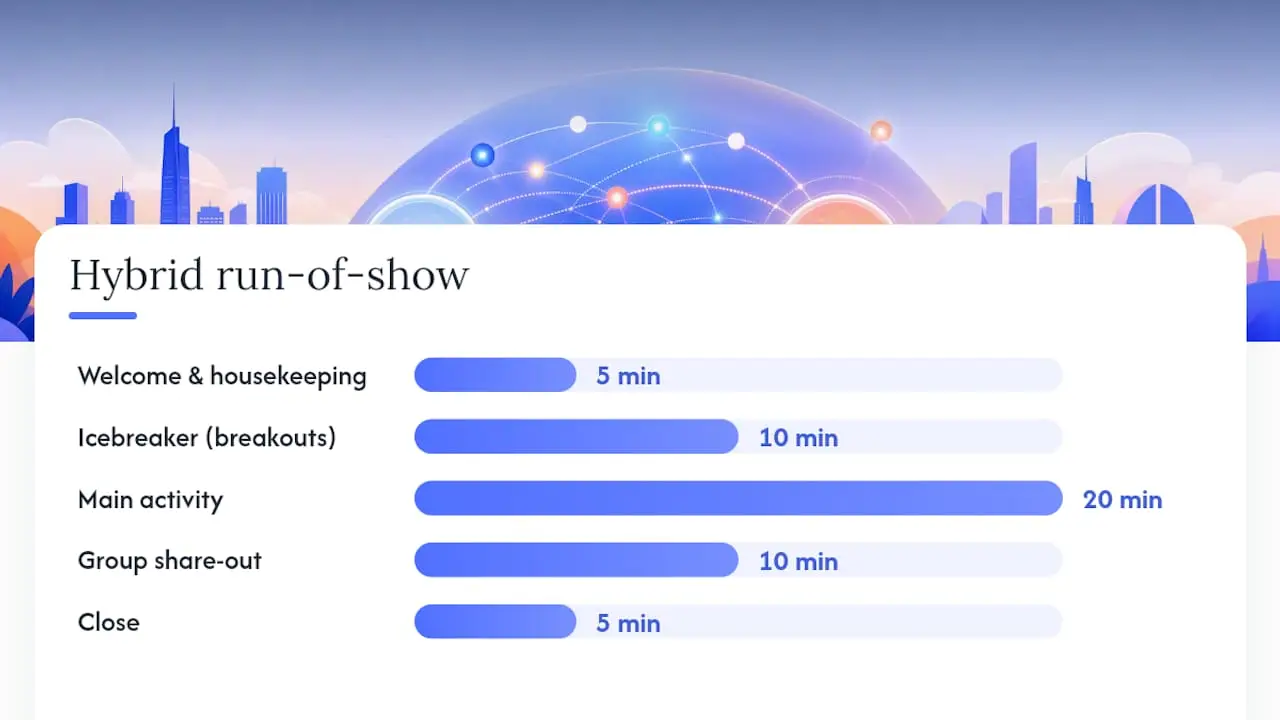
For platform setup, keep the virtual component to 45–60 minutes maximum. Use breakout rooms of 4–6 for any icebreaker or game; full-group video calls above 20 people lose energy fast. A workable run-of-show for a 45-minute hybrid event: 5 minutes of welcome and housekeeping, 10 minutes of icebreaker in breakout rooms, 20 minutes of main activity (trivia, cocktail demo, or tasting), 10 minutes of group share-out, and a 5-minute close. Virtual activities like two truths and one lie and structured breakout rooms keep remote participants engaged when the session is tight and the facilitation is active.
Time zones matter. If your team spans more than two time zones, schedule the event at a time that is reasonable for everyone, or record the main activity and offer an async version with a recipe card and a short video. Async participation is not second-class; it is a practical accommodation for global teams.
Why interactive formats produce better engagement
The research on this is consistent: interactive, activity-first events are more memorable and create better engagement than passive, drink-focused gatherings. The mechanism is straightforward. When people share a task, they have something to talk about besides their job titles. A cocktail class gives a junior analyst and a VP the same starting point: neither of them knows how to make a proper Negroni. That shared incompetence is surprisingly good for trust.
The goal of a corporate happy hour is not to serve drinks. It is to create a shared experience that people remember and that builds trust across the team. Facilitated activities lower the professional barriers that make open networking feel awkward for most employees.
Asana, Team-building games and activities
Employment-law experts add an important frame: workplace social events are still workplace events. The code of conduct does not pause because there is a bar. HR should set expectations in advance rather than policing behavior during the event. A pre-event email that covers the basics (conduct expectations, transportation options, NA availability) takes five minutes to write and prevents most problems.
Practical facilitation techniques that lower barriers:
- Assign teams randomly rather than letting people self-select. Self-selected groups reinforce existing cliques.
- Use a structured rotation: 15 minutes per station, then groups switch. Short, timeboxed activities work well as warm-ups and rotation stations for mixed or hybrid teams.
- Give the bartender or host a brief on the team: names, any inside jokes, recent wins to reference. A good facilitator makes the room feel like they belong there.
Measuring success does not require a complex survey. Three questions cover it: Did you enjoy the event? Did you meet or talk to someone you do not usually work with? Would you attend again? Send these within 48 hours while the event is fresh. Track attendance rate over time as your primary leading indicator. If attendance is climbing, the format is working.
What most planners get wrong (and how to fix it)
The most common planning failure is not budget or logistics. It is choosing a format that sounds good on paper but does not match the team’s actual culture or comfort level. A competitive trivia game with public scoring can feel fun to some people and genuinely stressful to others. An improv workshop is energizing for extroverts and quietly dreaded by a third of the room.
The fix is simple: ask before you plan. A two-question pre-event poll (“What kind of activity sounds most appealing?” and “Any dietary needs or accessibility requirements?”) takes 10 minutes to send and saves you from a format mismatch. The teams that consistently report high satisfaction scores from their happy hours are the ones where the planner treated the poll results as a real input, not a formality.
One format that tends to work across personality types is a guided cocktail or mocktail class where the bartender does most of the talking and guests participate at their own pace. Nobody is put on the spot. The activity gives introverts something to focus on. The bartender carries the energy. And the end result (a drink you made yourself) is a natural conversation starter for the rest of the evening.
Cocktail-crew makes the beverage side hands-off
Planning a corporate happy hour gets significantly easier when the drink program is handled by professionals. Cocktail-crew provides licensed, charismatic bartenders for corporate events across multiple metro areas, with a three-hour service minimum that fits neatly into a standard after-work window. No venue sourcing, no equipment rental, no last-minute scramble for garnishes.
For teams that want more than a bar, Cocktail-crew runs private cocktail classes and virtual sessions with shipped ingredient kits, making them a strong fit for hybrid events where in-office and remote staff need the same experience. Their elevated mocktail program means non-drinkers get a genuinely premium option, not an afterthought. When you are ready to book or want a quote for your next event, professional bartending services are available for corporate gatherings of most sizes. Request a quote at least three to four weeks out to confirm staffing and kit logistics.
Sources
These are the primary sources used to build this article. Each one offers templates, checklists, or deeper guidance for specific planning challenges.
- Asana — Team-building games and activities
- Holiday Party Catering: The Office Manager’s Year-End Playbook — Zerocater
- Happy hour ideas for work — Paperless Post
- Happy hour ideas — Museum Hack
- Team-building activities — SessionLab
- Virtual team-building activities — Atlassian
- Office happy hour guide — Superfine Kitchen