A great mocktail bar comes down to five categories: flavor bases (botanical syrups, concentrates), zero-proof spirits, sparkling bubbles, tart juices, and fresh garnishes. Get those five right, and you can build dozens of combinations from a single, clean table. Add proper glassware, labeled pitchers, and a linear flow setup from glasses to garnishes, and guests serve themselves without ever needing to find you. Brands like Seedlip and Spindrift raise the bar on what zero-proof drinking can taste and feel like, and they belong on any setup that takes the experience seriously.
Disclosure: This article contains affiliate links. Cocktail-crew may earn a commission on qualifying purchases at no extra cost to you.
How to set up your mocktail bar for smooth, guest-friendly flow
A self-serve mocktail station takes a moderate amount of time to set up for a cookout, baby shower, or backyard party. Spend that time on layout, and guests will navigate it without a single question.
Follow this order, left to right:
- Glasses first, so guests pick one up before anything else
- Ice bucket with tongs
- Pitcher bases (your two flavor options)
- Sparkling mixers: soda water, ginger beer, or tonic
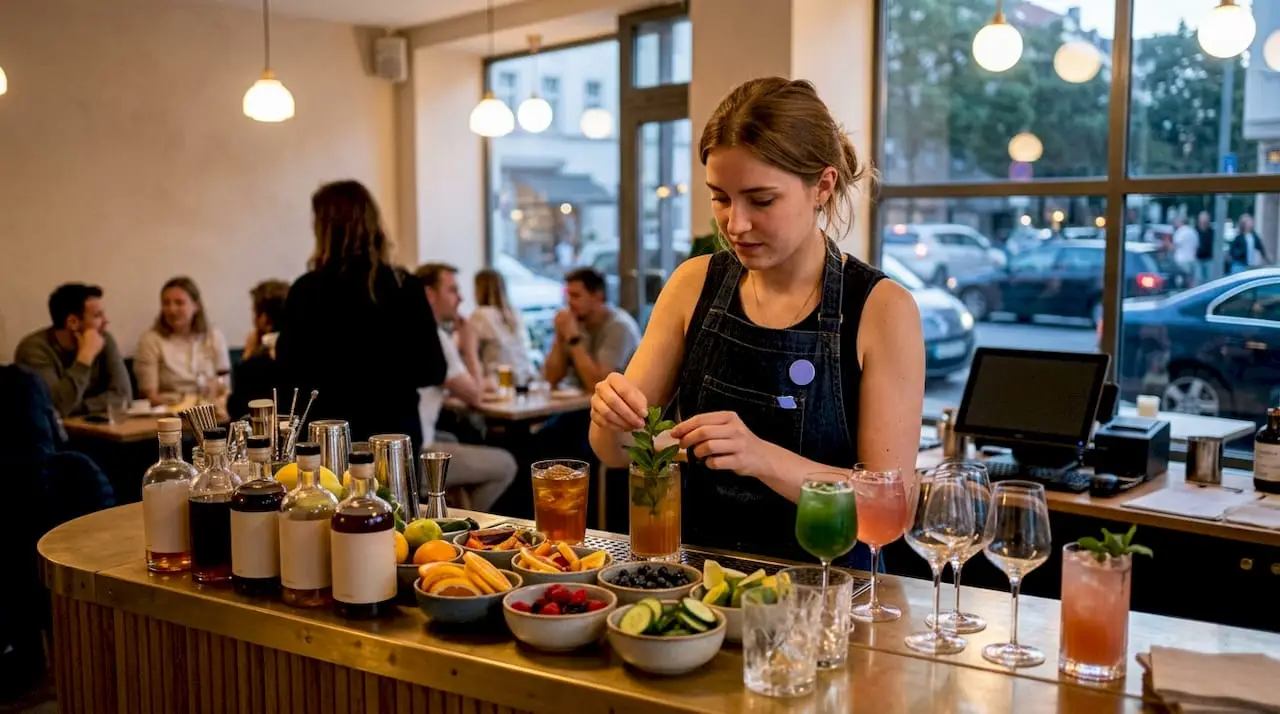
- Garnish tray with citrus, herbs, and berries
- Recipe cards and napkins at the end
Keep the layout in one direction. Guests build as they walk the line, exactly the way a salad bar works. Put recipe cards at the start so they know what they are aiming for before they even pick up a glass.
For height and visual interest:
- Use tiered trays, a lazy Susan, or a cake stand to lift the syrup bottles and garnish bowls
- Keep backup supplies under the table, not on it
- Group garnishes on one tray with small tongs so guests are not reaching into shared bowls
If you are serving cocktails alongside mocktails, keep spirits on a separate side tray with a label that says “optional.” The main table stays complete on its own, so guests who are not drinking never have to ask which pitcher is safe.
Pro Tip: Add a pinch of salt to your ice bucket. Salt lowers the freezing point of water, so the slushy mixture stays ice-cold throughout the entire event, not just the first hour.
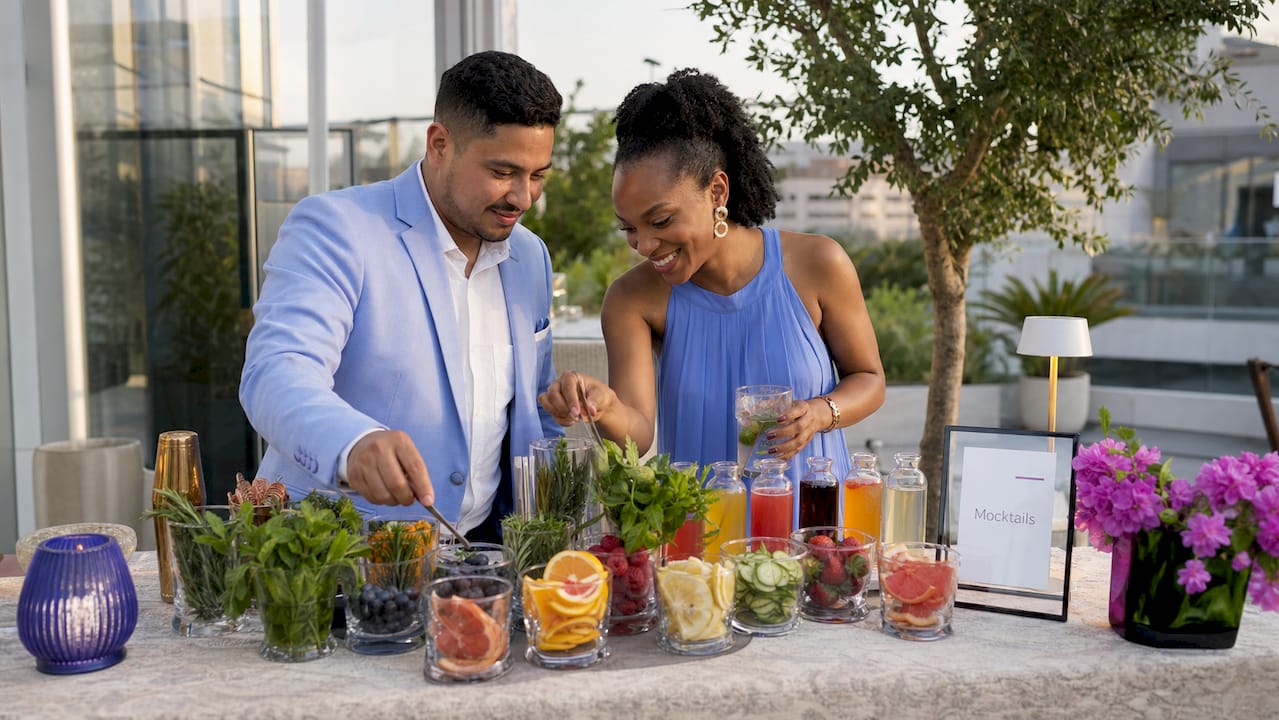
What to stock: bases, zero-proof spirits, mixers, and tools
The ingredients you choose decide whether the bar feels like a real drink experience or a sad table of warm juice. Stock these with intention.
Flavor bases:
- Botanical tonic syrups and concentrates give drinks structure that juice alone cannot
- Seedlip, a distilled non-alcoholic spirit, adds genuine complexity and an adult backbone
- Shrubs (drinking vinegars) and verjus bring tartness and depth without sweetness
- Hibiscus, cucumber mint, and rosemary citrus concentrates work as crowd-friendly pitcher bases
Sparkling mixers:
- Soda water is the most neutral finisher and pairs with nearly everything
- Spindrift sparkling water adds a subtle real-juice flavor that plain seltzer lacks
- Ginger beer brings spice and complexity; it is the single best upgrade for a simple juice base
- Tonic water works with citrus and herbal builds, though not everyone loves the bitterness
Essential bar tools:
- Cocktail shaker and jigger for made-to-order drinks
- Bar spoon and strainer
- Muddler for herbs and citrus
- Ice bucket with tongs; a Lewis bag if you want crushed ice
- Highball glasses, rocks glasses, and coupes for varied presentation
For mixology fundamentals that apply directly to mocktail prep, the same principles of balance, dilution, and temperature control matter just as much without alcohol. Keep juices tart rather than sweet. Grapefruit, pomegranate, and cranberry carry their weight far better than orange juice in a mocktail context.
Garnishes and finishing touches that actually change the drink
Garnishes do most of the visual work at a mocktail bar. A drink that looks beautiful gets picked up. A drink that looks like a cup of juice gets ignored.
Fresh herbs:
- Mint: the most versatile, works in citrus, berry, and tropical builds
- Basil: pairs beautifully with strawberry and grapefruit
- Rosemary: adds an aromatic, slightly piney note to pomegranate and pear drinks
Citrus and fruit:
- Lemon wheels, lime wedges, blood orange slices
- Cucumber ribbons for spa-style and herbal builds
- Fresh berries: raspberries, blackberries, and strawberries add color and a subtle flavor
Elevated touches:
- Edible flowers (calendula, viola, lavender) for weddings and formal events
- Dried citrus wheels for a shelf-stable, photogenic option
- Flavored ice cubes with mint leaves or berries frozen inside
Arrange garnishes in small matching ramekins or a sectioned ceramic tray. Always put out tongs or a small spoon. Guests reaching bare-handed into shared bowls is the one detail that makes an otherwise polished setup look careless. For more inspiration on vibrant drink presentations, the same principles of color contrast and height variation that work for food apply directly to garnish trays.
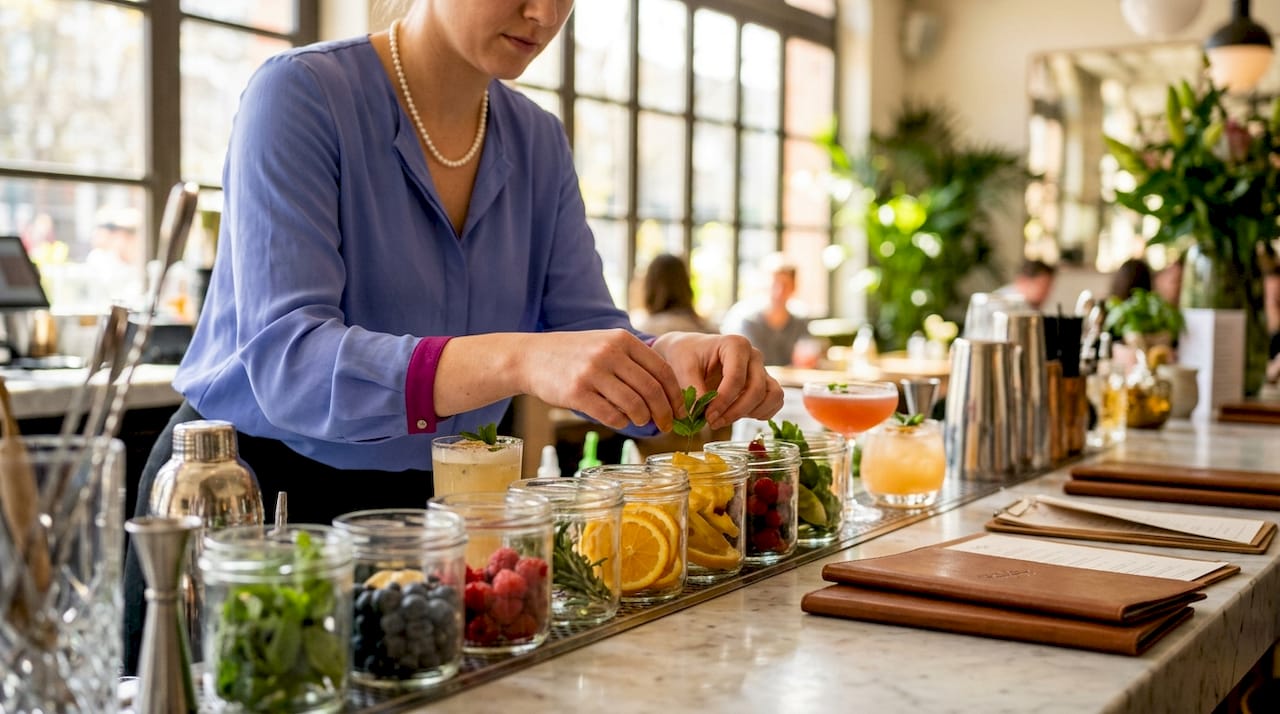
Signature mocktail recipes worth putting on your menu
Skip the long list of options. A focused menu of three or four named drinks is more effective for quality and guest satisfaction than an open-ended build-your-own spread. Give guests a recipe card and a name for each drink.
1. Verjus Spritz
Base: white verjus for tartness and a wine-like acidity. Add a syrup made from toasted coriander and pink peppercorns, top with high-carbonation sparkling mineral water, and serve in a chilled coupe with a dried orange garnish. This is the zero-proof drink that guests order because it sounds better than the booze, not because they have to.
2. Ginger Mule
Zero-proof spirit (Seedlip Spice 94 works well here), fresh lime juice, ginger beer, and a mint sprig. Bright, spicy, and easy to batch. The color alone sells it.
3. Pomegranate Rosemary Fizz
Pomegranate juice, soda water, a squeeze of lime, and a fresh rosemary sprig. Tart and festive. The deep red color does the marketing for you at any fall or winter gathering.
4. Cucumber Basil Cooler
Cucumber mint water base, tonic water, a splash of lime juice, and fresh basil. Light and herbal, the right counterpoint to a fruit-forward option on the same menu.
For sugar-free versions, swap simple syrup for a monk fruit or stevia liquid sweetener and use unsweetened juices. The flavor profile holds up well. For large events, batch the two most popular builds in drink dispensers ahead of time and leave one or two as self-serve. Add the sparkling component only at service so nothing goes flat.
The key to sophisticated mocktail flavor is tannins, acids, and bitters rather than sweetness alone. Verjus, shrubs, and chilled smoked teas provide that back-of-the-throat bite that usually comes from spirits.
How to style your mocktail bar so it becomes a conversation piece
The difference between a pretty drink table and one guests actually use is structure. The difference between a functional table and a memorable one is styling.
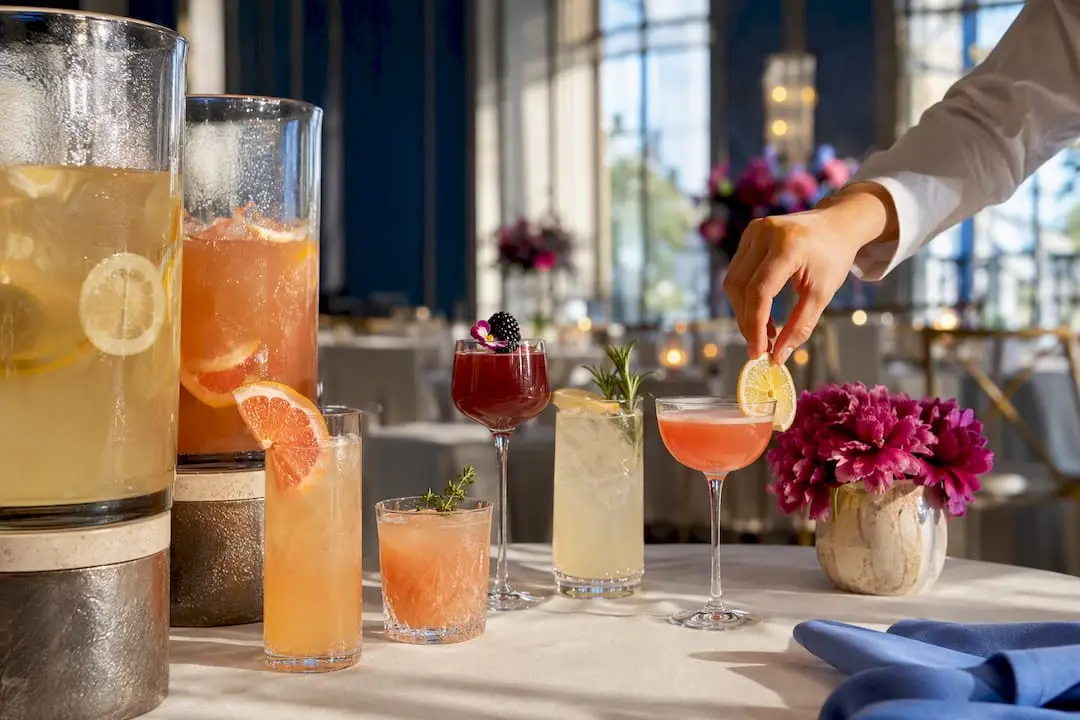
- Vary the height. Use a cake stand under the drink dispenser, a wooden crate under a cluster of pitchers, and a tiered tray for syrups. Everything at the same level looks flat.
- Use matching containers. A beautiful glass dispenser, uniform pitchers, and matching ramekins for garnishes look intentional. Mismatched plastic jugs do not.
- Color-coordinate the theme. Two or three colors across napkins, straws, and garnishes create a cohesive look without effort. Blush and gold for a bridal shower. Bright citrus tones for a backyard party. Black and white with clear glassware for a formal event.
- Place recipe cards at the beginning of the bar, not the end. Guests need to know what they are building before they pick up a glass.
- Pre-chill glassware 30 minutes before guests arrive. A cold glass keeps the drink colder longer and feels noticeably more polished.
Pro Tip: List zero-proof drinks on the menu without labeling them “mocktail” or “non-alcoholic.” When drinks are described by flavor rather than by what they lack, guests choose based on what sounds good. That shift alone drives broader acceptance and makes the bar feel genuinely inclusive rather than accommodating.
Expert hosting tips for a mocktail bar that runs itself
The best mocktail bars require almost no host intervention once guests arrive. That only happens with prep.
- Keep the menu to 3–4 drinks. More options create decision fatigue and slow the line.
- Pre-chill everything the night before: juices, syrups, seltzers, and sodas. The day of, prepare fresh juices about an hour before guests arrive and decant them into labeled pitchers.
- Label every container with a functional description, not just a name. “Hibiscus orange tea, lightly sweet” tells a guest more than “Base #1.”
- Avoid mystery syrups. If a syrup is on the table, its flavor and sweetness level should be obvious from the label.
- Treat zero-proof drinks as first-class beverages. Use the same premium glassware, hand-cut ice, and garnishes for mocktails as you would for any cocktail. Guests notice when the non-alcoholic option looks like an afterthought.
For corporate event setups or large gatherings, batch the two crowd-pleasers in dispensers and keep the self-serve station for guests who want to customize. Refresh the ice in dispensers every hour and keep them out of direct sun.
Planning your menu for dietary needs and allergen considerations
A well-planned mocktail menu accounts for more than taste preferences. Guests may have dietary restrictions that make certain ingredients off-limits.
Sugar-free options: Replace simple syrup with monk fruit sweetener or stevia drops. Use unsweetened juices and skip grenadine made with high-fructose corn syrup. Pomegranate-based grenadine made from real juice is a cleaner alternative.
Common allergen considerations:
- Some botanical syrups contain tree nuts (almond orgeat is a frequent culprit). Label these clearly.
- Lavender and other floral syrups can trigger reactions in guests with certain pollen sensitivities.
- Ginger beer occasionally contains traces of sulfites; check the label if you have guests with sulfite sensitivities.
Inclusive menu design: Offer at least one fruit-forward option, one herbal or botanical option, and one lighter, lower-sugar option. That three-drink range covers most preferences without overwhelming the setup. Print the ingredient list for each drink on the recipe card, not just the name. Guests with allergies will thank you, and it keeps the line moving because nobody has to ask.
For wedding mocktail menus, coordinate with your caterer on any known guest allergies in advance. A signature non-alcoholic drink that works for pregnant guests, sober guests, and designated drivers is one of the most thoughtful things a host can offer.
What Cocktail-crew’s approach brings to a professional mocktail setup
Cocktail-crew’s bartenders approach zero-proof drinks with the same flavor architecture they apply to full cocktail menus. That means building complexity through layered ingredients rather than relying on sweetness to carry the drink.
The professional standard for elevated mocktails focuses on three things: temperature control, carbonation quality, and flavor balance. A lukewarm mocktail with flat bubbles fails regardless of how good the ingredients are. Pre-batched bases should be the coldest things on the table, and carbonation should come from bottled high-carbonation mineral water rather than a soda gun, which delivers inconsistent pressure and a flatter mouthfeel.
Cocktail-crew’s event bartenders also handle the logistics that trip up DIY setups: calculating quantities per guest, managing ice replenishment, and keeping the bar looking clean and stocked through the full event. For hosts who want the professional bartending advantage without the setup stress, that expertise translates directly into a better guest experience from the first pour to the last.
The professional standard: signature zero-proof drinks should be built with tannins, acids, and bitters for depth, served in premium glassware with hand-cut ice, and kept colder than everything else at the event.
Key Takeaways
A stylish, inclusive mocktail bar requires five stocked categories, a linear left-to-right layout, pre-chilled ingredients, and named signature drinks served in premium glassware.
| Point | Details |
|---|---|
| Stock five categories | Flavor bases, zero-proof spirits, sparkling mixers, tart juices, and fresh garnishes cover every combination. |
| Linear layout prevents bottlenecks | Arrange glasses, ice, bases, bubbles, and garnishes in order so guests build drinks without stopping. |
| Salt your ice | Adding salt to the ice bucket lowers the freezing point and keeps ingredients colder throughout the event. |
| Keep the menu to 3–4 drinks | A compact menu is easier to execute, keeps quality consistent, and reduces guest decision fatigue. |
| Label for dietary needs | Print ingredient lists on recipe cards so guests with allergies or sugar-free requirements can choose confidently. |
Scottsdale, Nashville, Austin, Miami, Charleston, Savannah, Los Angeles & Orange County, San Diego, Palm Springs, Destin & 30A — wherever you’re celebrating, The Cocktail Crew will be there. Check your date, book The Cocktail Crew, and get ready for a night worth remembering. Cheers.