Hire a licensed, insured professional bartender and lock them in with a written contract and deposit as early as possible. That single step separates a smooth, memorable event from a chaotic one. Professional bartenders handle service speed, alcohol safety, and guest engagement so you can actually enjoy the party you planned.
Your three immediate next steps:
- Check availability now. Good bartenders book out months ahead, especially on weekend and holiday dates.
- Confirm your staffing ratio. Plan for one bartender per 50–75 guests depending on your drink menu complexity.
- Secure the booking with a deposit and a written contract that covers hours, overtime, cancellation, and proof of insurance (COI).
Why it matters: A professional bartender reduces your liability, keeps lines short, and handles ID checks so you are not the one cutting someone off at your own wedding.
Pro Tip: Request a Certificate of Insurance (COI) before you sign anything. A bartender without one puts you on the hook for any alcohol-related incident at your event.
Table of Contents
- Why hiring a professional bartender matters for private events
- How to define your event needs before contacting bartenders
- How many bartenders do you actually need?
- How much does hiring a bartender cost?
- Where do you find vetted bartenders?
- What qualifications should you require and what should you ask?
- What should your bartender contract include?
- Day-of logistics: what needs to happen before the first guest arrives
- Why Cocktail-crew makes hiring easy
- What happens if your bartender cancels last minute?
- Tips for interviewing bartenders
- What alcohol laws affect your bartender’s service?
- Key Takeaways
- What most hosts get wrong about hiring a bartender
- Book Cocktail-crew for your next event
- Useful sources and references
Why hiring a professional bartender matters for private events
The difference between a professional bartender and a friend who “knows how to make drinks” shows up within the first 30 minutes of your event. Lines form, ice runs low, and the person behind the bar starts looking panicked. A trained pro prevents all of that.
The direct benefits are concrete:
- Faster service. Experienced bartenders batch prep, organize their station, and move efficiently under pressure.
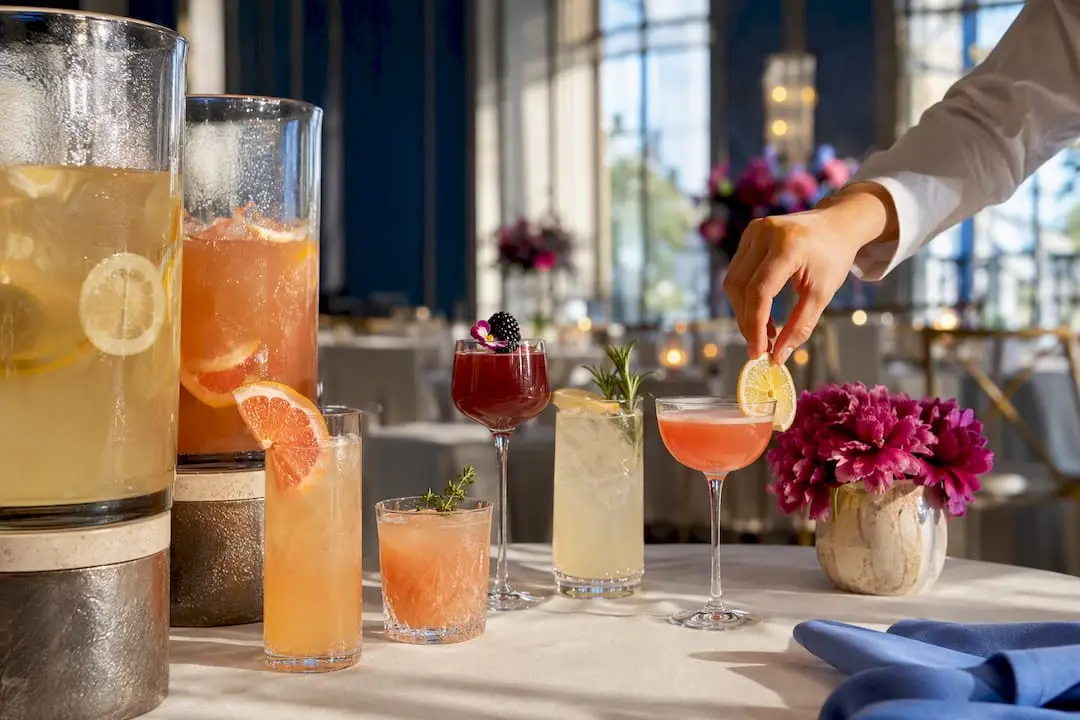
- Better drink quality. They know ratios, balance, and presentation without needing to look anything up.
- Safer alcohol service. Certified servers are trained to spot intoxication, check IDs, and refuse service when needed — reducing your liability as a host.
- Cleaner handoff. They handle POS or cash, track inventory, and manage cleanup so you are not counting bottles at midnight.
Hiring for attitude, energy, and calm under pressure often yields better event outcomes than hiring purely for technical cocktail skill. A bartender who reads the room and engages guests creates a noticeably different atmosphere than one who just pours drinks.
The insurance piece deserves its own emphasis. If a guest is over-served and causes an accident after leaving your event, you as the host can face liability. A bartender carrying their own COI and holding a state-recognized alcohol server certification (TIPS, ServSafe Alcohol, or the state equivalent) shifts that risk appropriately. That is not a minor detail. It is the reason professional bartending genuinely transforms an event rather than just adding a decorative bar setup.
How to define your event needs before contacting bartenders
Before you reach out to a single bartender or agency, spend 15 minutes answering these questions. Candidates who receive a clear brief give you comparable, accurate quotes. Vague inquiries get vague estimates.
Answer these before you contact anyone:
- Date, time, and venue. Include setup access time and any venue restrictions on outside vendors or alcohol.
- Guest count. Be realistic. Underestimating by 20 people affects staffing and inventory.
- Bar style. Open bar with full cocktails? Beer and wine only? Signature cocktails plus a mocktail menu? Each has different staffing and supply implications.
- Hours of service. How long do you need the bar open? Is there a cocktail hour before dinner, then a second service window?
- Menu complexity. A two-cocktail menu with beer and wine is far simpler to staff than a full craft cocktail menu with muddled herbs and infused spirits.
- Logistics. Does the venue have running water behind the bar? Power access? A dedicated bar surface, or does the bartender need to bring one?
Quick checklist for your inquiry brief:
- Event type (wedding, birthday, corporate, etc.)
- Expected guest count and age range
- Preferred bar style and any must-have drinks
- Whether you are supplying alcohol or want the bartender to source it
- POS or cash handling needs
- Venue contact and any vendor rules
Service level affects both staffing and price. A full-service mixology setup with custom cocktails, garnish prep, and specialty glassware costs more and requires more staff than a simple pour-and-serve beer-and-wine station. Knowing which you want before you call saves everyone time. You might also want to consider whether a mobile bar setup fits your venue better than a traditional staffed bar.

How many bartenders do you actually need?
The standard rule is approximately one bartender per several dozen guests, adjusted based on service complexity. Mixed drinks take longer to prepare, and the line backs up fast when a single bartender is shaking and straining for 80 people.
| Guest count | Beer & wine only | Full cocktail menu |
|---|---|---|
| 50 guests | 1 bartender | 1 bartender |
| 100 guests | 1–2 bartenders | 2 bartenders |
| 200 guests | 3 bartenders | 4 bartenders |
For a 120-person wedding with a full cocktail menu, that math points to 2–3 bartenders. Add a barback (a support role handling ice, restocking, and glassware) for any event over 100 guests and you will notice the difference during peak service.
Pro Tip: Simplify your cocktail menu to two or three signature drinks plus beer and wine. You can often reduce staffing by one bartender and still deliver a premium experience, because prep time per drink drops significantly.
Peak service windows, typically the first 45 minutes after guests arrive and the 30 minutes after dinner ends, are when lines form. Staffing for those windows, not the average pace of the evening, is the smarter calculation.
How much does hiring a bartender cost?
Private-event bartender rates commonly fall between $30 and $70 per hour depending on city, experience, and drink menu complexity. Flair bartenders and certified mixologists sit at the higher end. A straightforward beer-and-wine server in a mid-size market sits closer to the lower end.
What drives the price up:
- Major metro markets (New York, Los Angeles, Chicago, Miami)
- Holiday weekends and peak wedding season (May through October)
- Specialty skills: flair, molecular mixology, custom menu development
- Short-notice bookings
- Overtime beyond the agreed service window
Labor costs should be estimated by multiplying the expected hours and number of bartenders by the typical hourly rate. Alcohol, mixers, glassware, and ice are separate line items. Gratuity is typically 15–20% on top of the service fee and is often expected even when not required.
These figures cover labor only. Alcohol, mixers, glassware, and ice are separate line items. Gratuity is typically 15–20% on top of the service fee and is often expected even when not required.
When requesting a written quote, ask for it to be itemized:
- Labor (per bartender, per hour, plus overtime rate)
- Alcohol and mixers (if the bartender is sourcing)
- Equipment rentals (bar surface, glassware, ice bins)
- Optional add-ons (barback, POS system, specialty garnishes)
- Deposit amount and final payment due date
A quote that bundles everything into one number is harder to compare and easier to dispute later. For a deeper breakdown of what to expect in your market, the bartender cost guide for private events covers regional pricing in more detail.
Where do you find vetted bartenders?
Job boards, social media, staffing platforms, and venue referrals are all viable sourcing channels. Each has a different speed-versus-reliability tradeoff.
Sourcing options and their tradeoffs:
- Venue or caterer referrals. Usually the most reliable. The venue has already worked with these bartenders and knows they show up, follow house rules, and handle the space. Slower to source, but higher confidence.
- Bartending agencies and staffing platforms. Faster candidate pools, pre-screened profiles, and often insurance already in place. You pay a premium for that convenience.
- Freelance bartenders via social media or local listings. Can be excellent and cost-effective, but vetting is entirely on you. Check reviews, ask for references, and verify insurance independently.
- Mobile bartending platforms that list profiles, reviews, and sample pricing let you compare rates and reviews side by side before reaching out. Useful when you need speed and transparency.
Vetting checklist for any sourcing channel:
- Proof of insurance / COI
- References from at least two private events or weddings
- Sample menu or cocktail list
- Alcohol server certification (TIPS, ServSafe, or state equivalent)
- Willingness to do a brief tasting or trial shift
Pro Tip: Ask the bartender for a reference from an event similar in size and style to yours. A bartender who has worked 200-person weddings handles the pace differently than one whose experience is mostly small dinner parties.
What qualifications should you require and what should you ask?
The non-negotiables before you book anyone:
- Alcohol server certification. TIPS (Training for Intervention ProcedureS), ServSafe Alcohol, or the state-specific equivalent. This is not optional for liability reasons.
- Proof of insurance / COI. Ask for it in writing before the contract is signed.
- References from comparable events. At least two, with contact information you can actually use.
- POS or cash handling experience if your event involves ticket sales or a cash bar.
- A sample menu or signature cocktail list to gauge their range and creativity.
Interview questions worth asking:
- “Walk me through how you handle a rush at the bar when three guests arrive at once.”
- “How do you handle a guest you believe has had too much to drink?”
- “What is your backup plan if you are sick or have an emergency on the event day?”
- “Can you provide a sample menu for a 100-person wedding with a beer, wine, and two-cocktail format?”
A practical trial shift or tasting reveals more than any phone interview. If the bartender is local and the event is large, a 30-minute tasting where they make two or three cocktails from your proposed menu tells you everything about their speed, technique, and personality.
Red flags to watch for:
- Vague or verbal-only cancellation terms
- No COI or refusal to provide one
- Unclear overtime policy
- Unwillingness to provide references
- No written quote or contract offered
For a fuller picture of what separates a good event bartender from a great one, the guide on what makes a great event bartender is worth reading before your interviews.
What should your bartender contract include?
A solid contract protects both sides and eliminates the most common disputes: overtime charges, no-shows, and scope creep on the menu.
Contract essentials:
- Event date, start time, and end time
- Venue address and setup/breakdown windows
- Number of bartenders and barbacks
- Exact service scope (bar style, menu, alcohol sourcing responsibility)
- Overtime rate and how it is triggered
- Cancellation and replacement policy (what happens if the bartender cancels within 48 hours?)
- Proof of insurance / COI attached or referenced
- Payment schedule
Standard payment structure:
- Deposit (typically 50%) due at signing to hold the date
- Balance due before the event or on the day of service
- Overtime billed at an agreed hourly rate, invoiced within 48 hours post-event
Itemized written quotes and clearly stated overtime fees are standard best practice in event staffing. If a bartender resists putting any of this in writing, that is your answer. Book someone else.
Experienced bartenders and specialty talent book out months in advance, especially for weekend dates and holidays. Signing a contract early is not just about locking in the price. It is about not losing the person you want to someone who moved faster.
Day-of logistics: what needs to happen before the first guest arrives
A professional bartender will handle most of this independently, but knowing what to expect helps you coordinate with your venue and avoid last-minute surprises.
Setup timeline:
- Allow at least 60–90 minutes for bar setup before guests arrive (longer for mobile bars or complex setups).
- Confirm venue access time with both the bartender and the venue coordinator at least one week out.
- Identify where supplies will be stored and where trash and recycling go.
Equipment and supply checklist:
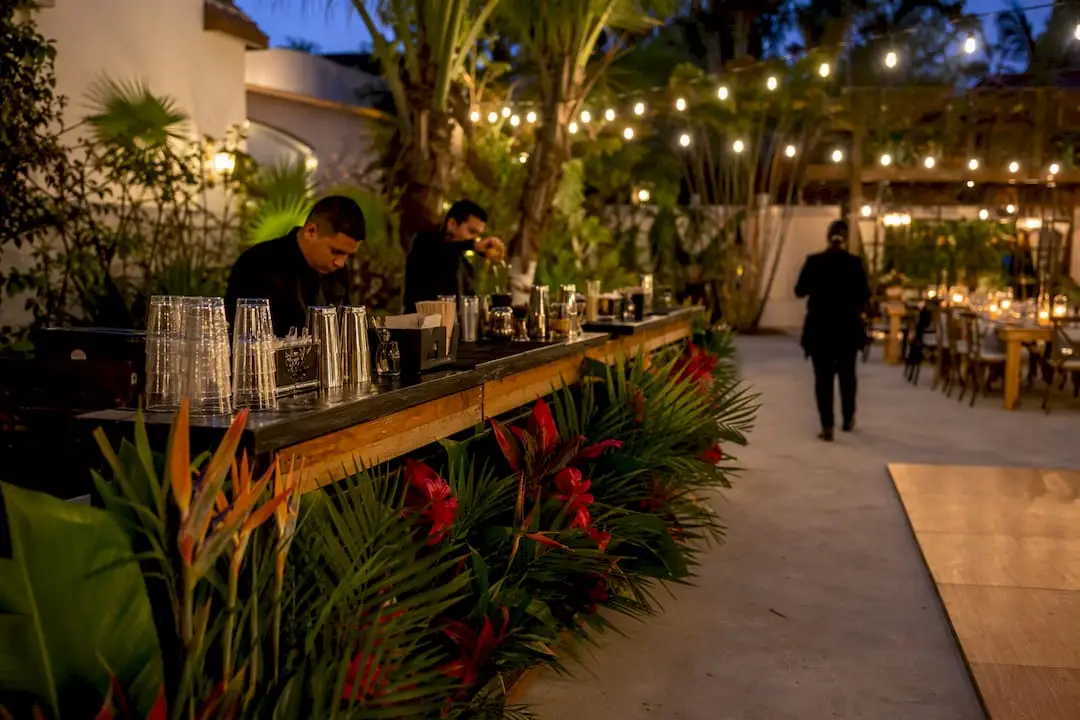
- Bar surface (venue-provided or bartender-supplied)
- Glassware (type and quantity matched to guest count and menu)
- Ice (plan for more than you think you need — a common shortfall)
- Backup supplies: bottle openers, strainers, muddlers, cutting boards
- POS terminal or cash box if applicable
- Garnishes and mixers (confirm who is responsible for sourcing these)
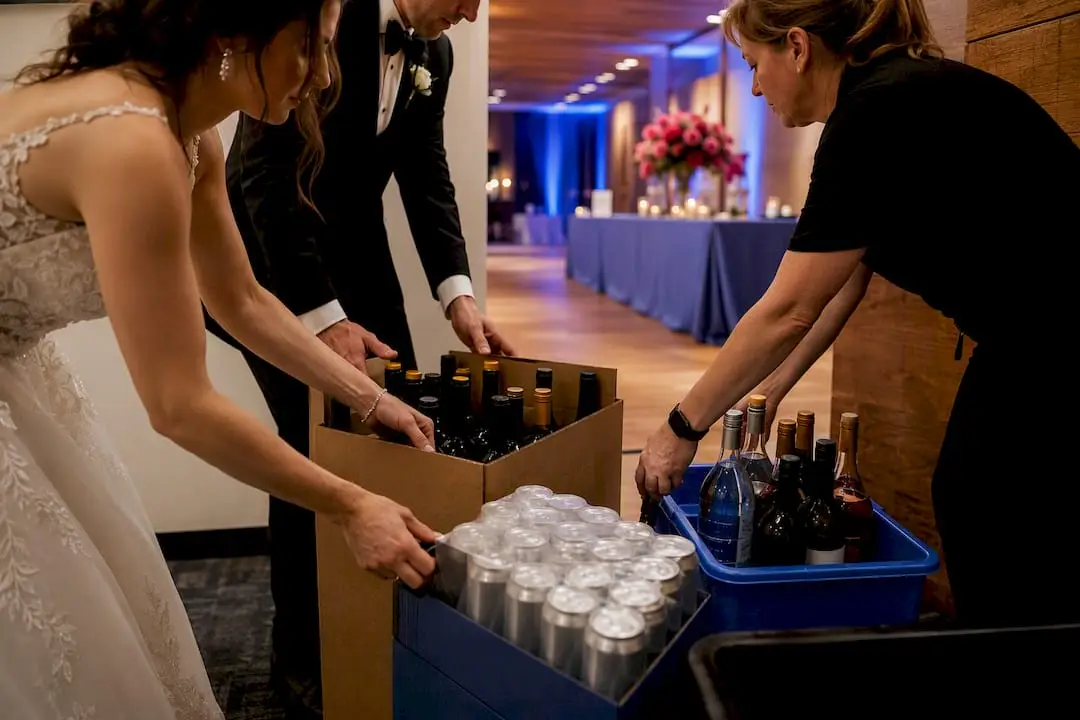
Venue coordination points:
- Confirm power access and running water location
- Share the venue’s vendor rules and any alcohol permit requirements
- Introduce the bartender to the venue coordinator on setup day
- Agree on a signal or protocol for last call
Coordinating bar service with catering is often where timing breaks down. A catering booking checklist can help you align both vendors on timing, access, and shared equipment so neither team is waiting on the other.
Pro Tip: Walk the bar area with your bartender at least a week before the event, or share detailed photos and measurements if an in-person visit is not possible. Surprises on setup day cost time and create stress.
Why Cocktail-crew makes hiring easy
Cocktail-crew brings licensed, insured bartenders to private events across multiple metro areas, with a flexible three-hour minimum that works for smaller gatherings and extended receptions alike. Their bartenders are vetted for both technical skill and guest engagement, because a bartender who can hold a conversation while shaking a cocktail changes the energy of a room.
What sets Cocktail-crew apart:
- Licensed and insured staff with COI available on request
- Flexible three-hour minimum, so you are not paying for time you do not need
- Built-in cocktail calculator to estimate quantities and build a custom shopping list
- Elevated mocktail service for sober-curious guests, so no one feels like an afterthought
- Positive client reviews and a Shark Tank feature that put the brand on the national map
- Optional mixers package for small events, removing one more logistical item from your list
The best event bartenders do not just pour drinks. They read the room, pace service, and make guests feel genuinely welcomed — and that is the standard Cocktail-crew holds its staff to.
Pro Tip: Use Cocktail-crew’s cocktail calculator before your first inquiry call. Arriving with a rough quantity estimate makes the conversation faster and the quote more accurate.
For hosts who want to understand what to look for when hiring a bartender for a private party, Cocktail-crew’s own resource library covers the vetting criteria in detail.
What happens if your bartender cancels last minute?
Even with a solid contract, illness and emergencies happen. The difference between a minor inconvenience and a ruined event is how prepared you are.
Before the event:
- Confirm your contract includes a replacement clause. A reputable agency or service should provide a qualified substitute at no extra cost if the original bartender cancels within a defined window.
- Ask directly: “If your bartender is sick the morning of my event, what is your process?” The answer tells you a lot about how the business operates.
- Keep the contact information for a backup bartender or agency on hand, especially for large or high-stakes events like weddings.
On the day:
- If a no-show happens and you have no replacement lined up, contact a local staffing agency immediately. Many can place a bartender within a few hours for a premium fee.
- Simplify the menu on the fly. One or two signature cocktails plus beer and wine can be managed by one fewer person than a full cocktail menu.
- Notify your venue coordinator right away. They often have relationships with local bartenders and may be able to help.
The best protection is booking through a service that has staff depth. A solo freelancer has no backup. An agency or professional service like Cocktail-crew can reassign staff because they have a roster, not just one person.
Tips for interviewing bartenders
Most hosts treat the bartender interview like a formality. That is a mistake. The interview is where you find out whether this person can handle 100 guests, a complicated cocktail menu, and a venue coordinator all at once.
What to evaluate beyond the resume:
- Composure under pressure. Ask them to describe the busiest event they have worked. Listen for how they describe managing the rush, not just that they survived it.
- Guest engagement. A bartender who talks about guests by name, who remembers a regular’s order, who notices when someone looks uncomfortable — that is the person you want behind your bar.
- Problem-solving instinct. “We ran out of a key ingredient mid-event — what did you do?” The answer reveals creativity and calm.
- Professionalism in communication. Did they respond to your inquiry promptly? Did they ask clarifying questions about your event? Did they offer a sample menu without being asked? These small signals predict day-of reliability.
Hiring for attitude and hospitality consistently outperforms hiring for technical skill alone. A bartender who is warm, fast, and calm under pressure can learn a new cocktail recipe. A technically skilled bartender who is rude or disengaged is much harder to fix.
A brief practical test, even just asking them to make two cocktails from your proposed menu during the interview, shows you more than 30 minutes of conversation. Speed, cleanliness, and how they explain what they are doing all matter.
What alcohol laws affect your bartender’s service?
Alcohol service at private events in the United States is governed at the state and sometimes county level, and the rules vary significantly. What is standard practice in one state may require a special permit in another.
Key legal considerations:
- Dram shop liability. Most U.S. states have dram shop laws that hold servers and hosts liable for damages caused by an over-served guest. Your bartender’s certification and COI are your primary protection.
- Banquet permits and temporary licenses. Some states require the event host or the bartender to hold a temporary banquet permit to serve alcohol at a private event, even on private property. Check with your state’s Alcohol Beverage Control (ABC) board.
- Venue alcohol licenses. If your event is at a licensed venue, the venue’s license may cover service, but only if alcohol is purchased through the venue. Bringing in outside alcohol often requires a separate permit.
- Last call and service hours. State and local ordinances set limits on how late alcohol can be served. Your bartender should know these for your specific location.
- ID verification requirements. Bartenders are legally required to check ID for any guest who appears under 30 in most states. Your contract should confirm this is standard practice.
This is general information, not legal advice. Confirm current permit requirements and service restrictions with your state’s ABC board or a licensed attorney before your event.
For events in major metros like Los Angeles, local ordinances add another layer. If you are searching for how to hire a bartender in Los Angeles specifically, confirm whether your venue requires a licensed caterer’s permit or a one-day alcohol license in addition to your bartender’s own credentials.
Key Takeaways
Hiring a professional bartender for a private event comes down to three things: knowing your needs, vetting thoroughly, and booking early with a clear written contract.
| Point | Details |
|---|---|
| Define needs first | Know your guest count, bar style, and service hours before contacting any bartender. |
| Use staffing ratios | Plan for one bartender per 75 guests for basic service, or one per 50 for mixed cocktails. |
| Budget realistically | Hourly rates typically fall between $30 and $70 depending on market and bartender skill level; always request an itemized quote separating labor, alcohol, and rentals. |
| Book early with a contract | Good bartenders book months out; secure your date with a 50% deposit and a written contract covering COI and cancellation terms. |
| Cocktail-crew simplifies booking | Cocktail-crew offers licensed, insured bartenders with a flexible three-hour minimum and a built-in cocktail calculator for private events. |
What most hosts get wrong about hiring a bartender
The conventional wisdom says hire the most technically skilled bartender you can afford. That framing misses the point for private events.
At a wedding or birthday party, your guests are not judging the bartender’s knife skills or their knowledge of obscure amari. They are noticing whether the line moves, whether the bartender smiled at them, and whether their drink tasted good. Those outcomes depend far more on attitude, pace, and guest engagement than on technical mastery.
The other thing hosts consistently underestimate is lead time. Treating bartender booking like a last-minute task, something to handle two or three weeks out, is how you end up with whoever is available rather than whoever is good. The best event bartenders in any market are booked months ahead, particularly from May through October. If your event is on a holiday weekend, add another month to that mental timeline.
Simplifying your cocktail menu is also underused as a strategy. Hosts often want to impress guests with a long, elaborate drink list. In practice, two well-executed signature cocktails plus beer and wine create a better guest experience than eight options that slow the bar to a crawl. Fewer choices mean faster service, shorter lines, and a bartender who can actually talk to your guests instead of staring at a recipe card.
The practical upshot: hire early, prioritize attitude alongside skill, keep the menu tight, and put everything in writing. Those four decisions will do more for your event than any single cocktail recipe.
Book Cocktail-crew for your next event
Cocktail-crew is the direct alternative to the time-consuming process of vetting freelancers, chasing references, and hoping someone shows up. Their licensed, insured bartenders come ready for private events, with a three-hour minimum that fits everything from a 40-person birthday to a 200-guest wedding reception.
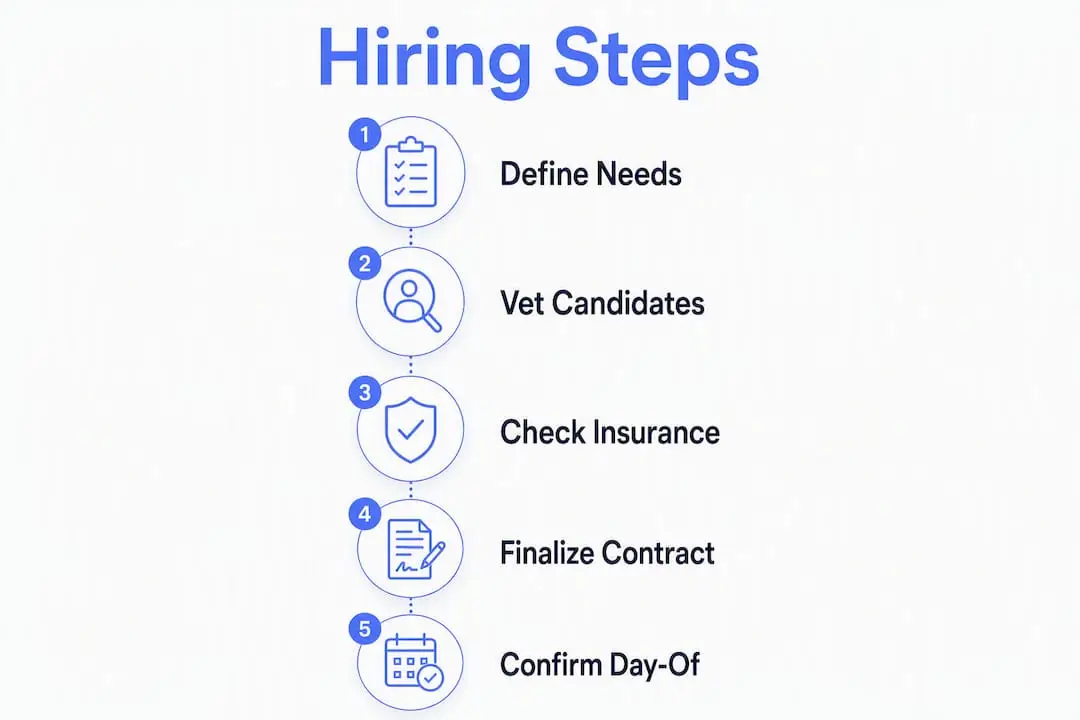
Three steps to book:
- Get a quote. Use the cocktail calculator on the Cocktail-crew site to estimate quantities, then request a quote with your event details.
- Confirm staff and menu. Cocktail-crew will match you with the right number of bartenders for your guest count and confirm your drink menu, including mocktail options if needed.
- Pay the deposit and lock in your date. A straightforward deposit secures your booking. No vague terms, no surprise fees.
Peak dates fill fast. If your event falls on a holiday weekend or in peak wedding season, reach out sooner rather than later. Book your private event bartending with Cocktail-crew and cross one major item off your planning list today.
Useful sources and references
The following resources informed the staffing ratios, pricing guidance, and hiring best practices in this guide.
| Resource | What it covers |
|---|---|
| National Bartenders — Hire a Bartender | Staffing ratios, lead time guidance, and contract best practices |
| Bar Masters Mobile Bartending — Pricing Guide | Hourly rate ranges and regional pricing factors |
| Indeed — How to Hire a Bartender | Sourcing channels and candidate screening guidance |
| Workstream — Bartender Hiring Guide | Attitude-first hiring philosophy and onboarding tips |
| Restaurant365 — Bar Hiring Strategies | Trial shifts, practical screening, and written contract standards |
| FindBartenders.com | Mobile platform for comparing bartender profiles and rates |
| WebstaurantStore — How to Hire a Bartender | Comprehensive hiring walkthrough for bar and event contexts |
For local licensing rules, contact your state’s Alcohol Beverage Control (ABC) board directly. Venue-specific restrictions on outside vendors and alcohol permits vary widely, and your venue coordinator is the fastest source for those details.